Military Medical Examination Notice Serves as a 'Comprehensive Checkup Pass'—National Defense Duty Must Be Carried Out in Good Health
- Input
- 2026-10-06 09:07:03
- Updated
- 2026-10-06 09:07:03
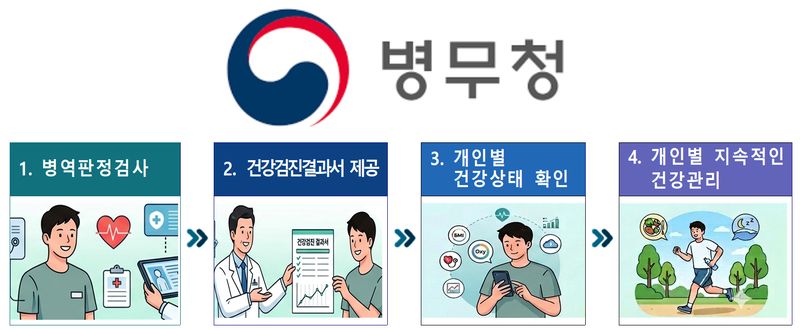
Amid the solemn principle of the universal conscription system—that we must pass on to our descendants the land our forebears protected through blood, sweat and tears—completing military service in good health is a key prerequisite for national security. In this context, the MMA's military service eligibility examination, the first gateway to fulfilling military service obligations, is drawing attention for going beyond simply determining whether someone is fit for active duty. It is effectively serving as a 'life safety net' by detecting serious, hidden diseases among young people.
According to the MMA on the 6th, it conducts detailed physical examinations of those subject to military service obligations through 35 types of tests comparable to those provided by a general hospital, including height and weight measurements, clinical psychology, radiology and clinical pathology. About 600 cases are identified annually in which young people who had experienced no notable symptoms are found to have diseases they did not know they had. These include potentially fatal serious conditions such as malignant tumors and leukemia, making the examinations a decisive turning point in enabling timely treatment.
There are numerous cases in which military service eligibility examinations have changed young people's lives. Person A and Person B were found to have signs of cardiomegaly and abnormal mass shadows through chest X-rays and were referred for detailed examinations, including computed tomography (CT) scans. Person A was subsequently diagnosed with a congenital atrial septal defect and underwent heart surgery at an early stage, while Person B was confirmed to have a malignant tumor (cancer) and was able to begin chemotherapy immediately.
In the cases of Person C and Person D, basic blood tests found that their white blood cell counts were outside the normal range, prompting the MMA to recommend additional detailed examinations. They were diagnosed with the serious blood cancers acute lymphoblastic leukemia and acute myeloid leukemia, respectively, and received treatment promptly. Their conditions could have become life-threatening if left unattended because they had shown no noticeable symptoms. Other cases included a young man whose blood pressure measurement led to the detection of severe cardiovascular disease caused by congenital aortic valve dysfunction, allowing him to successfully undergo a Bentall procedure, and young people whose glomerulonephritis was detected early through urinalysis, preventing its progression to chronic kidney failure.
The MMA provides comprehensive health screening reports on the day of the examination to support young people's self-care. Since June this year, it has expanded and revamped the service as a mobile e-Military Manpower Wallet service accessible through notification messages, making it easier to check information on associated symptoms and related diseases. It has also opened accumulated examination data through the Public Data Portal and registered Health Indicators of 19-Year-Old Korean Men as national statistics after analyzing 2.95 million records from the past 11 years, laying the groundwork for health research on young people.
Hong So-young, Commissioner of the Military Manpower Administration, emphasized, "We will continue expanding the role of military service eligibility examinations so that they can establish themselves as a health safety net for our society that protects young people's healthy futures, going beyond a mere rite of passage for fulfilling military service obligations."
Military service is a sacred duty undertaken to protect the community of the Republic of Korea together. The MMA's achievement in caring for young people's physical and mental health at the starting line of that duty offers a sign of trust that the state is not merely imposing obligations, but is also warmly protecting young people's lives.
[email protected] Lee Jong-yoon Reporter