Ministry of Foreign Affairs and Ministry of Justice Push Back Against Chung Dong-young's Insistence on "North Korean-born Citizens"
- Input
- 2026-10-06 07:14:32
- Updated
- 2026-10-06 07:14:32
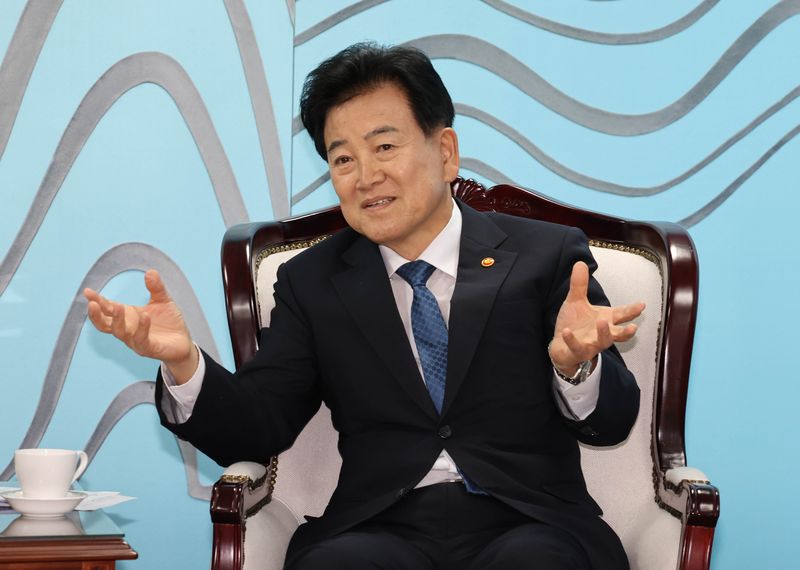
Minister of Unification Chung Dong-young has insisted on the term "North Korean-born citizens" and urged government ministries and the media to replace the term "North Korean defectors." However, opposition from the Ministry of Foreign Affairs and the Ministry of Justice is expected to make it difficult to retain the term "North Korean-born citizens."
According to Park Choong-kwon, a People Power Party lawmaker and member of the Foreign Affairs and Unification Committee of the National Assembly, the Ministry of Justice and the Ministry of Foreign Affairs have effectively opposed the amendment bill to the Act on the Protection and Settlement Support of North Korean Defectors, which is currently pending before the National Assembly.
The Ministry of Justice offered a "comprehensive review" opinion, citing the public's familiarity with the term "North Korean defectors," the possibility that "North Korean-born citizens" could be conceptually confused with "people from the northern provinces," and the need to assess public perceptions.
Regarding "North Korean-born citizens," the proposed English designation for the new term, the Ministry of Foreign Affairs submitted an opinion calling for the current terminology to be retained. It cited concerns that emphasizing "North Korean origin" rather than "defection from North Korea" could weaken the case for the principle of non-refoulement, as well as the possibility that the term could be mistaken for "North Korean citizens," meaning residents of North Korea.
The Ministry of Unification responded, "Because the scope of those eligible for protection and support under the law is determined according to the statutory definitions and the procedures for applying for and determining protection, it is difficult to argue that changing the designation to 'North Korean-born citizens' would in itself affect the scope of those eligible for protection."
At a presidential policy briefing at the end of last year, the Ministry of Unification reported that it would gradually replace "North Korean defectors" with "North Korean-born citizens." Since the beginning of this year, it has used "North Korean-born citizens" instead of "North Korean defectors" in its own documents and announcements.
However, opposition from North Korean defector organizations has continued. Some groups have objected, saying that the term "North Korean-born citizens" dilutes the identity of people who risked their lives to seek freedom and could be mistaken for simply meaning "someone heading north."
Park Choong-kwon said, "Minister of Unification Chung Dong-young's imposition of the term 'North Korean-born citizens' is an anti-constitutional and anti-human-rights outrage that denies the history of North Korean defectors' struggle for freedom after escaping North Korea's dictatorship and tramples on their identity."
He added, "Minister Chung must not turn the entire North Korean defector community into a laboratory because of his personal pique over his failed push for the term 'saeteomin' during the Roh Moo-hyun administration and his desire to claim an accomplishment." Chung Dong-young also pushed the native Korean term "saeteomin," meaning "people in a new home," as a replacement for the term "North Korean defectors" during the Roh Moo-hyun administration in 2005. However, strong criticism followed, and the Lee Myung-bak administration officially scrapped the term after taking office in 2008.
[email protected] Kim Kyung-soo Reporter