Saudi Aramco Warns of Global Oil Supply Shortage... "2 Years" to Restore Normal Supply
- Input
- 2026-10-06 06:27:15
- Updated
- 2026-10-06 06:27:15
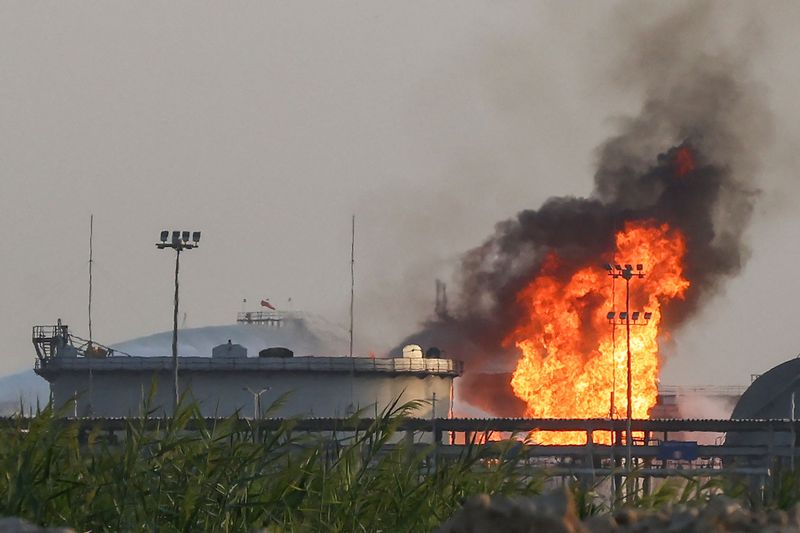
[Financial News] The head of Saudi Arabia's state-run energy company, the world's largest crude oil exporter as of last year, delivered his first in-person speech since the Iran war began this year and warned of a supply shortage. Saudi Arabia estimates that restoring crude oil supplies to normal levels will take at least two years.
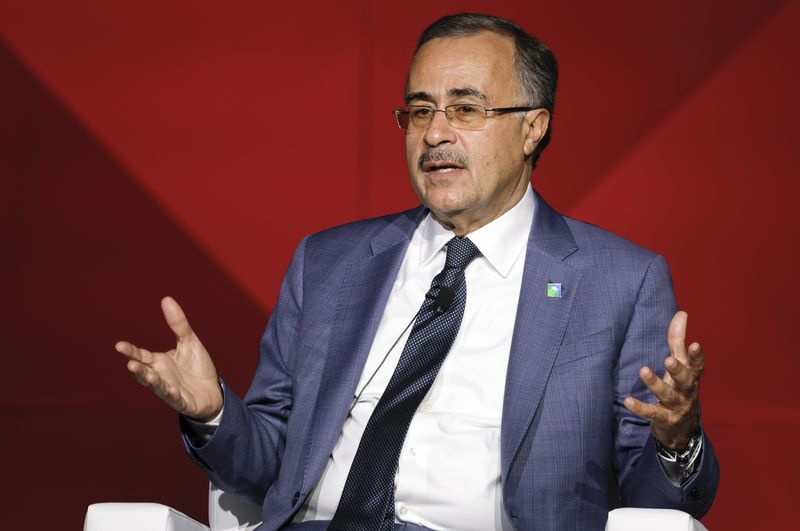
Saudi Aramco said so in a press release posted on its website on the 5th (local time). Amin H. Nasser, CEO of Saudi Aramco, attended the Energy Intelligence Forum in London, United Kingdom, and discussed the impact of the Strait of Hormuz blockade caused by the Iran war on the crude oil market. Saudi Arabia was a major user of the Strait of Hormuz, which handled approximately 25% of global seaborne crude oil transport just before the Iran war began in late February. Saudi Arabia exported an average of 7.2 million barrels of oil per day in February, sending 6.38 million barrels, or 88.6%, through the Strait of Hormuz. After Iran blocked the Strait of Hormuz following the outbreak of war, Saudi Arabia continued exporting through various means, including rerouting shipments through the Red Sea and conducting ship-to-ship transfers that secretly passed through the Strait of Hormuz without Iran's knowledge.
On the 5th, Nasser said, "Pressure on crude oil will intensify until the Strait of Hormuz is fully reopened and confidence is restored." He added, "Even then, it could take up to 2 years to meet demand while replenishing inventories."
He expressed concern that the "system" underpinning global oil supplies "is already under strain." He added, "With few alternatives left for the world to rely on, the buffer capacity supporting supply resilience is frighteningly thin."
Nasser noted that "approximately 3 billion barrels of total oil supply disappeared" after the Iran war. That is equivalent to about half of the crude oil and petroleum products that would normally have been transported through the Strait of Hormuz during the same period. He explained that fully replenishing depleted inventories would be equivalent to generating additional demand of approximately 2 million barrels per day over the next 18 months.
Nasser also pointed out that the shortage in the crude oil market was "not just a problem caused by the energy supply shock in the Strait of Hormuz." He claimed, "The shock was amplified by widespread attacks on land, including Saudi Aramco facilities, and by the situation (attacks by pro-Iran Houthi rebels) in the Gulf of Oman, the Red Sea and the Bab el-Mandeb Strait." He urged, "The international community must act together to protect the free flow of energy and commodities."
Other energy industry leaders attending the event also warned of supply shortages. Sheikh Nawaf Saud Al-Sabah, CEO of Kuwait Petroleum (KPC), said the refined oil shortage resulting from the war amounted to 6 million barrels per day. He stated, "There is not enough global refining capacity to make up for the volumes blocked in the Persian Gulf region of the Middle East."
Ryan Lance, chairman of the U.S. energy company ConocoPhillips, also said global oil demand might not recover until 2028 or 2029. Meanwhile, Tengku Muhammad Taufik, CEO of Malaysia's Petronas, said, "It looks like things will remain chaotic through the end of the year, perhaps even into 2027."
[email protected] Park Jong-won Reporter