Brazilian Financial Markets Rally on Prospects of Bolsonaro Presidential Victory
- Input
- 2026-10-06 03:58:54
- Updated
- 2026-10-06 03:58:54
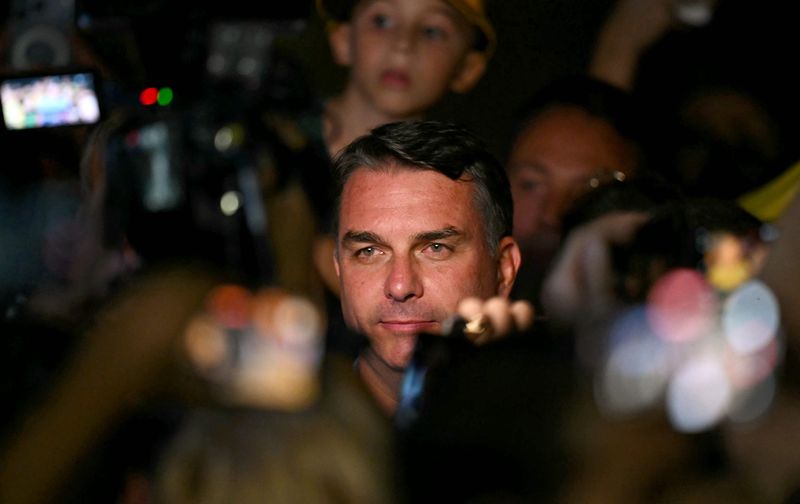
Brazil's currency, stocks and government bond prices all surged on Oct. 5 (local time). The rally was driven by expectations that Flávio Bolsonaro would be elected president and pursue market-friendly reforms aimed at lowering interest rates.
Financial Markets Cheer
According to the Financial Times (FT), the Brazilian real surged 4.8% against the U.S. dollar. The real has appreciated by nearly 10% against the dollar this year, making it the best-performing emerging-market currency.
Brazil's Ibovespa stock index soared 8.70%. The index has jumped 25% in dollar terms this year, slightly outperforming the MSCI Emerging Markets Index.
Yields on Brazil's euro-denominated government bonds fell from 6% to 5.8%. Bond yields move inversely to prices.
Prices for credit default swaps (CDS), the insurance premiums against a default by Brazil and state-owned oil company Petrobras, also fell.
Runoff Victory Nearly Certain
Senator Flávio Bolsonaro won Brazil's first-round presidential election on Oct. 4, defeating President Luiz Inácio Lula da Silva against expectations.
Flávio Bolsonaro, the son of former President Jair Bolsonaro, who is currently in prison, won 47% of the vote in the first round, beating President Lula, who received 45%. His vote share far exceeded the exit polls, increasing the likelihood that he will defeat Lula in the runoff later this month and become Brazil's president. Since South America's largest economy restored democracy in the 1980s, no candidate who won the first round has ever lost the runoff.
In this election, Bolsonaro's Liberal Party swept key regional seats and also won gubernatorial elections. Brazilian voters shifted to the right this time instead of retaining the left-wing Lula administration.
“Expectations Mount That Debt Will Be Cut and Rates Lowered”
This served as a positive catalyst for financial markets.
Investors expect Bolsonaro to reduce fiscal spending more rapidly than the Lula administration if he becomes president. Brazil's fiscal deficit has expanded to nearly 10% of gross domestic product (GDP), while public debt exceeds 80% of GDP. As a result, government bond yields have remained high.
Economists say Brazil's public debt has reached unsustainable levels and point to excessive public spending as the key reason for the country's persistently high interest rates.
Markets expect the Central Bank of Brazil to cut its current 13.75% policy rate if a Bolsonaro administration moves to reduce spending.
Chris Coussillis, an emerging-markets macro strategist at T. Rowe Price, said, "Fiscal credibility matters," and noted, "Brazil is trapped in high interest rates because of its large fiscal deficit and ever-growing public debt." He added that no candidate can freely move to reduce the deficit because fiscal reforms must pass through Brazil's Congress.
[email protected] Song Kyung-jae Reporter