"Bringing 'Assassin(s)' to a parliamentary audit is a gag on creativity" ... Lee Jae-jung Opposes Director Hur Jin-ho's Attendance
- Input
- 2026-10-06 06:00:00
- Updated
- 2026-10-06 06:00:00
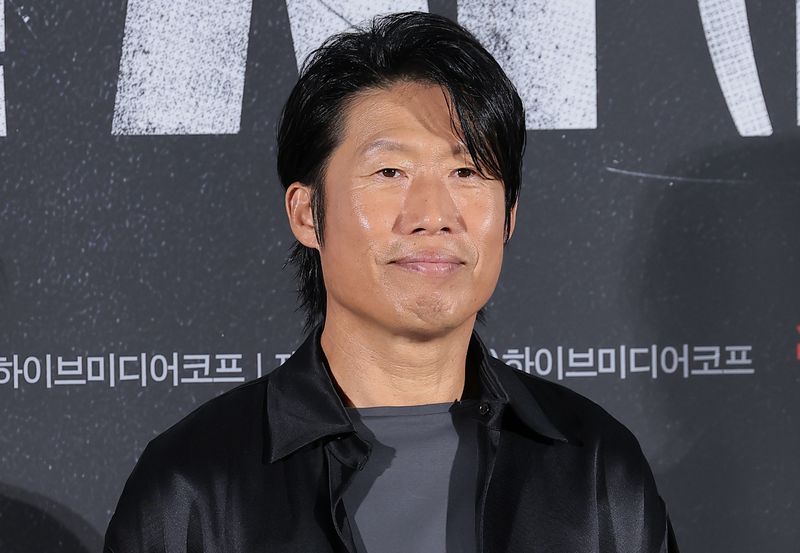
[Financial News] Lee Jae-jung, chair of the Culture, Sports and Tourism Committee of the National Assembly, opposed the People Power Party's demand to summon director Hur Jin-ho and others as witnesses or reference witnesses for a parliamentary audit concerning the film 'Assassin(s).'
Lee maintains that addressing the controversy over historical distortion in a parliamentary audit could itself infringe on creative freedom. A standoff has also continued between the People Power Party, which is calling for Hur's attendance at the audit, and the Democratic Party of Korea (DPK), which opposes it.
Lee wrote on social media on the 5th, "Bringing this film into the National Assembly audit hall is also a gag on creativity and outrageous violence against creative work," adding, "As chair of the Culture Committee, I intend to stand firm in upholding principle."
The People Power Party had earlier demanded that Hur Jin-ho attend the audit. During a full committee meeting of the Culture, Sports and Tourism Committee on the 29th of last month, when lawmakers were approving the list of witnesses and reference witnesses for the audit, People Power Party lawmaker Kim Seung-soo criticized 'Assassin(s)' as "a malicious and immoral historical distortion film" and requested that Hur be included.
Kim said that if it was difficult to designate Hur as a witness, he should at least be invited as a reference witness. He also cited the case of the director of the film 'The Birth of Korea,' who attended last year's audit as a reference witness. However, the ruling and opposition parties failed to reach an agreement, and Hur was not included on the list approved that day.
Regarding 'Assassin(s),' some conservatives have criticized the film for implying that former President Park Chung Hee may have been involved in the 1974 shooting of former First Lady Yuk Young-soo. Lee said she had watched the film herself, adding, "Violent attacks against the actors and creators involved in the film, going beyond all bounds, have continued one after another, and I decided that the political community's excesses could no longer be tolerated, so I went to the theater alone."
Lee also offered an assessment of the film that differed from the People Power Party's criticism. She wrote, "This film clearly did not even place the possibility of President Park's involvement within the scope of cinematic imagination," and asked, "Who could possibly make a beloved wife a scapegoat for power?" She added that scenes featuring former President Park Chung Hee and his wife lasted only a few dozen seconds. If the filmmakers had intended to convey such a message, she argued, they would have needed supporting explanations and narrative development.
Lee asked, "Did they dislike the long-term dictatorship symbolized by the emergency measures, the abuses of the Korean Central Intelligence Agency, suppression of the press, and the hidden side of the 1965 Korea-Japan treaty being mentioned publicly again?" Regarding a proposal for all People Power Party lawmakers to ask an international film festival to withdraw the screening, she said, "Let's stop embarrassing the international community here."
Lee continued, "Those who criticize this film are the ones insulting President Park Chung Hee themselves."
[email protected] Han Seung-gon Reporter