Falling Approval Ratings and Housing Crisis: Spain's Prime Minister Pedro Sánchez Calls Snap General Election for Next Month
- Input
- 2026-10-05 18:43:03
- Updated
- 2026-10-05 18:43:03
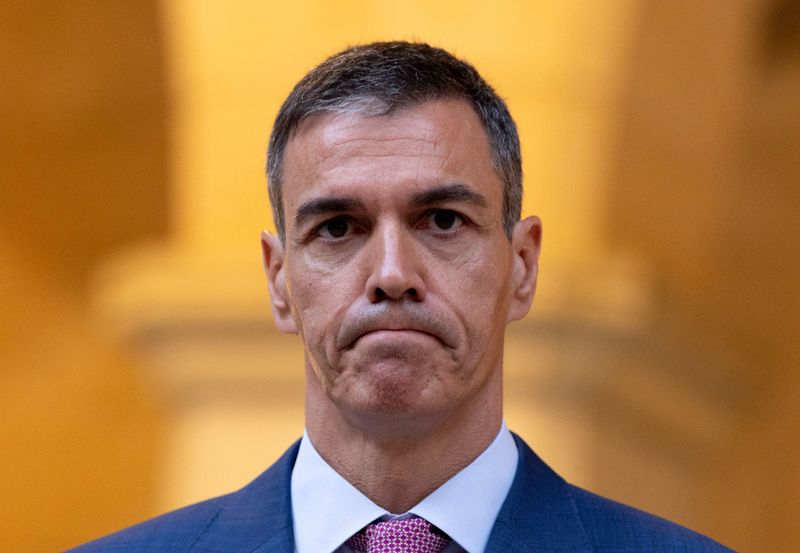
[Financial News] Spain's Prime Minister Pedro Sánchez unexpectedly announced on the 5th local time that the country will hold a snap general election on the 29th of next month. The move is seen as a bold attempt to regain political momentum amid a housing crisis sparked by the forced eviction of an 87-year-old woman, large-scale protests and political setbacks within and outside his administration and party.
Sky News and other foreign media reported that Sánchez announced the election in a televised address, saying, "Now is the time for the Spanish people to decide for themselves what future they want for themselves and their country." He stressed that a broad progressive alliance must be formed to resolve the country's challenges. At the same time, he acknowledged that "some members of the social majority are currently feeling dissatisfied," admitting to some failures to fulfill campaign pledges and other mistakes.
The snap election announcement is directly linked to the housing crisis that has recently shaken Spain. In Madrid's affluent Retiro district, the investment fund UrbaHestión forcibly evicted an 87-year-old woman in just 30 minutes in an effort to sharply raise the rent. The woman was taken to a hospital on a stretcher, prompting tens of thousands of angry citizens to take to the streets in more than 50 cities nationwide. Clashes also broke out in some areas, including Valencia, where police fired tear gas and rubber bullets.
The government pursued an emergency bill to protect tenants, but the legislation was rejected in parliament on the 2nd after opposition from right-wing parties. A lawyer for the evicted woman, Maricarmen Abascal, said, "She should never have been evicted," adding, "I hope this incident will serve as a catalyst for a social response to the housing crisis." The investment fund has presented a preliminary agreement that would allow her to return if she accepts its conditions.
Political experts believe the election will carry significant risks for Sánchez. The Spanish Socialist Workers' Party (PSOE), led by Sánchez, is trailing opposition parties in opinion polls. The most likely scenario is for the People's Party (PP) to form a coalition with support from the far-right Vox. If that happens, it would mark the first time a far-right party has joined Spain's government since the end of Francisco Franco's dictatorship and the country's transition to democracy.
Sánchez, who has been in power since 2018 and is considered one of Europe's longest-serving leaders, has led a minority coalition government with the left-wing Sumar alliance since 2023. He is now facing a range of domestic and international challenges, including legal allegations involving his wife and older brother, scandals within his party and the influx of tens of thousands of Moroccan migrants into Ceuta, a North African territory.
[email protected] Yoon Jae-jun Reporter