Fears of a French Fiscal Crisis Push Euro to 17-Month Low; Yen Continues to Rise
- Input
- 2026-10-05 18:23:42
- Updated
- 2026-10-05 18:23:42
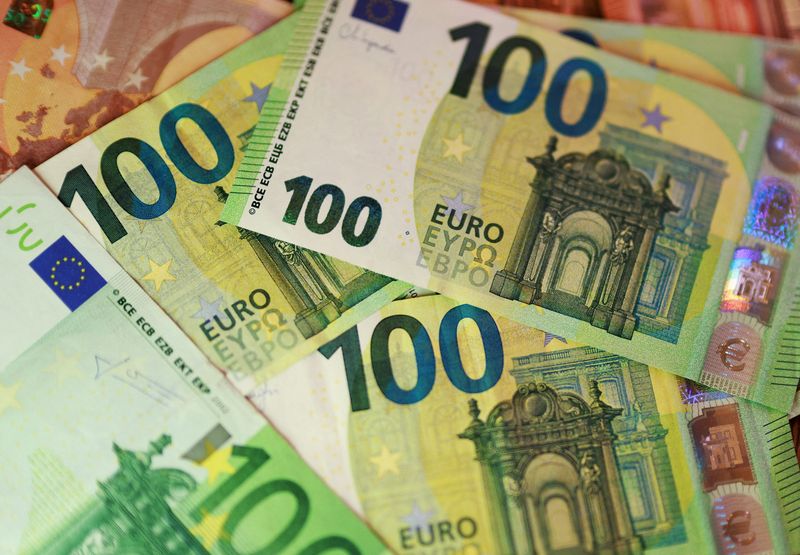
[Financial News] Fears are spreading that the Eurozone's sovereign debt crisis could recur as concerns grow over France's ability to control its fiscal deficit and a sharp sell-off in the sovereign bond market last week continues. As a result, the euro fell to a 17-month low against the U.S. dollar on the 5th local time.
French government bonds have come under heavy pressure amid expectations of higher policy interest rates and political uncertainty ahead of the 2027 presidential election. This has fueled market doubts over whether France, the Eurozone's second-largest economy, can put its public finances on a sustainable path.
The yield spread between French government bonds, which represent a risk premium, and German government bonds (Bunds), considered a safe-haven asset, widened to around 150 basis points (bp) on the 2nd. That was the highest level since the European sovereign debt crisis in 2011. The spread subsequently narrowed somewhat to 140 bp, but recently rose by another 5 bp to 145.50 bp.
Hauke Siemssen, a strategist at Commerzbank, said, "Recent movements in the sovereign bond market are becoming increasingly concerning and are reminiscent of a sovereign debt crisis," adding, "A prime example was the acceleration of the sell-off in French government bond (OAT) spreads on the 2nd, along with a flight to the safety of German government bonds." He added, "The sell-off in French bond spreads is becoming self-reinforcing and creating a dangerous market environment."
The euro fell as low as $1.1161 in Asian trading, its lowest level since May 2025, before trading at $1.1118, down 0.62%. On the 2nd, the euro posted its fourth consecutive weekly decline against the U.S. dollar, recording its sharpest drop in about four months.
Experts noted that France's fiscal problems are serious in their own right, but that resolving them has become even more difficult because of the upcoming presidential election and a hung parliament in which compromise is difficult. Plans to cut the budget, which have worsened funding shortages in the education sector, are provoking nationwide backlash and protests.
The euro's appeal as an alternative currency had already weakened following the U.S. Federal Reserve's September rate hike, while the sharp widening of French bond spreads last week dealt it another blow.
According to the CME FedWatch tool, market participants sharply raised the probability that the Fed would hold interest rates steady in October, to 78% from 36% a week earlier. Expectations for another rate hike in December and two hikes in the first half of 2027 remain unchanged.
The dollar index, which measures the U.S. dollar against six major currencies, rose 0.39% to 102.33. It climbed as high as 102.53 intraday, its highest level since April 10, 2025.
The Japanese yen rose 0.10% to 157.67 yen per dollar, supported by verbal intervention from authorities and its status as a safe-haven asset.
Anxiety among investors worried about rising government bond yields and deteriorating public finances eased somewhat after Japanese Prime Minister Sanae Takaichi reaffirmed her commitment to fiscal consolidation.
In addition, the acceleration in Tokyo's core consumer price index (CPI) inflation in September, announced on the 2nd, reached its fastest pace in 10 months, strengthening the case for another rate hike by the Bank of Japan (BOJ).
[email protected] Yoon Jae-jun Reporter