Can One Shot Make You 10 Years Younger? ... Growth Hormone’s “Rejuvenation Experiment” [Professor Ahn Cheol-woo’s Hormone Encyclopedia]
- Input
- 2026-10-17 07:00:00
- Updated
- 2026-10-17 07:00:00
What happens when growth hormone is completely depleted? The most extreme cases can be seen in people who lose pituitary function after a brain injury, or in patients who develop growth hormone deficiency as a result of brain tumor surgery or radiation therapy.
These patients experience very rapid overall physical deterioration. Their muscle mass and bone density decline to the point that daily life becomes impossible, and cardiovascular disease can lead to emergencies. They may also develop mental health problems such as fatigue, anxiety and depression. Without growth hormone replacement therapy, they die within just a few months to a few years.
Of course, the natural decline in growth hormone in old age is not this severe. It usually shows up as gradually declining muscle mass, slower walking and movement, and reduced strength. Bone density also falls, weakening the bones. Fat accumulates around the abdomen and waist even when people are not eating particularly much. They catch colds frequently and are prone to inflammation. They become short of breath after only a little activity. They have trouble concentrating on conversations, and their memory grows hazy. Even after sleeping, they feel tired and do not regain their energy. These are all symptoms we call “aging.”
Of course, it is difficult to say that growth hormone alone causes these symptoms. In old age, not only growth hormone but also sex hormones such as testosterone and estrogen decline sharply, while the secretion of melatonin and insulin also decreases. We must also consider that all the body’s organs and tissues weaken with age. As a result, by their 60s, everyone lives with one or two illnesses. High blood pressure, high cholesterol, diabetes, osteoporosis, arthritis, heart disease, lung disease and thyroid disease are all common in old age.
Illness is a natural result of aging, as is a decline in hormone secretion. This aging cannot be stopped. But even as aging progresses, having more growth hormone secreted would clearly help people maintain their youth and health.
In 1990, a research team at the University of Wisconsin Medical School hypothesized that growth hormone could slow aging and conducted a clinical trial in which healthy older adults were given growth hormone. Until then, growth hormone research and treatment had been carried out only on children or adults diagnosed with growth hormone deficiency. This was the first trial to administer growth hormone to people who were not deficient in it but whose levels had naturally declined with age.
The research team recruited 21 men aged 61 to 81 whose plasma levels of insulin-like growth factor 1 were markedly lower than those of young adults. Insulin-like growth factor 1 is another hormone secreted by the liver in response to growth hormone. Unlike growth hormone, which is secreted in pulses, it maintains a steady concentration in the blood, making it a reference for assessing growth hormone levels.
The researchers divided them into two groups. For six months, one group received subcutaneous injections of 0.03 milligrams of growth hormone per kilogram of body weight three times a week, while the other group received nothing. The researchers then measured changes in lean body mass (body weight excluding fat), fat mass, skin thickness (the combined thickness of the epidermis and dermis), bone density and other measures.
The group that received nothing showed no changes, while in the group given growth hormone, insulin-like growth factor 1 levels rose to those of young adults and fat mass fell by 14.4%. Lean body mass also increased by 8.8%, bone density by 1.6% and skin thickness by 7.1%. Simply administering growth hormone produced effects equivalent to becoming 10 to 20 years younger: stronger bones, weight loss and firmer skin.
In 2003, a research team in the Department of Psychiatry and Behavioral Sciences at Washington University in the United States conducted a similar experiment. Instead of injecting growth hormone directly, however, they chose to inject growth hormone-releasing hormone to stimulate the pituitary gland to secrete growth hormone. They divided 60 men and women aged 65 and older into two groups and conducted the experiment over five months. In the group given growth hormone-releasing hormone, growth hormone secretion during sleep increased by 35%, and blood levels of insulin-like growth factor 1 rose by an average of 50% in men and 20% in women. These levels were comparable to those in healthy adults in their 30s. At the same time, participants’ fat mass decreased and their cognitive abilities improved.
In 2012, the same research team reported more promising findings on the effect of growth hormone on cognitive abilities. They divided 137 men and women aged 55 to 87 into two groups. For a total of 20 weeks, one group received a daily subcutaneous injection of 1 milligram of growth hormone-releasing hormone, while the other received placebo injections. Of the 137 participants, 61 had mild cognitive impairment; the rest were healthy older adults with normal cognitive abilities.
The results showed that the healthy older adults had significantly better cognitive abilities than those in the placebo group in areas including verbal memory, task performance and concentration. The older adults with mild cognitive impairment did not improve to a normal level, but their results were still considerably better than those of the placebo group. The findings suggested that growth hormone therapy might help prevent dementia or slow its progression.
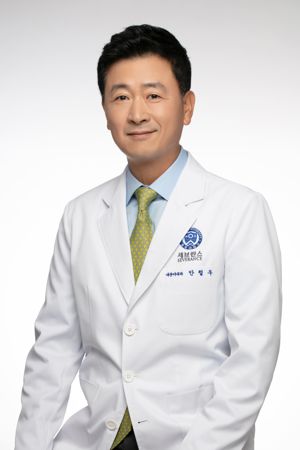
/Professor Ahn Cheol-woo, Department of Endocrinology, Gangnam Severance Hospital
[email protected] Jeong Myeong-jin, Medical Correspondent Reporter