Recommended by a U.S. Military Physician Who Was Once His Patient, Dr. Kang Yoon-sik Takes the Podium at a U.S. Military Symposium
- Input
- 2026-10-05 17:10:51
- Updated
- 2026-10-05 17:10:51
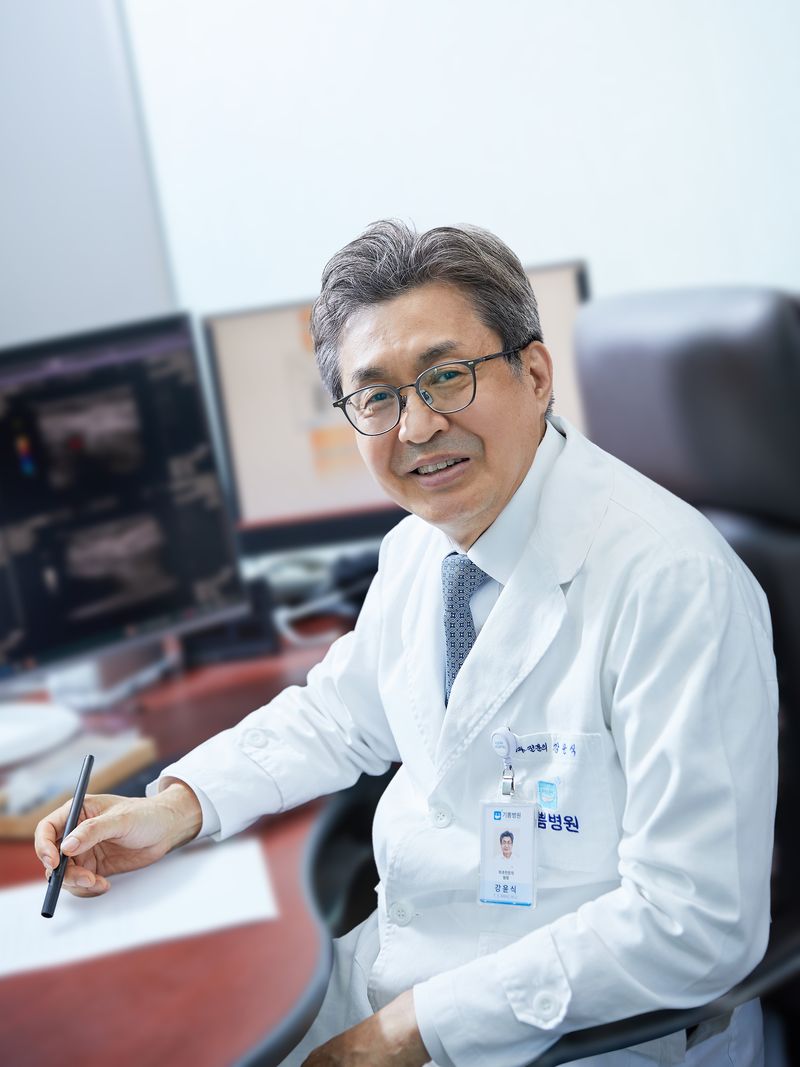
[Financial News] A U.S. Air Force physician stationed at Osan Air Base recommended the surgeon who operated on him for an educational session with fellow military physicians. As a result, Kang Yoon-sik, director of Gibbeum Hospital, took the podium at the 38th Parallel Healthcare Training Symposium held at Camp Humphreys on the 1st.
The family medicine military physician underwent hernia surgery performed by Dr. Kang at Gibbeum Hospital in Seocho-gu, Seoul. He later recommended Dr. Kang to the event organizers, saying he wanted to introduce the surgical technique to his colleagues as well.
Now in its 76th year, the symposium began in 1951 during the Korean War, when doctors from Mobile Army Surgical Hospitals (MASH) gathered to share new treatment methods. Today, it serves as a venue where U.S. military medical personnel from the Asia-Pacific region earn educational credits and interact with Korean medical professionals.
Dr. Kang introduced Kang Repair, a hernia surgery technique that does not use mesh, or an artificial surgical net. He had also performed mesh-based surgeries for more than a decade. The turning point came in 2012, when removing mesh from a friend who had suffered after mesh surgery led him to rethink the procedure.
"That was when I saw what the mesh becomes inside the body."
Before the military medical personnel, Dr. Kang emphasized life after surgery, particularly a soldier's ability to continue serving. His point was that, in addition to checking for recurrence, doctors must determine whether a soldier who has undergone surgery can return to daily life and training.
"The real question is whether that soldier can continue to carry a pack and run."
In response to the view that mesh is necessary to prevent recurrence in young and physically active patients, Dr. Kang presented the surgical outcomes of Kang Repair. According to the presentation, the reoperation rate was 0% among 615 patients under 50 who underwent surgery without mesh. He nevertheless cautioned against overinterpreting the results, adding, "A rate of zero does not mean zero risk."
During the question-and-answer session, Dr. Kang stood alongside his son, Dr. Kang Hyun-seok, who helped develop the Kang Repair technique, and answered questions from the attendees. A rehabilitation medicine physician expressed interest, saying that many soldiers seek treatment for pain after mesh surgery. A surgeon asked about the risks of mesh-removal surgery.
Dr. Kang also emphasized that Kang Repair can be performed under local anesthesia. He explained that this could provide a treatment option for elderly patients who may find general anesthesia burdensome.
[email protected] Jung Myung-jin, medical correspondent Reporter