Republic of Korea Joint Chiefs of Staff (ROK JCS) Urges North Korea to "Immediately Remove Mines Violating the MDL"; Mines Detonated and Removed Today
- Input
- 2026-10-05 16:48:01
- Updated
- 2026-10-05 16:48:01
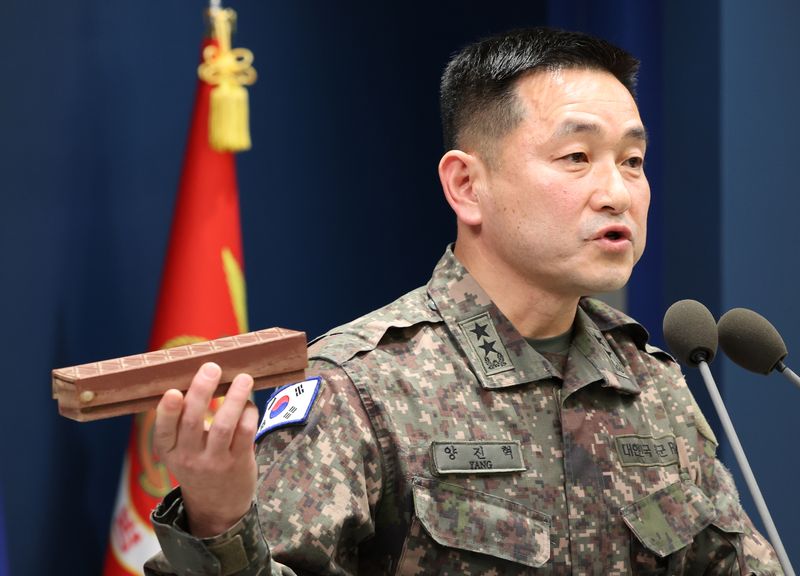
The Republic of Korea Joint Chiefs of Staff (ROK JCS) announced the final findings of its investigation into the mine explosion in the Korean Demilitarized Zone (DMZ) involving the 25th Infantry Division at the Ministry of National Defense in Yongsan-gu, Seoul, on the 5th. It also disclosed the final investigation results, concluding that the mine that exploded on the 21st had been deliberately planted by the North Korean military.
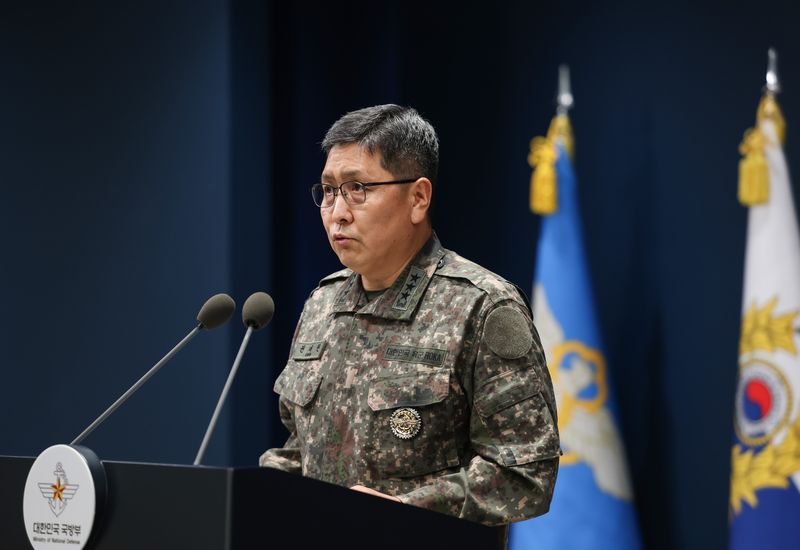
ROK JCS Deputy Chairman Kwon Dae-won said, "At around 12:51 p.m., we removed North Korean military mines south of the MDL that the United Nations Command (UNC) had recognized under the Korean Armistice Agreement."
Kwon also said, "We will continue mine-removal operations," while strongly urging, "North Korea must offer a sincere apology and immediately remove the mines that violate the Korean Armistice Agreement."
The ROK JCS also concluded that the mines found south of the MDL had been deliberately planted by the North Korean military. The mine discovered during the operation on September 21 had been buried approximately 5 to 10 centimeters underground, while a newly discovered mine found during the final investigation on September 29 was confirmed to have been buried approximately 3 centimeters underground.
Kwon said, "After examining the crater radii and distances between the craters of the mines that were found and exploded, we ultimately determined that they were typical North Korean mines that had been planted, not displaced mines." The UNC also said that the mines had been positioned artificially and assessed that they had been installed more than 12 months earlier.
The UNC and the joint intelligence investigation team determined that mines had been planted at three locations within 10 meters south of the MDL, constituting violations of the Korean Armistice Agreement.
Given the importance of the matter, the South Korean military conducted multiple examinations through the National Forensic Service.
1. Brown foreign matter and thermosetting resin components were found, confirming the mine as a North Korean "resin antipersonnel mine." A comparative analysis of fragments recovered from the injured individuals and a North Korean resin antipersonnel mine previously recovered from the Imjin River also reconfirmed that they were identical.
[email protected] Kim Kyung-soo, Reporter
[email protected] Kim Kyung-soo Reporter