Prosecutor in Yuk Young-soo Shooting Case Laments 'Assassin(s)'... "I Never Thought a Film Seemingly Modeled on North Korea's Claims Would Come Out"
- Input
- 2026-10-05 16:31:52
- Updated
- 2026-10-05 16:31:52
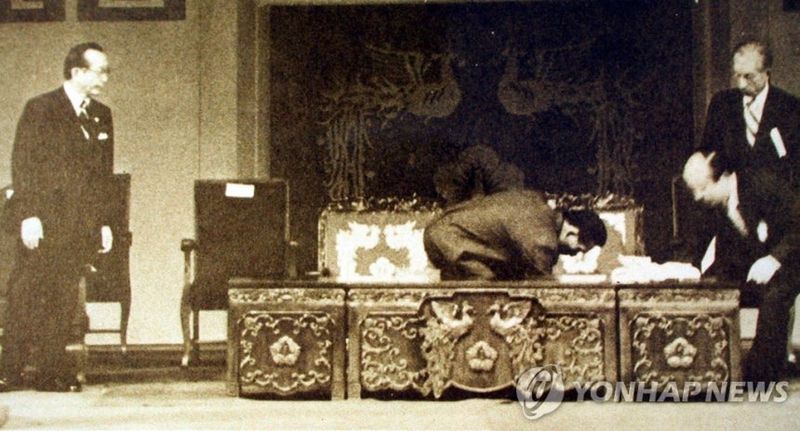
[The Financial News] As the historical distortion controversy surrounding the film 'Assassin(s)' has grown into a debate over freedom of expression and responsibility, a prosecutor who directly investigated Mun Se-gwang in connection with the 1974 shooting of Yuk Young-soo criticized the theory that a hidden force was behind the incident, as portrayed in the film. He said, "Even if creative works are protected by freedom of expression, they should ultimately be subject to the judgment of the courts."
Lawyer Kim Young-soo, who was a prosecutor in the Public Security Division of the Seoul District Prosecutors' Office and participated in the Special Investigation Headquarters at the time, recently shared his views in a phone interview with Yonhap News Agency on the investigation and the controversy surrounding 'Assassin(s)'.
Regarding the theory about the incident's mastermind presented in the film, Kim said, "The facts of the case had already been fully established through an on-site inspection." He added, "It was an incident in which Mun Se-gwang boarded the North Korean ship Mangyongbong-ho, received ideological indoctrination and instructions from an agent, was indoctrinated, and attempted to assassinate President Park Chung Hee," maintaining that Mun acted alone.
Kim's decision to speak publicly about the case after 52 years was influenced by the theory that resurfaced following the film's recent release. In an interview with Yonhap News Agency, he said, "I never even imagined that a film like this would come out," adding, "It is worrying for the Republic of Korea that an erroneous story seemingly modeled on claims from North Korea is spreading."
He also shared his memories of the investigation and trial at the time. Kim said, "The investigative authorities held daily briefings, and until the trial, no newspaper raised questions about flaws in the investigation or suggested that it was suspicious," adding, "I was shocked that such a strange story suddenly emerged."
Kim recalled that investigating Mun Se-gwang was not difficult. He said Mun "was a true believer, so he did not hide the facts and the investigation was not difficult," and told Yonhap News Agency that Mun sobbed shortly before his execution, saying, "I was deceived."
According to Kim, Mun Se-gwang initially saw the crowd outside the transport vehicle and thought, "The people in the southern half are supporting the 'righteous cause.'" He later learned that the public's anger was directed at him and became deeply discouraged.
Kim attributed Mun Se-gwang's ability to enter the venue to a security failure at the time. He described it as an "absurd security failure," explaining that Mun, who did not have an entry pass, should have been stopped, but the security team and police failed to respond properly because he spoke Japanese. The chief of the intelligence division at Seoul Jungbu Police Station was brought to trial on charges of dereliction of duty in connection with the security responsibility.
[email protected] Han Seung-gon Reporter