As Interest Rates Top 3%, Takaichi Mentions "Market" Eight Times: "We Will Cut Taxes While Protecting Fiscal Discipline"
- Input
- 2026-10-05 15:28:01
- Updated
- 2026-10-05 15:28:01
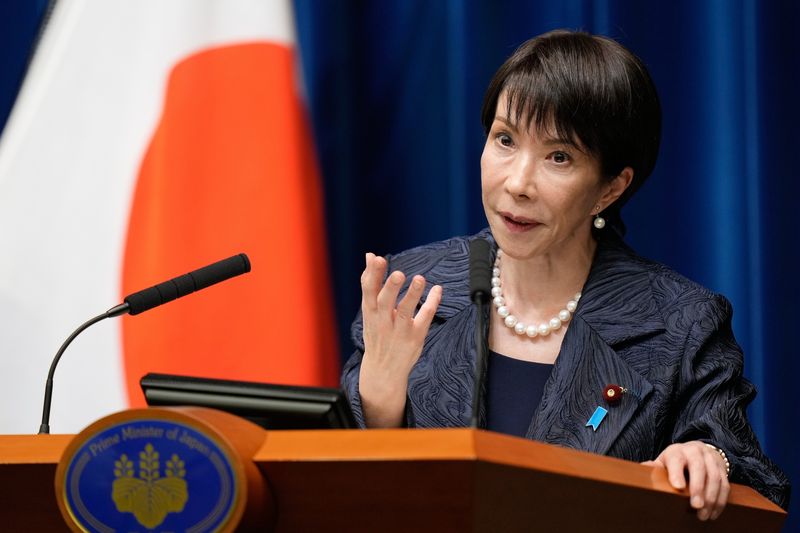
[Financial News Tokyo = Correspondent Seo Hye-jin] Japanese Prime Minister Sanae Takaichi, approaching the first anniversary of her inauguration, said on the 5th that she would pursue a cut in the consumption tax on food and invest in growth while maintaining fiscal soundness. With long-term interest rates topping 3% ahead of her first anniversary in office, she promised tax cuts to households and fiscal discipline to financial markets.
In a policy speech delivered during a House of Representatives plenary session that day, Takaichi said, "We will not postpone necessary policies and reforms, and will achieve both a strong economy and sustainable public finances." She explained that her flagship policy of 'responsible proactive fiscal policy' aims to increase people's take-home income while ensuring fiscal sustainability.
Her message to the markets stood out in the speech. According to Yomiuri Shimbun, Takaichi mentioned "market" eight times. As interest rates rose and the yen weakened, she made a concerted effort to ease investors' concerns about fiscal expansion.
She said the government would appropriately manage annual government bond issuance after taking into account the economy, prices, tax revenues, interest rates and interest costs. If the market moves contrary to expectations, the government will respond swiftly and explain its policies and results thoroughly, she said, adding, "We will straightforwardly enhance market confidence."
The backdrop is a sharp rise in government bond yields. According to Nihon Keizai Shimbun, Japan's 10-year government bond yield reached 3.115% on the 25th of last month, its highest level in roughly 30 years. That was nearly double the 1.655% recorded when Takaichi's administration took office on Oct. 21 last year.
The Bank of Japan's (BOJ) rate hikes coincided with rising oil prices amid tensions in the Middle East and concerns about fiscal expansion. The BOJ has raised rates three times since the administration took office, lifting its policy rate from 0.50% to 1.25%. Requests submitted by ministries for next year's general account budget also reached a record high of approximately 143 trillion yen, leaving persistent concerns about increased government bond issuance.
Takaichi pledged to steadily lower the ratio of central and local government debt to gross domestic product (GDP). She also said subsidies, government funds and tax breaks would be reviewed, adding, "We will not continue programs with minimal impact simply out of inertia."
She did not back down on tax cuts. Takaichi said the government would pursue a reduction in the consumption tax on food, the biggest issue of the current extraordinary Diet session, along with income-based payments to ease the burden of high prices. "I want to give households even a little more breathing room," she said, asking for cooperation on the grounds that opposition parties had also called for tax cuts.
Regarding funding, she stressed, "We will secure it without relying on deficit-financing bonds," adding, "There is no need to worry." She did not, however, disclose specific funding measures. How the government manages bond issuance while pursuing increased spending and tax cuts is expected to become a key issue in Diet deliberations.
The government also plans to accelerate growth investment. Takaichi said Japan's economy is at a pivotal juncture that will determine whether it can enter a virtuous cycle of growth, and pledged to use large-scale, long-term fiscal spending to encourage corporate investment.
The Japanese government will draw up the 'Japan Growth Strategy Implementation Plan' by the end of the year, outlining investment priorities for the next five years centered on 17 strategic sectors and 62 products. Next spring, it will release a 'Domestic Investment Map' detailing projects by region. It also plans to diversify sources and transportation routes for crude oil in preparation for instability in the Middle East.
On diplomacy, Takaichi said she would "further strengthen relations with South Korea across a wide range of fields." She described China as an "important neighboring country" and said Japan would pursue dialogue while "saying what needs to be said" about military activities and coercive measures. She also reaffirmed her support for the International Criminal Court (ICC), against which the Trump administration is tightening sanctions.
Takaichi said she hoped to achieve a reduction in the number of House of Representatives seats during the current Diet session. She also urged discussions on constitutional revision. Meanwhile, the 222nd extraordinary Diet session, which opened that day, will hold questions from leaders of the ruling and opposition parties from the 7th to the 9th.
[email protected] Seo Hye-jin Reporter