Taxes, Home Prices and U.S. Investment: Economic Parliamentary Audit to Scrutinize Lee Jae Myung Administration's Policies
- Input
- 2026-10-05 15:11:23
- Updated
- 2026-10-05 15:11:23
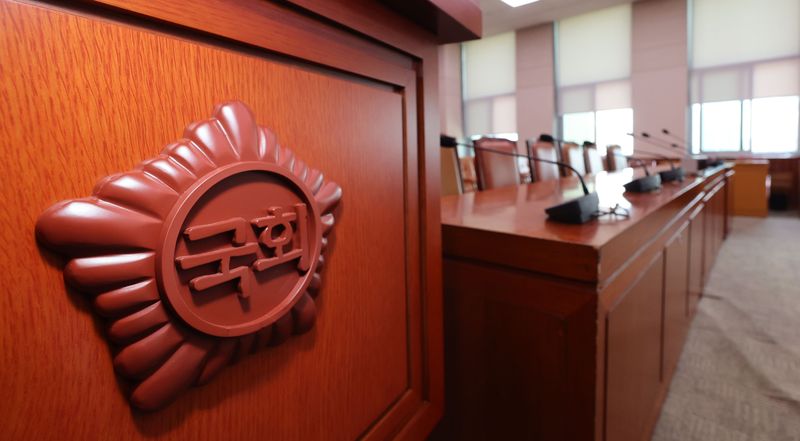
According to political sources on the 5th, this is the first Parliamentary Inspection of the Administration since the Ministry of Economy and Finance and the Ministry of Planning and Budget were split. The Ministry of Economy and Finance is responsible for economic policy and taxation, while the Ministry of Planning and Budget oversees budgets and fiscal management. Accordingly, this year's inspection is expected to divide issues by jurisdiction, focusing on the roles and responsibilities assigned to each ministry following the organizational restructuring.
At the Finance, Economy and Planning Committee's inspection of the Ministry of Economy and Finance on the 6th, a real estate tax reform proposal will come under scrutiny. The government initially sought to reduce the basic deduction for non-resident single-home owners from 1.2 billion won to 900 million won, but decided to maintain the current level after facing backlash. Its plan to raise the ceiling on comprehensive real estate tax burdens from 150% to 200% also fell through. Ahead of the National Assembly's review of tax bills, the ruling and opposition parties are expected to clash over the rationale of an owner-occupancy-centered tax system and the reasons behind the government's withdrawal of its proposals.
The use of excess tax revenue will be the central issue at the Ministry of Planning and Budget's inspection on the 8th. The government and ruling party are locked in a fierce confrontation with the opposition over the operation and oversight of the Future Response Fund, which has been allocated 162.3 trillion won. Following a revised tax revenue estimate, the amount that can be deposited into the fund has increased by 56.2 trillion won, bringing its projected size to as much as 200 trillion won. The enlarged Future Response Fund is therefore considered a potential flashpoint in the Ministry of Planning and Budget's inspection.
Both the ruling and opposition parties are emphasizing the need to ensure the commercial viability of investment in the United States. This is because Korea is investing $350 billion in the United States, making the prospects for recovering future returns crucial. The parties are expected to question the Ministry of Economy and Finance over whether the recently finalized investment in a Texas gas-fired combined-cycle power plant has secured commercial viability. They are also expected to examine how much profit can be generated from the second and third investments.
Questions about investment in the United States are also expected at the Trade, Industry, Energy, SMEs and Startups Committee's inspection of the Ministry of Trade and Industry on the 6th. The background behind selecting the Texas gas-fired combined-cycle power plant development project as the first U.S. investment project, as well as whether it has secured commercial viability, will be key areas of scrutiny.
The conservative camp is also expected to launch an offensive targeting the government's three flagship megaprojects. In particular, the suitability of the site for the 800-trillion-won Honam semiconductor cluster investment is expected to come under scrutiny. Conservatives have repeatedly argued that Honam's current water and power infrastructure is inadequate for carrying out the project.
Home prices will be the biggest issue at the Land, Infrastructure and Transport Committee's inspection of the Ministry of Land, Infrastructure and Transport on the 7th. According to the Korea Real Estate Board (KREB), apartment prices in Seoul had risen for 86 consecutive weeks through the fourth week of September, surpassing the record of 85 weeks set during the Moon Jae-in administration. The cumulative increase was 17.6%, more than double the 7.7% recorded at that time. The ruling and opposition parties are expected to engage in a blame game over the surge in housing prices in the Seoul metropolitan area since the Lee Jae Myung administration took office.
The ruling and opposition parties are also expected to clash over how to increase housing supply. The ruling party advocates expanding supply in the Seoul metropolitan area with a focus on public rental housing. The opposition, however, argues that public rentals alone have limitations and that private rentals must be promoted.
The conflict between the government and ruling party and Oh Se-hoon, the People Power Party-affiliated mayor of Seoul, over Yongsan Park is another major issue for the Land, Infrastructure and Transport Committee's inspection. The Ministry of Land, Infrastructure and Transport proposes building housing for young people and newlyweds only on damaged land within Yongsan Park, while Seoul is maintaining its position that this is absolutely unacceptable. The effectiveness of the Tancheon Water Recycling Center, which Mayor Oh proposed as an alternative to Yongsan Park, is also expected to become a subject of debate.
At the inspection of the Korea Land and Housing Corporation (LH) on the 12th, questions are expected to continue over the separation of its functions. The LH union has been protesting by holding a series of rallies.
The National Policy Committee, which oversees the financial and securities sectors, is expected to engage in a blame game over the process of introducing single-stock leveraged exchange-traded funds (ETFs), including the 'Sam-Hynix' product, which shook the domestic stock market in the first half of the year, at its financial-sector inspection on the 8th.
The government and ruling party are expected to acknowledge some policy missteps while emphasizing that the products were introduced to help stabilize the exchange rate. Their argument is that single-stock leveraged ETFs, which had previously been available only overseas, were introduced urgently in an effort to stabilize the exchange rate after it surged as high as 1,561.5 won.
The conservative camp, on the other hand, is expected to criticize the introduction process for single-stock leveraged ETFs, arguing that inadequate policy impact assessments caused the domestic stock market to repeatedly swing wildly. It is also expected to continue its offensive against the government's financial and securities policies, claiming that individual investors suffered massive losses as a result.
An AI-driven hacking incident at banks that emerged just before the Parliamentary Inspection of the Administration has also become an issue for the National Policy Committee. Park Sang-hyuk, the Democratic Party of Korea's committee secretary on the National Policy Committee, said he would summon bank chiefs as witnesses to hold them accountable for commercial banks' poor protection and management of personal information. Accordingly, whether additional witnesses will be approved for questioning during the inspection is also drawing considerable attention.
[email protected] Kim Hyeong-gu, Seo Young-jun, and Jeong Gyeong-su Reporter