Seoul Apartment Transactions Skew Toward Low- and Mid-Priced Homes After Tax Reform; Share Priced at 1.5 Billion Won or Less Nears 80%
- Input
- 2026-10-05 15:09:45
- Updated
- 2026-10-05 15:09:45
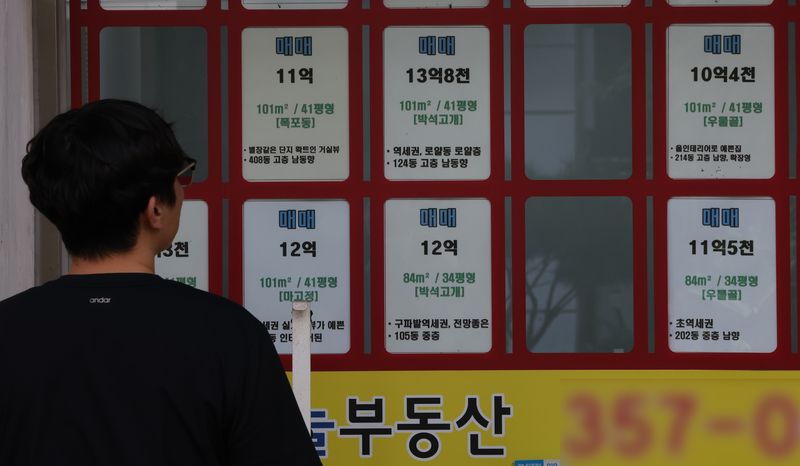
[Financial News] Following the government's announcement of the August 3 tax reform proposal, eight out of every 10 Seoul apartment transactions involved homes priced at 1.5 billion won or less. In particular, the share of transactions priced at 600 million won or less, which are eligible for low-interest government policy loans such as first-time homebuyer financing, rose sharply.
According to the Ministry of Land, Infrastructure and Transport's real transaction price system on the 5th, apartments in Seoul contracted since August and priced at 1.5 billion won or less accounted for about 79% of transactions, excluding canceled contracts and purchases by public institutions.
The share of transactions priced at 1.5 billion won or less averaged 73.3% during the 10 months before the October 15 Real Estate Measures, from December 2024 to September 2025. It then rose to 76.8% during the 10 months through July this year, from October 2025 to July this year.
The shift appears to have resulted from buyers concentrating on apartments priced at 1.5 billion won or less after the October 15 Real Estate Measures reduced mortgage limits. Under the measures, the maximum mortgage was lowered to 600 million won for homes valued at 1.5 billion won or less, 400 million won for homes priced above 1.5 billion won and up to 2.5 billion won, and 200 million won for homes priced above 2.5 billion won.
In addition, after the August 3 tax reform proposal, which centers on raising taxes on ultra-high-priced homes, more urgent-sale listings priced below market value appeared in the Gangnam area and prices fell. Buying demand for low- and mid-priced apartments, however, has remained steady. The trend is interpreted as a result of rental demand shifting to home purchases as rental listings in outlying Seoul have become scarce, while such homes face relatively fewer lending restrictions.
The share of transactions priced at 600 million won or less, which are eligible for government policy loans such as first-time homebuyer financing, reached 25% of all transactions, or four out of 10. Compared with 17.0% before the October 15 Real Estate Measures and 20.5% from after the measures through July this year, the increase accelerated after the tax reform proposal was announced.
There were differences by price even among transactions priced at 1.5 billion won or less. The combined share of transactions priced at 600 million won or less and those priced above 600 million won and up to 900 million won rose from 23.2% before the October 15 Real Estate Measures to 25.9% afterward and 27.6% since August this year.
By contrast, the share of transactions priced above 900 million won and up to 1.5 billion won fell from 33.1% before the October 15 Real Estate Measures to 30.4% afterward and then to 26.3% since August this year. In other words, only transactions involving apartments priced at 900 million won or less increased, while the shares of all other transactions declined.
Market observers believe this is because buyers of homes priced between 900 million won and 1.5 billion won need 540 million to at least 900 million won in their own funds, even if they borrow 360 million to 600 million won at a loan-to-value (LTV) ratio of up to 40%. The required equity exceeds the loan amount, creating a burden for prospective homeowners.
Meanwhile, the share of transactions involving apartments priced above 1.5 billion won and up to 2.5 billion won, for which loans of up to 400 million won are available, fell from 18.4% to 16.0% before and after last year's October 15 Real Estate Measures and declined further to 15.3% since August. The share of transactions involving high-priced apartments above 2.5 billion won also fell from 8.3% to 7.2% and then to 5.8%.
The decline in transaction volume is also affecting prices. According to the Korea Real Estate Board (KREB), prices in Gangnam-gu and Seocho District fell for eight
consecutive weeks after the tax reform proposal was announced, while non-Gangnam areas, including the Gangbuk area, have continued to rise.
Experts expect the decoupling between Gangnam and Gangbuk, as well as between high-priced and low- and mid-priced markets, to continue for the time being. The shortage of jeonse and monthly rental housing for low- and mid-priced apartments is continuing, while the Gangnam area is likely to maintain a wait-and-see attitude ahead of the National Assembly's revision of the tax reform proposal.
Some observers, however, predict that the gap will gradually narrow. Outlying districts such as Nowon District, Dobong District, Gangbuk District, Seongbuk District and Jungnang-gu, which had led price increases, are showing slower growth amid fatigue from rising prices. At the same time, urgent-sale listings for ultra-high-priced apartments in the Gangnam area are gradually being sold, starting with complexes that have experienced the steepest price declines.
[email protected] Choi A-young Reporter