Joseph Chalom, CEO: "The 'AI agentic finance' revolution is coming... Korea must prepare, too" [Crypto Briefing]
- Input
- 2026-10-05 13:32:54
- Updated
- 2026-10-05 13:32:54
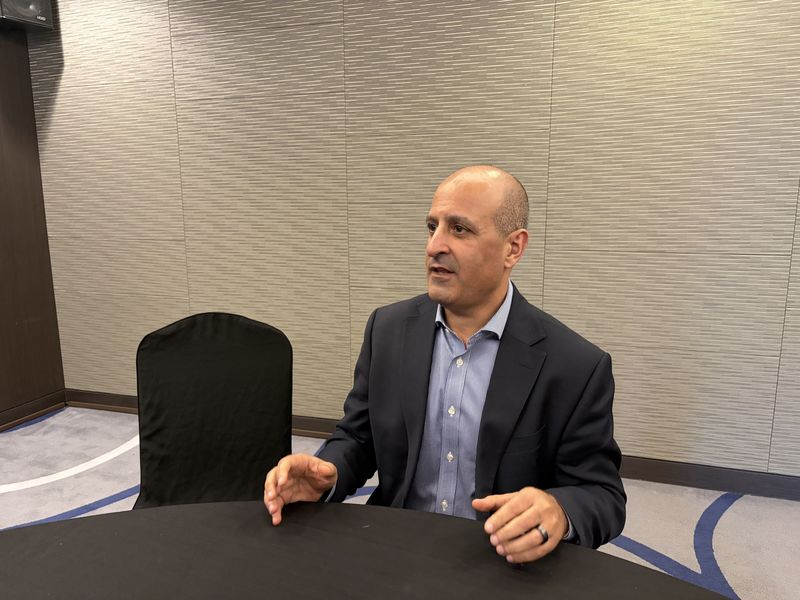
[Financial News] "The 'agentic finance revolution' has the potential to bring about the most significant transformation in financial services companies in the past 50 years. At the same time, it will create unprecedented levels of economic prosperity for users."
Joseph Chalom, CEO of SharpLink, gave this response in an interview with Financial News on the 1st when asked whether he viewed agentic finance as the key change that would shape the next generation of finance. Chalom previously led the launch of digital asset products at BlackRock, including spot Bitcoin and Ethereum exchange-traded funds (ETFs) and the tokenized money market fund BlackRock USD Institutional Digital Liquidity Fund (BUIDL).
Chalom has recently emphasized that the age of agentic finance is approaching. "AI agents will become part of our daily lives like personal assistants, making appointments and booking travel," he said. "In particular, they can solve problems in consumers' financial lives." He continued, "There is approximately $15 trillion (about KRW 20.169 quadrillion) in checking and savings accounts in the United States, most of it idle cash that earns no interest. If AI agents moved these funds into money market fund accounts, they could generate $180 billion (about KRW 242 trillion) in annual interest income." He also predicted that AI agents could automatically compare insurance, mortgages and credit card debt, as well as restructure consumers' portfolios, allowing them to switch to lower-cost products.
He particularly expects the fee structures of traditional financial companies to come under pressure. "Financial companies have been able to charge high fees because consumers did not understand finance well enough and did not have sufficient time to examine financial products," he said. "But AI can provide unlimited financial knowledge and pay attention to financial markets around the clock. The introduction of agentic finance could fundamentally disrupt fee structures," he predicted.
He also believes the Ethereum ecosystem could benefit from the age of agentic finance. AI agents are likely to use blockchain-based assets such as stablecoins and real-world assets (RWAs), while most blockchain asset activity currently takes place within the Ethereum ecosystem, he explained.
Chalom joined SharpLink as a co-CEO in July last year and has led the company as its sole CEO since December. SharpLink is a digital asset treasury (DAT) company that manages Ethereum as its primary asset. It currently ranks second worldwide in Ethereum holdings among publicly listed companies.
Chalom said, "AI agents will not operate on top of traditional finance. In traditional finance, it takes days to move assets, and sending money across borders incurs fees. With stablecoins, money can be moved instantly and at almost no cost." He added, "Around 50% of transactions involving stablecoins, RWAs and similar assets already take place within the Ethereum ecosystem. Many agentic transactions could take place on Ethereum, and increased on-chain activity would benefit Ethereum."
Chalom believes South Korea must also prepare for the age of agentic finance and stressed that traditional financial institutions need to embrace innovative technologies. "Ultimately, new 'integrated technology' is needed by combining the technology used by traditional financial institutions with that used by innovative businesses such as Kakao and Toss," he said. "Historically, institutions that pursued completely aggressive strategies have survived in the long term, rather than traditional institutions that defended their existing business models."
He also said, "When I first visited South Korea last year, I was struck by how strongly retail-investor-centric it was, but recently I have felt that the focus of conversations is shifting toward institutions. After meeting with South Korean lawmakers and major financial institutions recently, I heard that they were concerned they could fall behind. South Korea can play a leading role in connecting East and West across the broader digital economy. Now is the time to move forward."
[email protected] Lim Sang-hyuk Reporter