Nuri to launch for the fifth time today, attempting its first satellite-constellation launch
- Input
- 2026-10-07 06:00:00
- Updated
- 2026-10-07 06:00:00
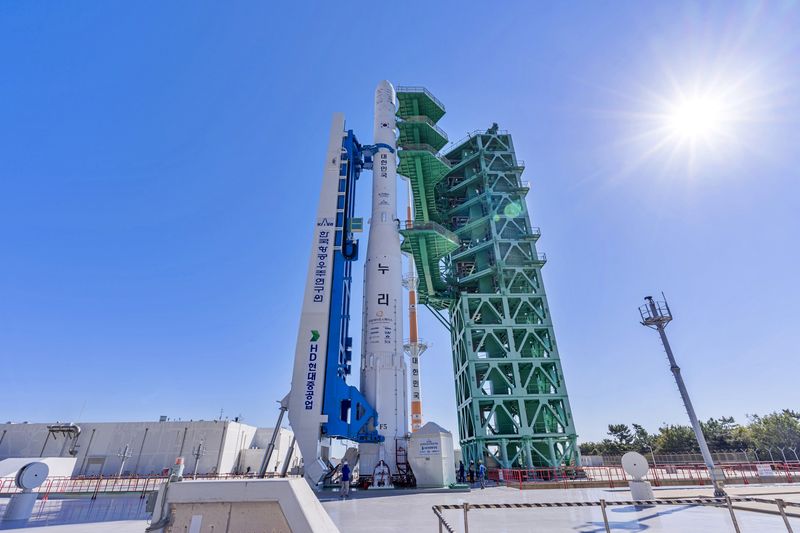
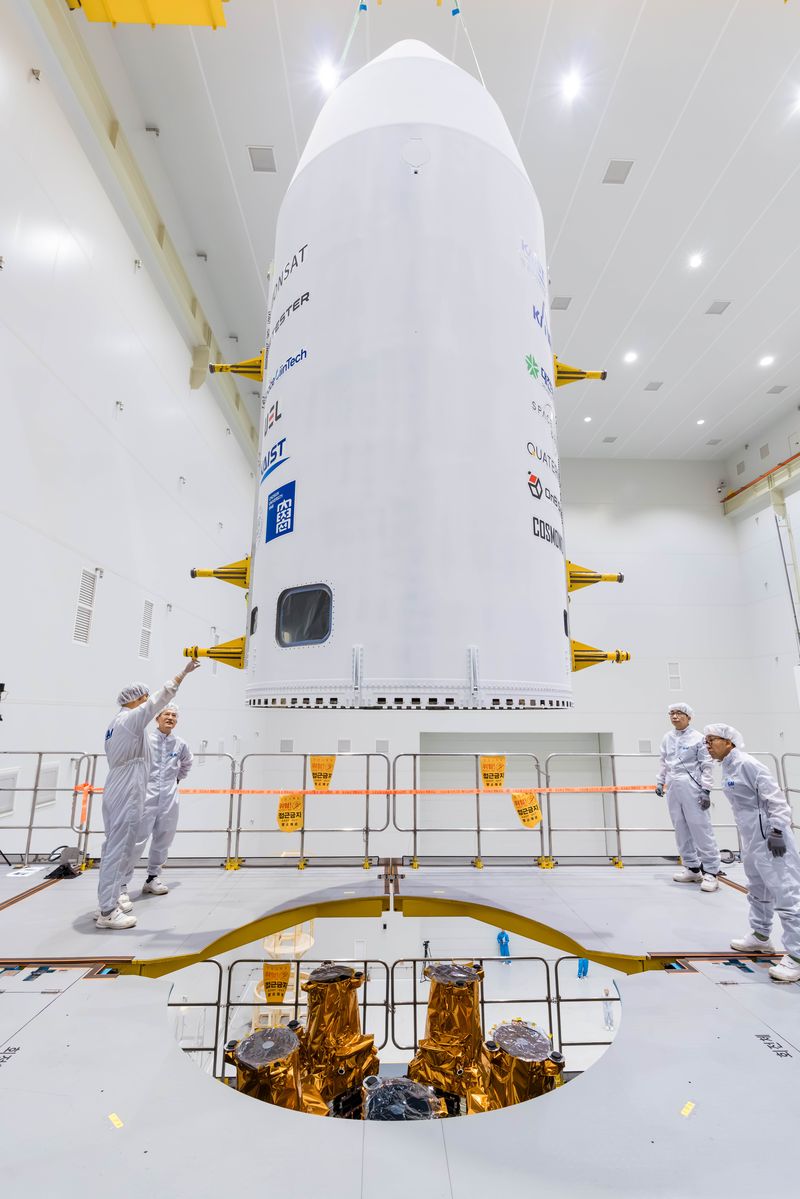
[Financial News] South Korea’s homegrown launch vehicle Nuri (KSLV-II) is set to make its fifth launch on October 7. It will attempt to launch a satellite constellation for the first time in the country. The launch is expected to mark the first step toward establishing a precision surveillance system for the Korean Peninsula.
■A record 15 satellites to be carried...aiming to establish a precision surveillance systemAccording to the Korea AeroSpace Administration and the Korea Aerospace Research Institute on the 7th, Nuri completed final assembly on the 5th and was moved to the launch pad on the 6th. It is scheduled to launch around 12:25 p.m. on the 7th. Like the fourth launch in November last year, the fifth launch will also take place at the Naro Space Center in Goheung, South Jeolla Province.
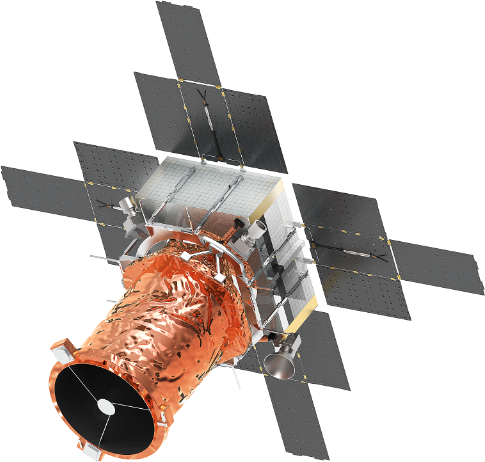
The primary payload for this fifth launch will be five NeonSat microsatellites, part of a satellite constellation. NeonSat satellites are designed to establish a real-time precision surveillance system and play a role in national security and disaster response. Following the launch of these five, the remaining five are scheduled to launch next year on Nuri’s sixth flight. Once all 10 have been launched, they will form a precision surveillance system capable of imaging the Korean Peninsula at least three times a day.
The secondary payload will consist of 10 CubeSats. The satellites will serve various purposes, including testing space pharmaceuticals and optical communications, validating domestically produced components and new materials, and exploring the space environment, including space radiation.
As a result, Nuri’s fifth launch will carry a total of 15 satellites, the most ever, when it lifts off.
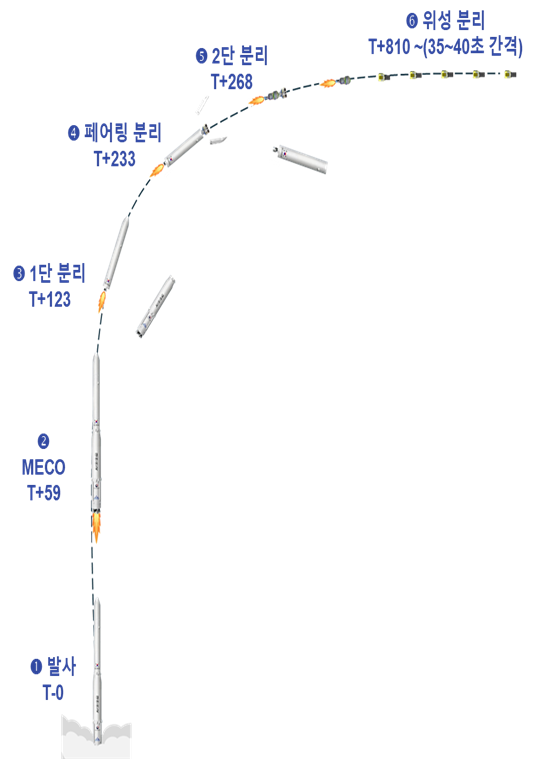
A key focus of this launch is ensuring that the satellites are deployed without colliding with one another. To prevent collisions, the five NeonSats will be separated in different directions at intervals of 35 to 40 seconds. A newly introduced low-shock satellite separation system will also reduce the impact generated during separation.
Space pharmaceutical company Spaceliintech will use its BEE-1012 satellite to conduct space-based validation of a dementia treatment drug on this year’s fifth launch, following a space experiment with an anticancer drug on last year’s fourth launch. The satellite has doubled in size and is equipped with a neural processing unit (NPU), as the company aims to enter a space pharmaceutical market worth 1 trillion. The company says it is also collaborating on a real-time AI automated control system and expects to commercialize space-based pharmaceutical production by 2028.
CosmoWorks will also launch JACK-007 to conduct further validation on the fifth launch, following its participation in the fourth. The satellite’s mission is to capture images of Earth, and two of its satellites are already carrying out their mission in space. Two more will go into space this year to further advance the performance validation conducted during the fourth launch.
Quaternion is also aiming for 100% domestic production of CubeSats with PERSAT02. The satellite detects marine debris, and the company has improved data collection by adding more backup devices. Its goal is to validate space components and begin selling them if it achieves three consecutive successes, including the previous fourth launch and this fifth launch.
KARI’s Space Validation Platform for Domestic Components No. 2 (E3 Tester) is also on board. The first unit, which succeeded on the fourth launch, completed its six-month official mission in July. The second unit will conduct in-space demonstrations of various components, including SK hynix flash memory.
■Six newly carried CubeSats to demonstrate optical communications and conduct lunar exploration experimentsThe six CubeSats newly added to the fifth launch will also conduct a range of space experiments. Daejeon City’s DaejeonSat-1 will validate the technology of four domestically produced payloads: a color electro-optical camera with a resolution of around 1.5 meters, a high-damping deployable solar panel module, a 4K satellite selfie camera, and high-capacity stacked memory for space use. It will be the first time a selfie-style image is captured in South Korea. Meanwhile, lunar exploration startup Unmanned Exploration Research Institute will carry UEL-Y-Sys and conduct satellite tests of a high-voltage battery charging system (OBC) and a camera ahead of a planned lunar exploration mission next year.
Space & Bean’s SD-1 SAT satellite will undertake two missions: collecting radiation data and validating ground equipment in space. Chosun University’s CPSat will demonstrate optical communications technology in space. CPSat is scheduled to be observed through a telescope at the Gwangju National Science Museum, and data will be transmitted.
The Korea Advanced Institute of Science and Technology’s (KAIST) GBSAT, a satellite developed by a group of undergraduate students, will observe the space radiation environment and Earth’s magnetic field. O&Space’s SLEDGE satellite will measure Earth’s atmosphere.
[email protected] Yeon Jian Reporter