‘The War Transformed by Drones and AI’: Global Defense Startup Investment Surges 56%
- Input
- 2026-10-05 13:02:50
- Updated
- 2026-10-05 13:02:50
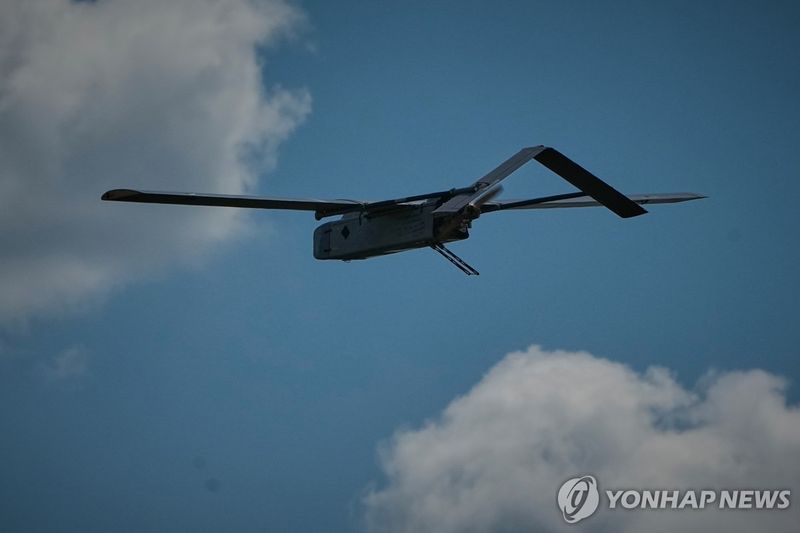
[Financial News, Tokyo—Correspondent Hye-jin Seo] As drones and artificial intelligence (AI) have emerged as key technologies on the battlefield, defense startups are attracting an influx of investment, the Nihon Keizai Shimbun (Nikkei) reported on the 5th. New companies are emerging as key players that can complement established conglomerates, which often take years to develop weapons. Japan, which had been cautious about defense-industry investment, has also begun fostering startups as the government and financial sector expand funding.
According to the Nikkei, global venture-capital (VC) investment in the defense sector totaled $40.8 billion (approximately 54.86 trillion won) in the first half of this year, up 56% from the same period a year earlier. It was the largest amount recorded for any half-year period in the past decade. Investment in the first half alone reached 74% of last year’s full-year total, and the annual figure is expected to set a new all-time high.
The leading example is U.S.-based Anduril Industries. The company, which develops drones and weapon-control software, announced in May that it had raised ¥780 billion (approximately 6.63 trillion won). Its valuation reached ¥9.6 trillion (approximately 81.64 trillion won).
Andreessen Horowitz, a major U.S. VC that invested in Anduril, is strengthening its investment in the security sector by, among other moves, recruiting a former senior U.S. official as a special adviser. Large sums have also flowed into Covenant, a U.S. company developing a new cruise missile. Stark, a German drone developer, raised €500 million (approximately 75.088 billion won) in June to expand production.
Investment is being driven by the changing nature of warfare. Drones have demonstrated their prominence in the war between Ukraine and Russia, while Palantir Technologies’ AI-based data-analysis software was used in a U.S. military operation against Iran. Competition among countries to secure new technologies is also intensifying amid the prolonged Russian invasion of Ukraine, U.S.-China tensions, and military conflicts in the Middle East.
The defense industry has traditionally been led by major companies such as Lockheed Martin and Japan’s Mitsubishi Heavy Industries. However, large corporations often take a long time to develop new systems, limiting their ability to respond to rapidly changing battlefields. This is why governments around the world are turning their attention to startups with rapid development capabilities.
Ryo Tokoshima, a senior manager at Deloitte Tohmatsu Group, said, "In the United States and Europe, it has become clear that defense-related supply chains are insufficient, so they are rushing to build the necessary infrastructure." The German government also announced in July that it planned to establish a fund to invest directly in defense startups.
Related investment is also gaining momentum in Japan. Sakana AI raised ¥31 billion (approximately 263.6 billion won) in the first half of this year and is expanding its defense business. In July, it signed a demonstration contract with the Ministry of Defense of Japan to use AI in defense and information analysis. Oceanic Constellations, which is developing maritime unmanned aircraft for uses such as maritime surveillance, announced in January that it had raised ¥2 billion (approximately 17 billion won).
Cooperation between major companies and startups is also expanding. In September, Mitsubishi Heavy Industries said it had invested a total of ¥10 billion (approximately 85.038 billion won) in Preferred Networks, an AI developer, and would jointly develop Japanese AI technology for use in defense equipment and other systems.
The financial sector is also lowering barriers to the defense industry. In May, the Development Bank of Japan (DBJ) reportedly effectively allowed investment and lending for weapons-related businesses. MUFG Bank is also shifting from its cautious stance on lending to defense-related companies. VC firm Cross Tech Ventures plans to step up investment in the defense sector through its third fund, announced in March.
The Japanese government plans to establish a new entity to invest in defense startups through VCs as early as fiscal 2027. Defense Minister Shinjirō Koizumi also stressed the importance of cooperation with startups in this year’s defense white paper.
Government procurement support is a factor attracting private investment. Jo Konno, a managing partner at major Japanese VC firm Globis Capital Partners, said, "Some investments are possible because they are made in an environment backed by government procurement."
[email protected] Hye-jin Seo Reporter