Iranian Deputy Foreign Minister: "Dialogue with the U.S. Through Intermediaries to Continue"
- Input
- 2026-10-05 14:01:53
- Updated
- 2026-10-05 14:01:53
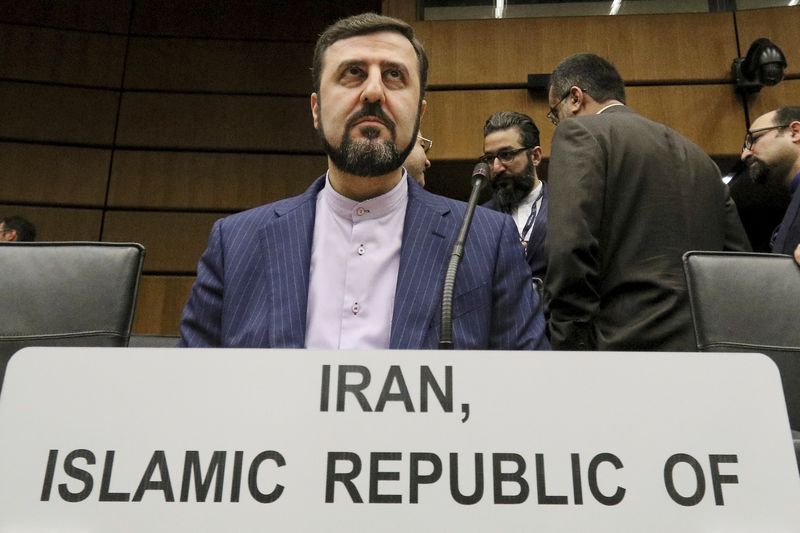
[Financial News] Iranian government officials are signaling that peace negotiations with the United States are continuing. Tensions in the Middle East are again approaching a peak as the United States prepares a large-scale show of force and Iran-backed Houthi rebels in Yemen strike global energy facilities.
The Washington Times reported on the 4th, local time, that Iranian Deputy Foreign Minister Kazem Gharibabadi said he was reviewing the U.S. response to a 'seven-day peace proposal' delivered through intermediaries late last month. The proposal includes a basic framework for a comprehensive ceasefire lasting one week and the reopening of the Strait of Hormuz.
Gharibabadi's remarks have drawn attention because they came after U.S. President Donald Trump publicly rejected Iran's proposal.
Some Iranian lawmakers said that talks with the United States were being held through intermediaries. They added, however, that while Iran's proposal focuses on security and control of the Strait of Hormuz, the United States is concentrating heavily on Iran's denuclearization.
Despite the ongoing negotiations, the United States is increasing military pressure. U.S. Secretary of Energy Chris Wright said the diplomatic channel remains open, but made clear that President Trump retains the right to resume military pressure.
The United States is in fact massing substantial forces in the Middle East. The USS Theodore Roosevelt departed for the region late last month and is scheduled to join the USS George H.W. Bush and USS George Washington by the end of November. With ships from the Makin Island Amphibious Ready Group also being deployed, about 9,000 additional U.S. troops will be sent to the Middle East.
Iranian Foreign Minister Abbas Araghchi warned diplomats based in Tehran, "We hope the United States will choose the path of wisdom and reason, but if it once again pursues a military solution, we will use every means available to defend ourselves."
Meanwhile, actual attacks targeting energy markets have also continued. According to United Kingdom Maritime Trade Operations (UKMTO), a commercial tanker was attacked again in Omani waters of the Strait of Hormuz, marking the fourth strike this month alone. The disruption has intensified, with shipping traffic through the Strait of Hormuz falling to single digits.
Yemen's Houthi rebels also announced that they had attacked oil facilities near the Saudi Arabian capital of Riyadh and at the Khurais oil field with ballistic missiles and drones. Local footage showed fires and black smoke rising, prompting the Saudi-led coalition to reject the Houthi announcement as "misleading information."
The United States recently abruptly returned B-1 strategic bombers deployed at the United Kingdom's Fairford base to bases in the U.S. mainland, citing security concerns. The Fairford base was used by the United States as a staging point for bombing Iran. Five Britons suspected of plotting terrorism near the base were arrested and later released on bail.
[email protected] Yoon Jae-jun Reporter