Passenger Traffic on the Cheongju–Hiroshima Route Jumps Sevenfold in a Year... LCCs Expand Air Links to Regional Cities
- Input
- 2026-10-05 14:35:34
- Updated
- 2026-10-05 14:35:34
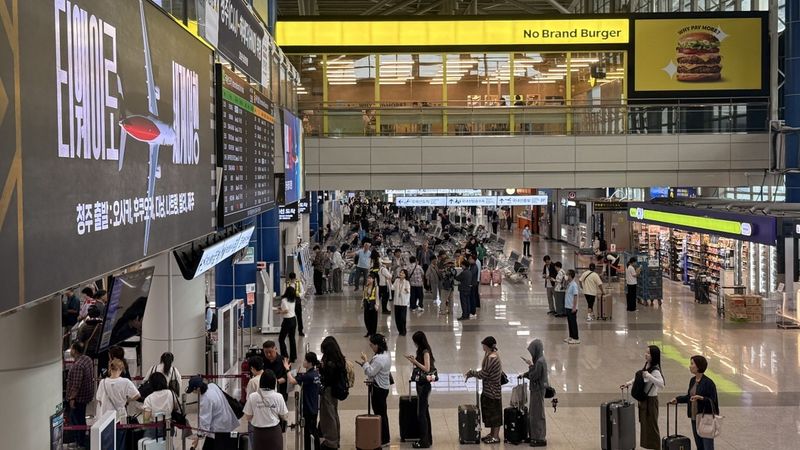
[Financial News] Low-cost carriers (LCCs) are expanding air links connecting regional airports in South Korea with regional cities in China and Japan. Passenger traffic on routes to regional Japanese cities is increasing, while the resumption of Chinese services and the launch of scheduled flights are also continuing. The airlines are expanding their international networks by serving both overseas travel demand from residents in Korean regions and demand from foreign tourists visiting South Korea.
According to the Aviation Information Portal on the 5th, Cheongju International Airport handled 1,537,074 international passengers from January through August this year, up 36.5% from the same period last year. Gimhae International Airport handled 8,191,544 passengers, an increase of 22.6%. International flights at Cheongju rose 33.0%, from 8,182 to 10,884, while those at Gimhae increased 18.1%, from 39,999 to 47,239. At both airports, passenger growth outpaced the increase in flights.
Growth has been particularly pronounced on routes to regional cities in Japan. Passenger traffic on the Cheongju–Hiroshima route rose about 7.2 times, from 5,186 in January–August last year to 37,086 in the same period this year. Traffic on the Cheongju–Obihiro route increased 72.3%, from 9,521 to 16,401, while the Busan–Matsuyama route saw a 61.4% increase, from 49,341 to 79,654. Routes between regional cities are expanding alongside services to major tourist destinations such as Tokyo and Osaka.
Airlines expect to expand demand by diversifying their destinations. Residents in regional areas can travel abroad without making the trip to Incheon Airport, while airlines can secure new travel demand centered on their hub airports. Adding regional tourist destinations to route networks focused on major overseas cities can also broaden customers' choices.
Aero K Airlines, based at Cheongju International Airport, plans to resume services this month on routes to Yichang and Shijiazhuang in China and operate routes to Matsuyama and Fukushima Prefecture in Japan. It is also preparing to launch a route to Okayama next month. The airline is expanding its international network by increasing the number of cities connected to its existing hub. Attracting foreign tourists is another pillar of its route expansion strategy. Aero K Airlines said about 350 Japanese group tourists visited South Korea last month on charter flights from Hanamaki and Toyama. In addition to carrying Korean travelers abroad, the airline also connects tourists from regional cities overseas with South Korea. The strategy is seen as an effort to broaden the foundation for route operations by securing travel demand in both directions—departures and arrivals.
In the Chinese market, scheduled services are being launched on some routes that previously operated as charter services. Jeju Air launched scheduled service four times a week on the Busan–Guilin route on the 23rd of last month. From January through August this year, the route operated 32 charter flights without any scheduled-service operations and carried 5,626 passengers. Regular capacity has thus been added to an air link that had operated intermittently.
An industry official explained, "Regional-city routes can both improve the convenience of overseas travel for local residents and help secure demand from local tourists visiting South Korea. In particular, as domestic interest in travel to smaller cities has recently grown, we are also working hard to secure a variety of routes."
[email protected] Jung Won-il Reporter