"Let's Catch the Last Train for a 600 Million-Won Loan": 80% of Seoul Apartment Transactions Are for Homes Priced at 1.5 Billion Won or Less
- Input
- 2026-10-05 15:00:00
- Updated
- 2026-10-05 15:00:00
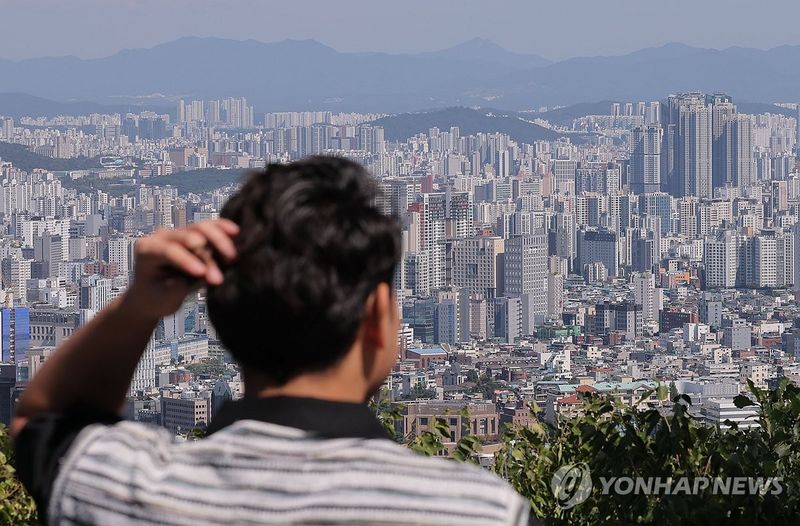
[Financial News] Eight out of 10 Seoul apartments sold after the government announced its Aug. 3 tax reform plan were priced at 1.5 billion won or less. The share of transactions involving homes priced at 600 million won or less also rose sharply, as low-interest policy loans, including first-time homebuyer loans, were available for such properties.
Up to 600 Million Won in Loans for Homes Priced at 1.5 Billion Won or Less... Buying Demand Surges After Tax Reform Plan Announcement
According to an analysis by Yonhap News Agency on the Seoul apartment sales data reported to MOLIT's actual transaction price system on the 5th, transactions involving homes priced at 1.5 billion won or less accounted for approximately 79% of Seoul apartment contracts signed after the Aug. 3 tax reform plan was announced, excluding canceled contracts and purchases by public institutions.
The share of transactions involving homes priced at 1.5 billion won or less averaged 73.3% during the 10 months before the Oct. 15 measures, from December 2024 to September 2025. It rose to 76.8% during the following 10-month period, from October 2025 through this July. As mortgage limits were reduced to a maximum of 600 million won for homes valued at 1.5 billion won or less, 400 million won for homes worth more than 1.5 billion won and up to 2.5 billion won, and 200 million won for homes valued at more than 2.5 billion won, buying demand shifted toward homes priced at 1.5 billion won or less, which allowed buyers to borrow relatively more.
Since the Aug. 3 tax reform plan, transactions involving ultra-high-priced apartments in the Gangnam area have remained sluggish because of the increased tax burden. Meanwhile, relatively more buyers have flocked to low-priced apartments amid the rental housing shortage and lending restrictions. In particular, homes priced at 1.5 billion won or less can secure larger loans relative to their sale prices. Rental demand also appears to have shifted to buying demand as low-priced jeonse and monthly-rental listings in Gangbuk and other areas have become scarce.
The most notable change was in the share of transactions involving homes priced at 600 million won or less, which qualify for government policy loans such as first-time homebuyer loans. The share rose sharply to 25% of all transactions after the tax reform plan was announced, up from 17.0% before the Oct. 15 measures and 20.5% from after those measures through this July.
Demand Concentrated on Low-Priced Listings of 900 Million Won or Less... Share of Homes Priced at 600 Million Won or Less Rises Most
However, only transactions involving low-priced apartments worth 900 million won or less increased, while the shares of other transactions declined. Along with homes priced at 600 million won or less, transactions worth more than 600 million won and up to 900 million won rose from 23.2% before the Oct. 15 measures to 25.9% afterward and 27.6% since August this year. By contrast, transactions worth more than 900 million won and up to 1.5 billion won fell from 33.1% before and after the Oct. 15 measures to 30.4%, then continued to decline to 26.3% since August this year.
The share of transactions involving high-priced apartments worth more than 2.5 billion won, which were also targeted by the tax reform plan, declined from 8.3% to 7.2% and then to 5.8%. Although bargain-priced listings in the Gangnam area, particularly in ultra-high-priced complexes, are increasing at prices 1 billion to more than 2 billion won below their previous peaks, buyers remain largely on the sidelines because of uncertainty over the tax reform plan and the burden of holding taxes.
The decline in transaction volume is also affecting prices. According to the Korea Real Estate Board (KREB), prices in Gangnam-gu and Seocho District have fallen for eight consecutive weeks since the tax reform plan was announced, while prices in non-Gangnam areas, including Gangbuk, continue to rise.
Experts: "Decoupling Between Gangnam and Gangbuk, and High-End and Mid-to-Low-End Markets, to Widen Further"
Experts expect the decoupling between Gangnam and Gangbuk and between high-end and mid-to-low-end markets to continue for the time being. The shortage of jeonse and monthly-rental homes for mid- to low-priced apartments is persisting, while the Gangnam area is likely to remain in a wait-and-see mode ahead of the National Assembly's revision of the tax reform plan.
However, price gains have recently slowed in areas such as Nowon District, Dobong District, Gangbuk District, Seongbuk District and Jungnang-gu, which had led the recent increase, amid fatigue from rising prices. In Gangnam, bargain-priced listings are gradually selling, starting with complexes that have suffered the steepest declines. As a result, some observers believe the gap will gradually narrow.
[email protected] Kim Hee-sun Reporter