"Proxy Forms Received in Management-Control Dispute Not Subject to the 'Five-Percent Rule'"... Supreme Court Clarifies Scope of Joint Holders
- Input
- 2026-10-05 11:19:04
- Updated
- 2026-10-05 11:19:04
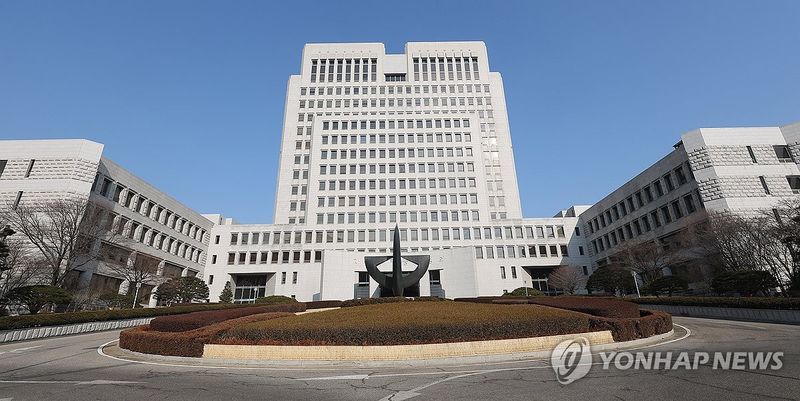
According to legal sources on the 5th, the Second Division of the Supreme Court of Korea, led by Justice Oh Kyung-mi, upheld a lower-court ruling that four minority shareholders of KOSDAQ-listed Melfas lost their action against the company seeking confirmation that a shareholders' meeting resolution was invalid. The ruling was issued on the 10th of last month.
Article 147 of the Financial Investment Services and Capital Markets Act requires a person to report to the Financial Services Commission (FSC) and the Korea Exchange (KRX) within five days when the shares held by that person and specially related parties account for at least 5% of a listed company's total shares issued. If this requirement is violated, voting rights cannot be exercised for the portion exceeding 5% that is subject to the violation. People who have agreed to exercise voting rights jointly are included among specially related parties as "joint holders."
Three Melfas shareholders obtained court permission to convene an extraordinary shareholders' meeting on Nov. 11, 2022, and put the dismissal of existing directors and auditors and the appointment of new ones on the agenda. Although they agreed to exercise their voting rights jointly at the meeting, they held only 872,765 shares, or 2.3% of the 37,946,235 shares issued. They solicited proxy votes from other shareholders, obtained proxy forms, and exercised the voting rights.
The minority shareholders filed suit on Nov. 22. They argued that adding the shares covered by the proxies pushed the total above 5%, in violation of the reporting requirement, and that the resolution was therefore adopted with shares whose voting rights should have been restricted. They also alleged a procedural defect, claiming that an agent handling the proxy work took possession of official seals, arbitrarily changed the votes marked for or against, and used newly created proxy forms to exercise the voting rights.
The issue was whether shareholders who delegated their voting rights for a specific shareholders' meeting could also be grouped with the proxy recipients as joint holders. The Suwon District Court Seongnam Branch, the court of first instance, dismissed some claims on procedural grounds in July 2024 and rejected the remaining claims. The Suwon High Court, the appellate court, also dismissed the appeal in October last year. It noted that the delegation was limited to exercising voting rights at that extraordinary shareholders' meeting and that the proxies could in practice be freely revoked.
The Supreme Court of Korea upheld the lower courts' rulings. The panel stated, "To become joint holders, there must be a meeting of minds to jointly exercise voting rights or the right to direct the exercise of voting rights, rather than merely an outward appearance of jointly exercising voting rights." It added, "The fact that a shareholder authorized a third party to exercise voting rights on the shareholder's behalf in a temporary and revocable manner for a specific shareholders' meeting, or delegated proxy voting to a person soliciting proxies under the Financial Investment Services and Capital Markets Act, alone cannot be regarded as an agreement to jointly exercise voting rights."
The court also rejected the allegation that the proxy forms were forged, stating, "Although some parts of the reasons given by the lower court were inappropriate, its conclusion that the resolution was free of defects can be accepted."
[email protected] Kim Dong-gyu Reporter