From Cho Hee-dae’s Appearance as a Witness to the Public Prosecution Office’s First Scrutiny: Key Issues in the Legislation and Judiciary Committee’s Audit
- Input
- 2026-10-05 14:10:57
- Updated
- 2026-10-05 14:10:57
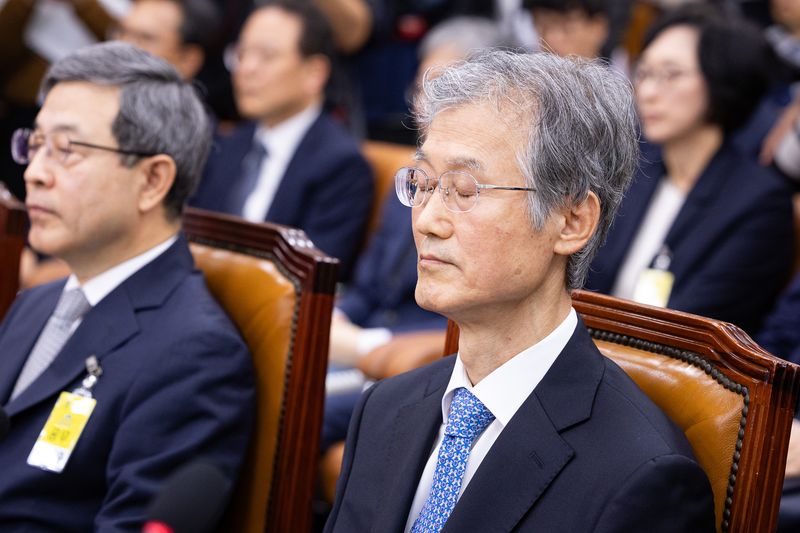
[Financial News] The National Assembly Legislation and Judiciary Committee’s audit begins on Oct. 6 amid an unprecedented dispute between Cheong Wa Dae and the Supreme Court of Korea over the renewed recommendation of a Supreme Court justice candidate. Chief Justice Cho Hee-dae has said he will not attend as a witness, setting the stage for a clash between the ruling and opposition parties over the candidate’s renewed recommendation. The Public Prosecution Office, converted from the Prosecutors’ Office on Oct. 2, will also face its first scrutiny in a National Assembly audit since its launch.
According to legal circles and the National Assembly on Oct. 5, the Legislation and Judiciary Committee will conduct a National Assembly audit of the Supreme Court of Korea and the National Court Administration on Oct. 6, followed by an audit of the Ministry of Justice on Oct. 8.
At the Supreme Court audit, the conflict between Cheong Wa Dae and the Supreme Court over the appointment of a successor to former Supreme Court Justice Rho Tae-ak is expected to be the biggest issue. In August, Chief Justice Cho recommended Senior Judge Son Bong-gi of the Daegu District Court as a candidate for Supreme Court justice. Cheong Wa Dae, however, called for a renewed recommendation, saying the written recommendation had been made without substantive consultation between the president and the chief justice.
On Sept. 22, Chief Justice Cho rejected the request, saying, "I cannot find any specific constitutional grounds or reasons to justify a renewed recommendation." The Legislation and Judiciary Committee selected Chief Justice Cho as a witness at the initiative of the ruling party, but he submitted a written statement expressing his intention not to attend. However, since he previously said he would state his position at the audit, some expect his remarks on the renewed recommendation to appear in his opening or closing remarks.
The ruling and opposition parties also hold opposing views. The ruling camp maintains that responsibility must be determined for ordinary citizens being unable to receive speedy trials as the Supreme Court justice vacancy has dragged on following Chief Justice Cho’s refusal to make a renewed recommendation. The People Power Party, by contrast, is expected to argue that Cheong Wa Dae’s request itself infringed on the chief justice’s constitutional authority to recommend judicial appointments and judicial independence. The issue of resuming President Lee Jae Myung’s criminal trial may also be raised again.
At the Ministry of Justice audit on Oct. 8, the initial confusion revealed since the launch of the Public Prosecution Office is expected to be a major focus of scrutiny. After former Minister of Justice nominee Kim Seung-won failed to secure the post, Vice Minister of Justice Lee Jin-su is expected to answer most questions in his capacity as acting minister.
Problems surfaced in court proceedings from the very first day of the Public Prosecution Office’s launch. In the trial over allegations that former Minister of the Interior and Safety Lee Sang-min and others were involved in relocating the presidential residence, a dispute arose over whether a prosecutor dispatched to the special counsel team from the former Prosecutors’ Office could lawfully continue participating in the trial after the Public Prosecution Office was launched. The trial was ultimately halted after about 11 minutes.
Questions are expected to continue over whether preparations for the transition to the Public Prosecution Office were sufficient. During the overhaul of the Korea Information System of Criminal Justice Services (KICS), some offices also experienced temporary disruptions in civil service operations, including the receipt of documents. The specific scale of the Ministry of Justice’s planned reduction in the authorized number of prosecutors and its impact on front-line work will also be an issue.
The controversy over the “withdrawal of prosecution” in cases involving President Lee Jae Myung is also expected to heat up the audit. There has been pushback within the Public Prosecution Office over the Ministry of Justice’s Committee for Respecting Human Rights in Prosecution and the Future operating a fact-finding team to examine cases involving the president.
Kim Seong-dong, head of the Public Prosecution Office’s Inspection Division, recently criticized the fact-finding team’s activities on the internal network, calling them "a serious threat to the independence of prosecutors’ duties." The opposition camp suspects that the fact-finding inquiry could lead to the withdrawal of prosecution in a case involving President Lee. Acting Prosecutor General Lee Jung-hyun also previously responded to the issue of withdrawing prosecution to the effect that, "We need to review the results of the fact-finding inquiry," so related questioning is expected to be intense.
[email protected] Choi Eun-sol Reporter