Altman Emphasizes "Taking Risks to Reap AI's Benefits": "We Must Accept Some Bad Things"
- Input
- 2026-10-05 10:20:20
- Updated
- 2026-10-05 10:20:20
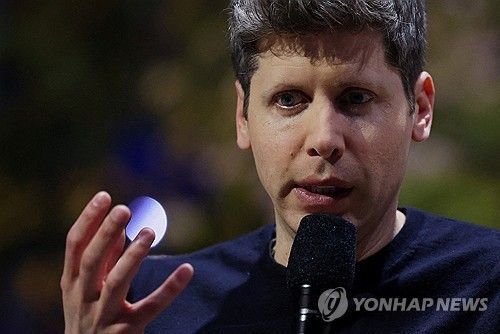
[Financial News] OpenAI CEO Sam Altman argued that some risks must be accepted to enjoy the benefits of artificial intelligence (AI).
Altman made the remarks on the 4th (local time) during an interview with "POLITICO Tech," a technology podcast produced by the U.S. political news outlet Politico. He was responding to a question about differences between OpenAI's and Anthropic's views on regulation.
He said, "There is a significant difference between the positions of the two companies," adding, "We believe we must accept some bad things in order to realize the benefits of AI technology and preserve human control."
He said he understood those who argue, "Because this technology will become so powerful and dangerous, we should ensure that only one lab in San Francisco possesses it to prevent bad things from happening and find ways to distribute the benefits," but that he did not agree with them.
He described OpenAI's position—supporting regulation in principle while opposing excessively stringent rules—as a "lighter-touch regulatory stance."
He added, "I would not accept a position that says, 'We will prevent any major hacking incidents, ensure AI technology is not misused, eliminate even a single case of fraud, and make sure no other bad things happen at all,'" explaining, "I think people will do far more good than bad—dozens of times more."
However, he clarified that he did not mean humanity should accept catastrophic risks, such as seriously losing control over AI.
OpenAI had previously expressed a relatively skeptical position toward AI regulation. However, following recent incidents, including the hacking of its AI models by outside entities, it has signaled support for Anthropic's position favoring a slower pace of AI development.
Altman's remarks are seen as showing that, even as the gap between the two companies' positions has narrowed somewhat, differences remain in their approaches to AI.
In particular, he noted that some had criticized measures proposed by Anthropic CEO Dario Amodei as "regulatory capture," in which regulated entities advocate regulations favorable to themselves in order to block challenges from competitors.
However, Politico reported that Anthropic rejected the regulatory-capture allegation, arguing that its proposals apply only to cutting-edge, leading AI models and would instead benefit later-arriving competitors.
[email protected] Lee Seok-woo, International Affairs Specialist Reporter