[Exclusive] 'Have They Forgotten the National Information Resources Service Fire?'... 20 of Police's 25 Information Systems Lack Disaster Recovery Systems
- Input
- 2026-10-05 14:50:04
- Updated
- 2026-10-05 14:50:04
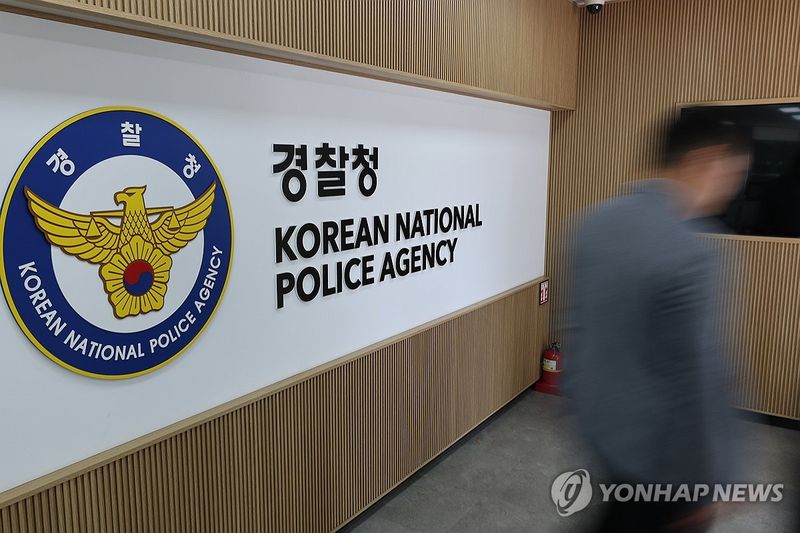
[Financial News] Twenty of the Korean National Police Agency's 25 critical information systems do not have separate disaster recovery (DR) systems to protect against fires or large-scale outages, an investigation has found. Many of the systems are closely tied to people's daily lives and safety, including traffic-related civil services and missing-person alert text messages. Concerns are mounting that preparations for disasters are urgently needed. The police has begun developing annual plans and taking supplementary measures, including assigning dedicated staff, with the goal of establishing DR systems within the next three years.
According to data submitted by the Korean National Police Agency to the office of Lim Ho-seon, a Democratic Party of Korea lawmaker on the National Assembly's Security and Public Administration Committee, 20 of the 25 information systems rated A1 to A3 in importance did not have DR systems in place as of the 5th. Although the government established disaster recovery standards for information systems this year following incidents including last year's fire at the National Information Resources Service, many of the police's key information systems still lack separate DR systems.
Among the six systems with the highest importance ratings, A1 and A2, four do not have DR systems. These include the A1-rated Traffic Police Work Management System and the A2-rated Urban Traffic Information Center, Integrated Analysis and Response System for Telecommunications and Financial Fraud, and Firearms and Explosives Safety Management System. Among the A3-rated systems, the Missing Persons Alert Text Message Delivery System, Korea Information System of Criminal Justice Services (KICS), Cybercrime Reporting System (ECRM), and Wanted Vehicle Search System also lack DR systems.
Eighty percent of key systems lack DR... Timeline for construction remains unclear
Budget constraints were a prominent reason the systems had not been established. The Traffic Police Work Management System applied for a DR construction budget, but the request was not reflected in the budget. The Wanted Vehicle Search System, Investigation Support Portal (KIAS), Geographic Profiling System (GeoPros), and Fingerprint and Criminal History Management System (FCMS) also failed to secure the necessary funding. For some systems, DR construction was postponed because their importance ratings were being raised or next-generation systems were being developed.In a significant number of cases, the timeline for establishing DR systems remains unclear or has been extended. The Urban Traffic Information Center, Integrated Analysis and Response System for Telecommunications and Financial Fraud, and Firearms and Explosives Safety Management System listed the timing for DR construction or related measures as 'when the budget is secured.' The Missing Persons Alert Text Message Delivery System plans to seek a separate budget for DR after completing construction of its next-generation system over three years. The Cybercrime Reporting System is scheduled to establish DR by December 2027, the Cyber Investigation Portal System by August 2028, and the Next-Generation Hospital Information System by December 2029. The Traffic Police Work Management System plans to complete construction of the next-generation system, TCS, from 2027 to 2029 and finish establishing DR by December 2030.
The concern is the potential interruption of administrative and public safety services before the DR systems are established. A large-scale computer outage could disrupt services closely tied to people's daily lives and safety, ranging from the issuance of driver's career certificates and the provision of real-time traffic information to voice-phishing analysis and response and the dispatch of missing-person alert messages.
For the Traffic Police Work Management System, outages caused by software or hardware defects are expected to be resolved within eight hours. However, recovery could take several days or longer if a disaster such as a fire occurs. The Missing Persons Alert Text Message Delivery System also requires approximately two hours to restore backup data after a disaster, after which text messages can be sent.
Continuity is key to public safety services... "Proactive investment in DR is needed"
Experts advised that proactive investment is necessary because DR is essential safety infrastructure for maintaining public safety services during disasters or cyberattacks. Hwang Seok-jin, a professor at the Graduate School of International Information Security, Dongguk University, said, "DR is a key safety mechanism that can keep services running in place of the primary system not only during fires or power outages, but also during ransomware attacks or large-scale cyberattacks. Because these systems are directly linked to the lives and safety of the public, their importance should be reassessed, critical systems should be duplicated or given priority for DR construction, and internal mechanisms should be established to regularly conduct actual switchover drills."Establishing DR requires considerable time to secure funding, prepare infrastructure, and replicate data. It will therefore also be important to establish response measures for the period before construction is complete. Analysts say backup and alternative servers should first be prepared for systems directly tied to public safety, such as 112 emergency calls and dispatch and investigative and criminal information systems. They also recommend specifying recovery priorities and emergency procedures, including manual work and radio communications, so that essential police operations can continue even during an outage.
Lim Ho-seon emphasized, "The Korean National Police Agency and other government institutions must establish disaster recovery systems so they can continue their operations even during disasters such as fires. To prevent computer outages from creating gaps in public safety services, they must set specific construction timelines and promptly prepare alternative measures to use until the systems are established."
The police has recognized that its DR capabilities need to be strengthened and has begun taking action. It recently established a plan for the Korean National Police Agency's information system disaster and emergency response operations and developed annual plans with the goal of equipping the necessary DR systems within the next three years. The police estimates that establishing the DR systems will require approximately 10 billion won and has assigned three dedicated staff members. Although it sought to secure the relevant budget this year, the request was not included, so it plans to seek its inclusion again in next year's government budget proposal.
A police official said, "Until the DR systems are established, we plan to back up data on separate storage devices and pursue offline off-site storage by keeping the backups at the Gwangju Center of the National Information Resources Service once a month." The police also plans to conduct disaster preparedness drills and develop business continuity plans.
[email protected] Kim Ye-ji Reporter