"Advanced medical devices remain an opportunity": Wonju Medical Device Industry Promotion Institute targets Indonesia
- Input
- 2026-10-05 10:07:14
- Updated
- 2026-10-05 10:07:14
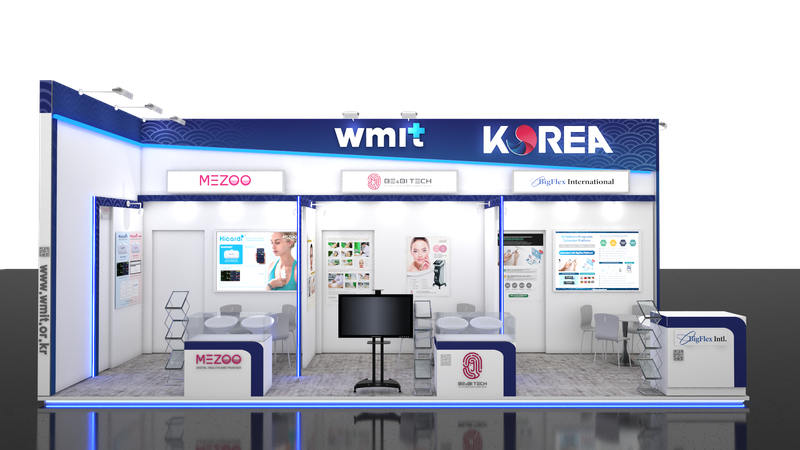
[Financial News, Wonju—Reporter Kim Ki-seop] South Korean advanced medical devices, including wearable electrocardiogram patches and artificial intelligence diagnostic platforms, are joining forces in a joint pavilion to enter Indonesia, where policies favoring domestically made products have raised barriers to imports.
The Wonju Medical Device Industry Promotion Institute said on the 5th that it will operate a joint pavilion with six South Korean medical device companies at the Indonesia Medical Device Exhibition, or Hospital Expo 2026, held in Indonesia for four days from the 7th to the 10th. Now in its 38th year, the exhibition is considered the largest medical device trade show in Indonesia. The institute has prepared a 54-square-meter joint pavilion in Exhibition Hall 9 and will carry out local marketing with the participating companies.
The pavilion will feature Galeb, which manufactures infusion pumps for laparoscopy and arthroscopy; Mezoo, which makes wearable electrocardiogram patches; BE&BI Tech, which produces high-intensity focused ultrasound equipment for cosmetic applications; SONICWORLD, which makes sound-wave exercise equipment; Big Flex International, which develops artificial intelligence diagnostic platforms; and Geodia, which manufactures quantum-dot immunofluorescence measuring devices.
Indonesia is a market where demand for medical devices continues to grow, driven by its large population, expanded health insurance coverage and improved access to healthcare services. As medical facilities such as hospitals and medical equipment continue to expand, the medical device market is also expected to maintain its growth. However, barriers to entry for foreign companies are rising as the Indonesian government promotes localization and import substitution to foster domestic industry and gives preferential treatment to local products in public procurement.
Despite these challenges, advanced medical devices that are difficult to produce locally remain highly dependent on imports, opening opportunities for technologically capable South Korean companies. The key is to secure reliable local distribution partners and develop market-entry strategies tailored to each product's characteristics.
To help participating companies become familiar with local conditions before attending the exhibition, the institute provided market information covering the size and outlook of Indonesia's medical device market, major policies and licensing and approval procedures. It also provided a database of local buyers to help identify new business partners and plans to offer interpretation during the exhibition so that consultations can proceed smoothly. Promotional videos introducing the companies and their products will also be produced for use in local marketing.
The participation is being carried out as part of the K-Medical Industry Global Market Entry Support Platform Development Project. Running for five years from 2024 to 2028 with a budget of 23.2 billion won, the project aims to strengthen the overseas competitiveness of South Korean medical device companies by building business-support infrastructure and international networks and supporting the commercialization of their technologies.
Kim Young-sung, president of the Wonju Medical Device Industry Promotion Institute, said, "Indonesia has a large population, and as health insurance coverage expands, hospitals and equipment are being added one after another, leaving the door open for advanced products that are difficult to manufacture locally. We will use the licensing, policy information and buyer database provided in advance to help participating companies secure reliable distribution partners and ultimately conclude actual export contracts."
[email protected] Kim Ki-seop Reporter