From Soaring Home Prices to Yongsan Park and Supply Measures: MOLIT Audit Set for Major Political Showdown
- Input
- 2026-10-05 14:08:44
- Updated
- 2026-10-05 14:08:44
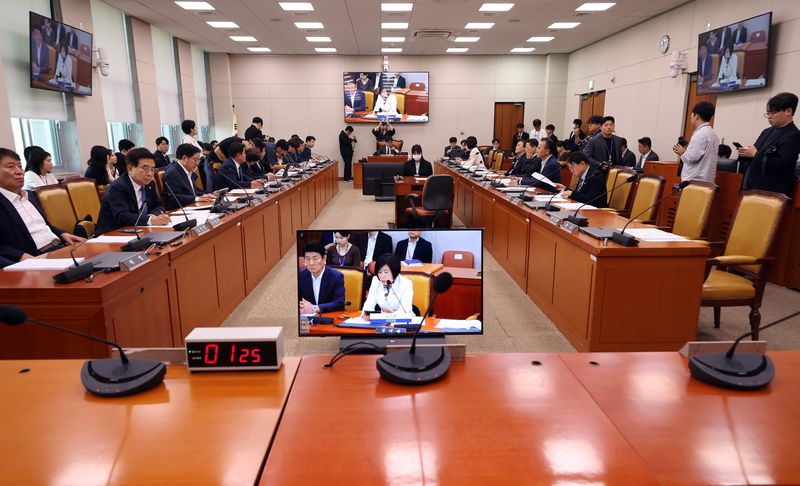
[Financial News] The National Assembly's audit of the Land, Infrastructure and Transport Committee will begin on the 7th. The ruling and opposition parties are expected to engage in a political tussle over housing prices in the Seoul metropolitan area, which have surged since the Lee Jae-myung administration took office. Other issues, including the dispute over Yongsan Park between the Ministry of Land, Infrastructure and Transport and Seoul, housing supply measures, and the division of Korea Land and Housing Corporation (LH), are also expected to fuel partisan clashes.
The government and the National Assembly said on the 5th that the Land, Infrastructure and Transport Committee of the National Assembly would conduct its 2026 parliamentary audit starting on the 7th. On the first day, the committee is scheduled to audit the Ministry of Land, Infrastructure and Transport (MOLIT), the National Agency for Administrative City Construction, and the Saemangeum Development and Investment Agency (SDIA).
The biggest issue in this year's MOLIT audit is the surge in housing prices in the Seoul metropolitan area under the Lee Jae-myung administration. According to the Korea Real Estate Board (KREB), Seoul's weekly apartment sales price index rose 0.09% from the previous week in the fourth week of September, as of the 28th. Seoul apartment prices have now risen for 86 consecutive weeks, surpassing the previous record of 85 weeks set during the Moon Jae-in administration.
The difference is also significant in terms of cumulative gains. Prices rose 7.7% over 85 weeks under the Moon Jae-in administration, compared with 17.6% under the Lee Jae-myung administration—more than double the previous increase. The ruling and opposition parties are expected to clash particularly over the sharp rise in housing prices in areas on the outskirts of Seoul.
The ruling and opposition parties also plan to examine housing supply measures in connection with the rise in home prices. The Lee Jae-myung administration said it would add a total of 1.5 million housing units in the Seoul metropolitan area from last year, when it took office, through this year. It also plans to substantially expand rental housing supply to absorb some of the demand for home purchases.
As Minister Hong Ji-sun visited Bucheon Daejang District, a third-generation new town, as his first official move after taking office, he is expected to continue emphasizing housing supply measures. The opposition is likely to point to problems with rental housing supply alongside the surge in home prices. Having previously engaged in a fierce contest with former policy chief Kim Yong-beom over rental housing, the opposition is expected to scrutinize this issue closely.
Tensions are also expected over the jeonse and monthly-rental markets. Rental listings in the Seoul metropolitan area have become scarce amid soaring home prices and higher interest rates. As jeonse listings have dwindled, monthly rents have also risen sharply.
The ruling and opposition parties are expected to use the situation to criticize government policies. Tax issues, including transfer taxes and property taxes, are also likely to come under scrutiny.
The Yongsan Park issue, which has become a source of tension between MOLIT and Seoul Mayor Oh Se-hoon, is another major point of contention. Consultations had continued since the tenure of former minister Kim Yun-deok, but no agreement was reached before the issue was passed on to Minister Hong Ji-sun. The two sides have reportedly failed to narrow their differences: MOLIT seeks to develop damaged land within Yongsan Park and provide housing for young people and newlywed couples, while Seoul maintains that such development is absolutely unacceptable.
Working-level officials from both sides are continuing negotiations, and efforts are under way to arrange a meeting between Minister Hong Ji-sun and Mayor Oh Se-hoon. However, the situation remains difficult, as their differences have not narrowed. Attention is also focused on whether the Tancheon Water Reclamation Center, proposed by Mayor Oh, could serve as an alternative. The ruling and opposition parties are expected to clash over the effectiveness of Yongsan Park and the Tancheon Water Reclamation Center.
A parliamentary audit of LH and other organizations is scheduled for the 12th. Under the government's reform of public institutions, LH will separate its development and housing-supply functions from its rental-housing operations. Internal opposition has intensified, with the LH labor union holding a series of rallies. The government explained that the measure is intended to resolve supply delays caused by LH's debt, but controversy continues. The ruling and opposition parties are also expected to raise a barrage of questions about reforms to public institutions, including the division of LH.
[email protected] Jung Kyung-soo Reporter