U.S. Democrats Push Bills to Curb 'Trump Powers,' Appeal to Anti-Trump Sentiment
- Input
- 2026-10-05 08:48:44
- Updated
- 2026-10-05 08:48:44
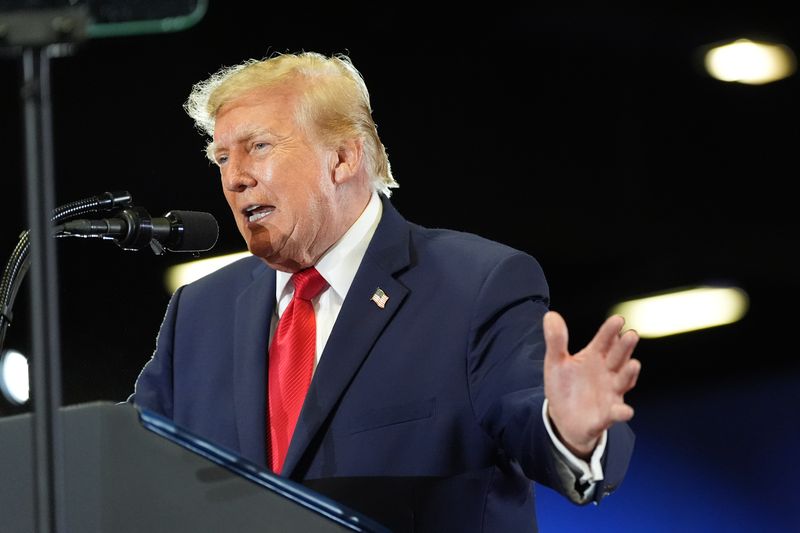
[Financial News] The Democratic Party is pursuing various legislative measures to limit President Trump's powers. If the Republican Party (GOP), led by President Donald Trump, loses next month's midterm elections and the Democratic Party retakes both chambers of Congress, Democrats plan to reverse the changes the Trump administration has made to the United States over the past two years. The effort is also seen as a strategy to appeal to voters' anti-Trump sentiment ahead of the election.
According to The Washington Post (WP) on the fourth, Democratic lawmakers are rushing to introduce bills aimed at nullifying or preventing the recurrence of actions President Trump has taken in foreign affairs and defense, government spending, immigration, the judiciary and his personal affairs. The measures also appear intended to appeal to voters' anti-Trump sentiment ahead of the election.
Representatives Suzan DelBene of Washington and Don Beyer of Virginia have introduced a bill to limit the president's authority to declare a national emergency, which President Trump has used 12 times to impose tariffs, deport immigrants and deploy the National Guard.
Representative Jamie Raskin of Maryland has prepared a bill that would prevent the president from receiving money from foreign governments without congressional approval and require public review of White House renovations. The measure targets President Trump's acceptance of an Air Force One from Qatar's royal family and the construction of a large White House ballroom.
Another bill would prevent the president from entering into financial agreements with his own government. It is related to President Trump's proposal for an approximately $1.8 billion "Justice Victims Fund" in exchange for dropping his $10 billion damages lawsuit against the Internal Revenue Service, which he filed over the agency's alleged responsibility for leaking his tax records.
Senator Chris Murphy has introduced a bill described as a "political enemies ban" that would prevent the administration from prosecuting or punishing individuals or organizations because of their speech.
At the Department of Justice under Pam Bondi and Todd Blanche, lawyers concerned about President Trump's "weaponization of the DOJ" have resigned or been fired. They are discussing bipartisan ways to restore the department's political independence.
Partnership for Public Service (PPS), a nonprofit organization focused on government reform, has proposed a bill to strengthen rules governing dismissals and prevent a recurrence of the mass firing of federal employees that occurred shortly after the Trump administration took office.
Raskin told The Washington Post, "Trump's use of presidential power can and must be reversed, but doing so will take decades. We face an enormous task of rebuilding."
In U.S. history, sweeping reforms of this kind were carried out shortly after the Watergate scandal, which led to President Richard Nixon's resignation in 1974. Congress at the time passed a large number of bills limiting presidential powers involving the misuse of personal information, surveillance of citizens, diversion of campaign funds and declarations of national emergencies.
The Washington Post reported, "Critics predict that post-Trump America will be swept up in a similar wave of reforms," adding, "Amid widespread public disgust with Trump's self-aggrandizement and pursuit of personal gain, lawmakers are expected to rush to act to score political points."
The key question is whether the Democratic Party can win a landslide in both chambers of Congress.
During the Watergate scandal, the Democratic Party won a landslide, holding a 61-39 advantage in the Senate and a 291-144 advantage in the House.
[email protected] Park So-hyun Reporter