Trump Announces "Superintelligence Task Force," Taps DNI Director Clayton to Lead It
- Input
- 2026-10-05 06:11:41
- Updated
- 2026-10-05 06:11:41
[Financial News] U.S. President Donald Trump announced on the 4th (local time) the creation of a superintelligence (SI) task force. The announcement came just one week after he met with leaders of major U.S. artificial intelligence (AI) companies, amid growing calls for AI regulation and safety measures.
President Trump wrote on his social media platform Truth Social, "Under the historic White House Super Intelligence Accord, in which the world's most important technology companies gathered in one place and affirmed their responsibility to the American people, I am announcing the creation of the 'Super Intelligence Force (SIF, a superintelligence task force).'"
President Trump used the term "SI (Super Intelligence)," which the federal government has instructed people to use instead of "AI."
"U.S. to Lead the World in Superintelligence"... "Lead Cooperation with Consumers and Industry Leaders"
He explained that the body's goal was "to ensure that the United States continues to lead the world in superintelligence" and that it "will lead efforts to collaborate with consumers, public-interest groups, religious organizations, infrastructure providers, and industry leaders."
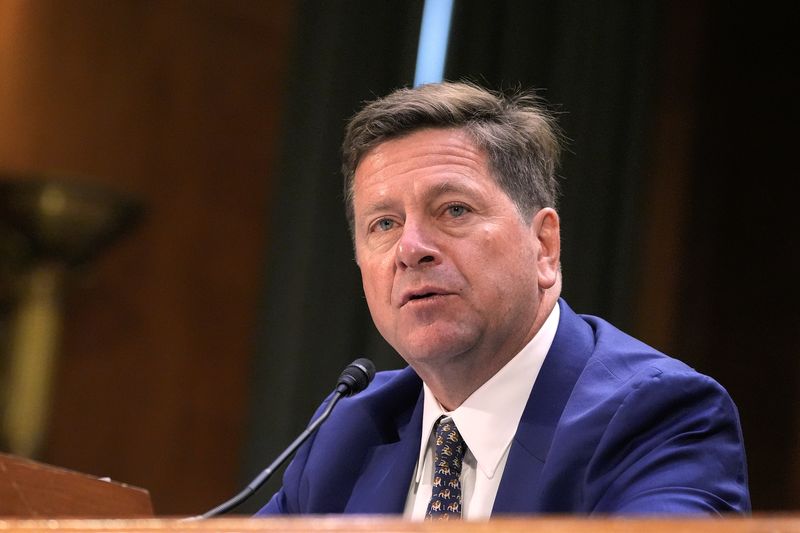
The task force will be led by Jay Clayton, director of national intelligence (DNI). Foreign media previously reported that Clayton was likely to be named the "AI czar." Clayton previously served as chair of the Securities and Exchange Commission (SEC) and U.S. attorney for the Southern District of New York before taking office as DNI director in August.
President Trump also wrote on Truth Social that Andrew Ferguson, chair of the Federal Trade Commission (FTC); Emil Michael, under secretary of defense for research and engineering and chief technology officer (CTO); and Scott Kupor, director of the Office of Personnel Management (OPM), would lead the task force and report to him and White House Chief of Staff Susie Wiles.
It was also reported that Vice President JD Vance, Defense Secretary Pete Hegseth, and Treasury Secretary Scott Bessent would participate, while David Sacks, co-chair of the President's Council of Advisors on Science and Technology (PCAST), and former Secretary of State Condoleezza Rice would serve as external advisers.
In a July 3 interview with The Wall Street Journal (WSJ), Clayton said, "Through the task force, we plan to study AI's risks and potential uses and prepare a report over 120 days." He also said the task force would offer recommendations on the federal government's role regarding new technologies.
Clayton said, "President Trump asked me to structure the organization so that the United States could remain in a leading position in superintelligence and put the interests of the American people first." He emphasized, "The risks are significant if we fail to be at the forefront of superintelligence. Not only the identified risks but also risks that have not yet been identified will grow," adding, "In particular, risks originating from hostile countries could increase."
"Task Force to Serve as Coordinating Body... Focus on Conveying Opportunities and Risks to Government and Industry"
According to the task force's operating plan, reported by the WSJ, "The task force will protect the American people while serving as a coordinating body to ensure that the United States remains at the forefront of SI development. Recognizing that major technological change always entails fundamental unpredictability in its effects, the task force will focus on identifying emerging opportunities and risks and communicating them to government officials, industry, and the American people."
Last week, shortly after meeting at the White House with the heads of major U.S. AI companies, including OpenAI, Anthropic, Google, Meta, NVIDIA, and SpaceXAI, President Trump told reporters, "I will nominate an AI czar within three to four days."
The participants agreed to and signed voluntary safety standards. President Trump described the standards as a "morally binding" agreement, claiming, "A tremendous amount of self-regulation is taking place, and companies also understand that they need to regulate themselves."
According to the one-page accord that President Trump posted on Truth Social, the technology companies agreed to introduce a "four-stage control and audit" system to verify that their AI models operate as intended. The system includes internal evaluations, audits by external firms, and reviews by each company's board of directors.
The participants also agreed to hold regular meetings to develop standards and best practices for improving the safety of AI systems.
[email protected] Lee Seok-woo, international affairs specialist Reporter