"Severing the Capital's Lifelines and Disrupting Daily Life"—Russia Bombs Kyiv's Key Bridges Seven Times in Four Days
- Input
- 2026-10-04 22:38:08
- Updated
- 2026-10-04 22:38:08
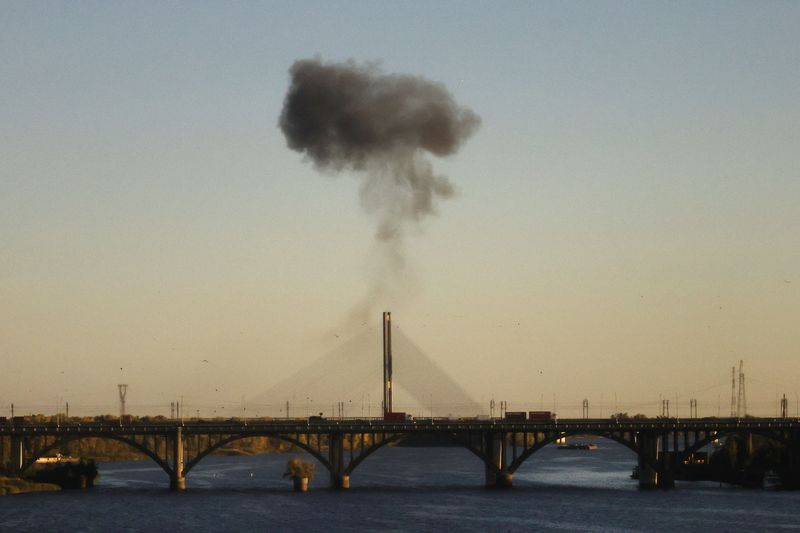
[Financial News] Russian forces have carried out concentrated attacks on key bridges across Ukraine's capital, Kyiv, for four consecutive days, tightening their grip on the city's transportation and logistics networks. The attacks are viewed as part of a sweeping air campaign aimed at destroying critical infrastructure behind the front lines, disrupting Ukraine's daily life and economy, and weakening the public's will to resist.
■ Seven strikes on bridges in four days...Five Kyiv bridges restricted, leaving the city 'paralyzed'
According to reports on the 4th (local time) from foreign media outlets including The New York Times (NYT), Russian forces used drones that morning to attack Pivnichnyi (Northern Bridge) in northern Kyiv. It was the second consecutive day of attacks following the previous day's strike, destroying part of the road surface and injuring two people. Kyiv Mayor Vitali Klitschko said on social media that he had released video showing a drone crashing into the bridge while vehicles were crossing it. He also stated that damage to a district-heating center had cut off hot-water supplies in some downtown areas.
Russian forces had already struck Pivdennyi (Southern Bridge) in the south five times on the 1st and 2nd, completely halting vehicle and subway traffic. Bridges in Kyiv that had remained safe throughout four and a half years of war were attacked at least seven times over the four days beginning on the 1st. The Ministry of Defense of the Russian Federation claimed that the bridges were legitimate military targets because Ukrainian forces use them to transport troops and military cargo.
■ Risk of disrupting 1 million commutes and paralyzing national logistics
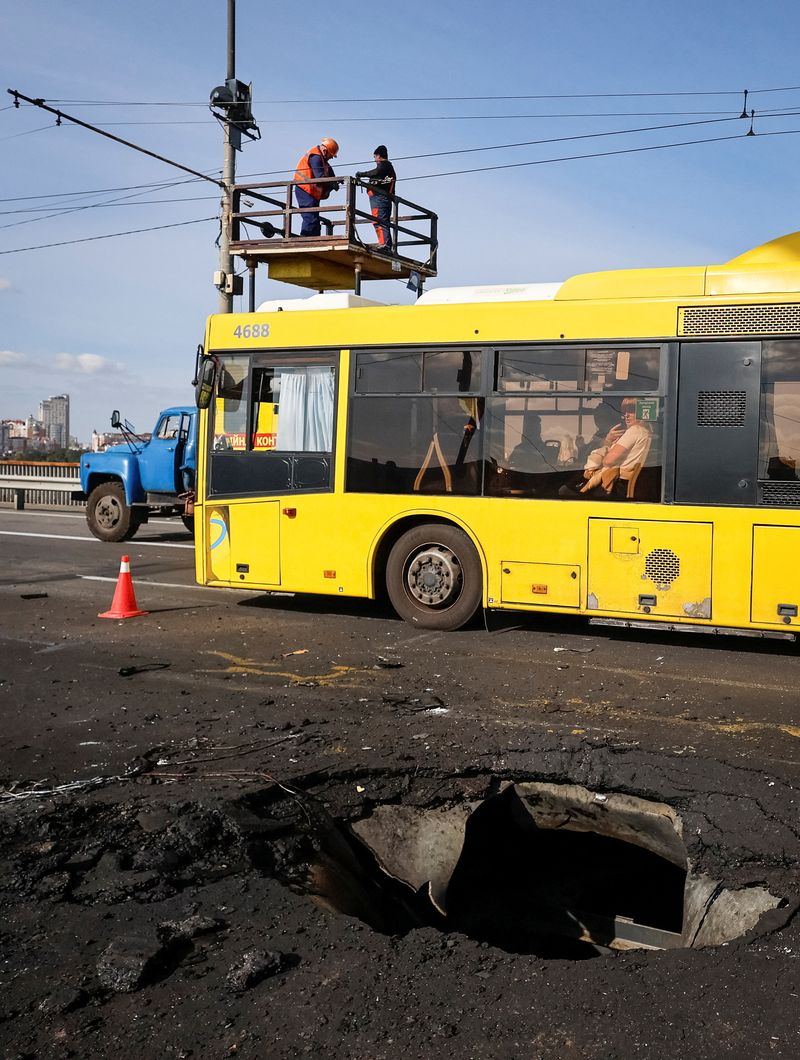
Kyiv is divided by the Dnieper River into the western right bank, where government offices and businesses are concentrated, and the eastern left bank, which is largely residential. For the roughly 1 million people living in the east, the bridges are lifelines. Amid continuing airstrikes and fears of additional attacks, Kyiv authorities have significantly restricted or completely blocked traffic on five of the city's six major road bridges.
Although the bridges have not been completely severed, traffic bottlenecks and disruptions to public transportation have already thrown residents' daily lives and commutes into turmoil. NYT warned that if Kyiv's bridges become functionally paralyzed, logistics flows between the north and south could be blocked, dealing a fatal blow to Ukraine's overall economy and military transport. Using bridges farther downstream to the south requires a detour of dozens of kilometers and exposes travelers to the risk of additional attacks because the area is close to the front line.
■ Carpet-bombing rear-area infrastructure after the power grid..."We can no longer live as if it were peacetime"
Russia's concentrated attacks on Kyiv's bridges extend a campaign of 'carpet bombing' against rear-area infrastructure, expanding beyond earlier strikes on the power grid to logistics warehouses, railways, data centers, pharmaceutical storage facilities, and other targets. It is an overt tactic aimed at exploiting Ukraine's vulnerability caused by a shortage of air-defense missiles and paralyzing its economy.
Mayor Klitschko expressed a sense of crisis, saying, "The enemy is destroying Kyiv. It is no longer possible to pretend that we can live as if it were peacetime." In the early stages of the war, Ukraine's leadership considered blowing up bridges itself to halt the advance of Russian forces. Now, it faces the desperate task of defending the capital's lifelines from Russian drone bombardment.
[email protected] Park Ji-hyun Reporter