[Editorial] NPS Stock Returns Plunge: The Price of Delaying Rebalancing
- Input
- 2026-10-04 19:18:23
- Updated
- 2026-10-04 19:18:23
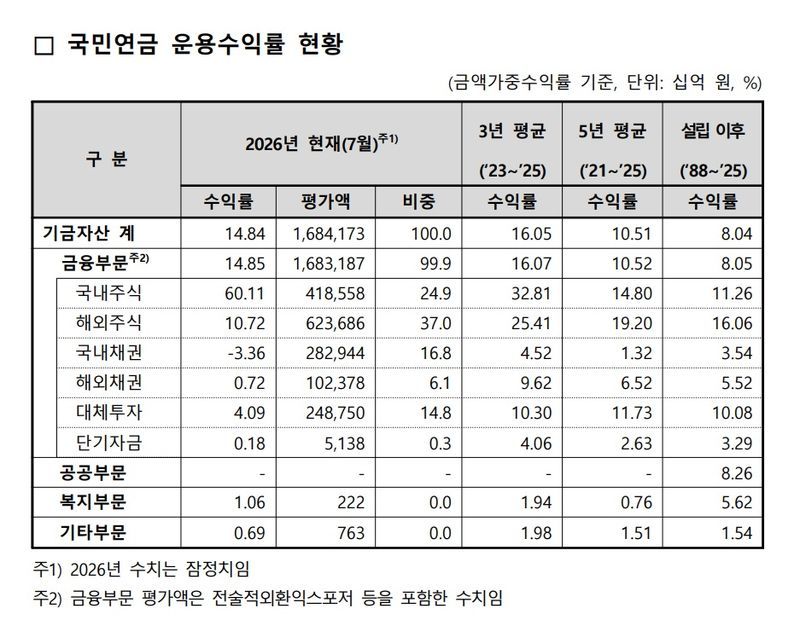
This outcome was foreseeable given the NPS's domestic stock investments. The NPS's return figures reflect unrealized gains; unless it sells stocks and realizes those gains, they remain merely paper profits. Although the return is still 9.7%, close to double digits, it could fall further unless the gains are realized.
Experts have argued that the NPS should rebalance its assets by selling stocks, but the NPS has continued to postpone the move. The reason is simple: if the NPS starts selling, stock prices could undergo a sharp correction. Prices could, of course, rise further or fall from here. However, the NPS may already have missed the right time to sell. If it continues delaying profit-taking, it could end up giving back all of its gains.
The NPS fund has come under suspicion of being mobilized to prop up stock prices under the Lee Jae Myung administration. The NPS Fund Management Committee set a target of 14.9% for the fund's domestic stock allocation this year. The committee continued raising the target until it reached 29.1%. Against this backdrop, the KOSPI Composite Index plunged, causing the NPS's returns to drop sharply.
A return becomes a real return only when gains are realized. Unrealized gains are nothing more than paper figures with no actual profit. Selling when the index rises and converting the gains into cash is the only way to expand the resources available for pensions. Continuing to hold the assets amounts to nothing more than a numbers game. The NPS's refusal to rebalance is intended to avoid affecting stock prices. But if prices enter a downward trend and return to their levels of a year ago, who will be held responsible?
The principle of selling when prices rise and buying again at lower prices when they fall applies to the NPS as well as to individual investors. Foreign investors follow this principle rigorously. They took full advantage of the stock market's rally, to which the NPS made a significant contribution, and pocketed the gains. If stock prices return to where they started, foreign investors will be the biggest beneficiaries of the earlier rally. Their gains could translate into losses for domestic retail investors.
It was wrong from the outset to use the NPS as a means of propping up stock prices. The NPS should have followed the proper course: maintaining an appropriate investment ratio while moving with the market. It would serve the national interest for the NPS to earn returns through overseas rather than domestic investments. Artificially propped-up prices are bound to return to their starting point someday.
The NPS should begin rebalancing even now, while it is still generating above-average returns. It should sell when foreign investors are buying, handing the baton to them. It should then wait for the right opportunity to buy again at lower prices. If it continues maintaining a high investment allocation to avoid pushing stock prices down, it could miss the chance to sell forever.