"You Have to Listen to Korean Until the End: Omitted Subjects Can Be Tricky, but 'Jang-Ka-Seol' Is Fun" [Southeast Asia at a Glance]
- Input
- 2026-10-05 06:00:00
- Updated
- 2026-10-05 06:00:00
To mark the 100th anniversary of the establishment of Hangul Day on the 9th, [Southeast Asia at a Glance] visits Korean-language education sites in Vietnam, Indonesia and India. Over the coming weeks, we will provide an in-depth look at the fervent Korean-language craze sweeping the region and the realities of local education.
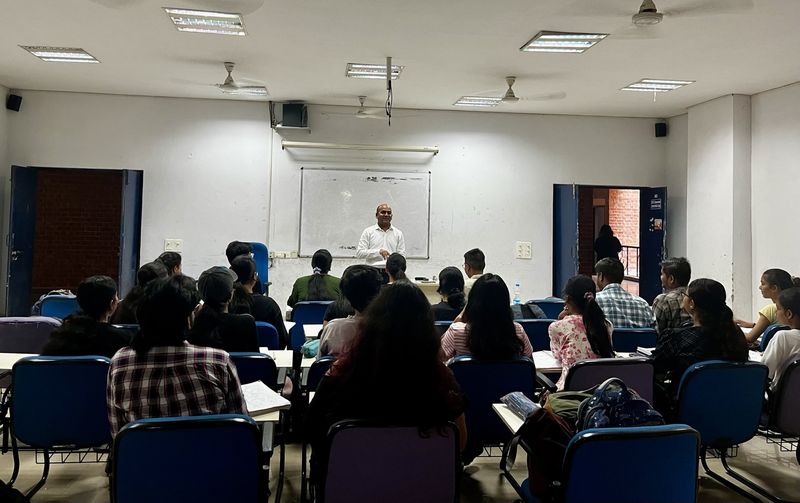
Al, a second-year student who took the same class, identified the subject as another difficult aspect of Korean. "Korean seems like a language that runs on nunchi," Al said with a laugh. "Unlike in Indonesian, subjects are often omitted in Korean. At first, I felt like I was trying to identify the culprit, wondering, 'Who on earth is doing this?'"
Al continued, "New expressions emerge quickly in Korean, and the culture of shortening words and phrases is also particularly strong." Al then shared an anecdote about the term 'Jang-Ka-Seol,' which Al learned from a Korean student in an Indonesian-language program. At first, Al tilted their head in confusion, not knowing what it meant. After hearing that it was formed by taking one syllable from the names of Jang Won-young, Karina and Sullyoon, three leading members of Korean girl groups, Al said, "Korean is truly fascinating and fun."
Asna, a third-year student in the Korean Studies Department at Jawaharlal Nehru University (JNU), whom we met in New Delhi that day, said, "In India, a country with 22 official languages and more than 1,600 dialects, the unfamiliar phonemes of Korean are a barrier to entry." Asna added, "It is still difficult to accurately distinguish and pronounce unfamiliar sounds, such as fortis and lenis sounds."
Nguyen Ngoc Linh, a fourth-year student in the Korean Language Department at Thang Long University in Hanoi, Vietnam, cited honorifics and forms of address as particularly difficult aspects.
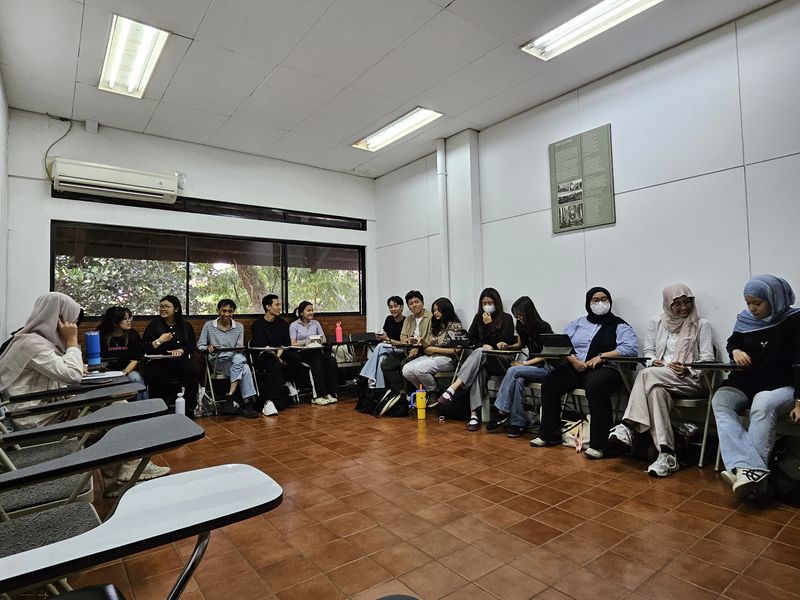
Vietnam approved Korean as a first foreign language in 2021, making regular Korean education available from the third grade of elementary school, and also added it to the high school graduation examination. Starting this year, students who achieve Level 3 or higher on the Test of Proficiency in Korean (TOPIK) can be exempted from the foreign-language examination, with their TOPIK score converted and included in their final results. It is an exceptionally bold policy rarely seen in other countries.
At Bac Ninh High School for the Gifted, which the reporter visited last month, the competition ratio for Korean classes for 10th and 11th graders, established in 2024, exceeded five to one. Students study Korean for six hours a week, with native-speaking and Vietnamese teachers leading the classes. Cheon Kang-hee, a teacher dispatched to the Hanoi Korean Education Center, said, "Many students chose the classes with the goal of studying in Korea or pursuing in-depth learning beyond K-content, so I am teaching them with an even stronger sense of responsibility."
Kim Hyun-dong, director of the Hanoi Korean Education Center, said, "More than 33,000 students at 169 schools are currently learning Korean as part of their regular education. We will support them so that they can grow into key talents who will lead Vietnam through various opportunities, including study and employment in Korea."
Korean-language enthusiasm is also intense in India. Registration for the TOPIK fills up in just five minutes. After Korean was adopted as a recommended second foreign language under the National Education Policy (NEP) of the government of Narendra Damodardas Modi in 2020, early Korean education is now offered at 24 primary and secondary schools nationwide. Competition is fierce at Jawaharlal Nehru University, which has a Korean Studies Department, with the ratio exceeding 3,300 to one.
Indonesia has also officially included Korean among the eight major target languages for foreign-language education, after President Prabowo Subianto made foreign-language education mandatory nationwide from the first grade of elementary school last June. The average competition ratio for Korean-language departments at four universities, including the University of Indonesia (UI) and Gadjah Mada University (UGM), is said to be close to 40 to one.
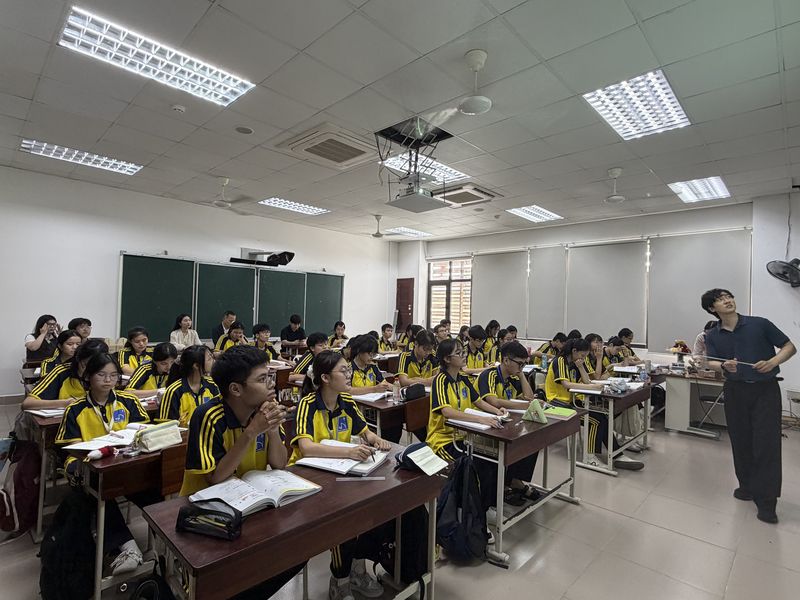
Al emphasized, "In Korean, there are many expressions that cannot be used in certain situations even if they have similar meanings, and it is difficult for AI to distinguish such subtle differences perfectly. Interpretation is not simply a matter of transferring words into another language; it also conveys the speaker's emotions and intentions."
As AI becomes more widespread, education aimed at understanding Korea itself, beyond the Korean language, is also becoming increasingly important. Accordingly, Iis Sulastri, head of the Korean Studies Department at the University of Indonesia, explained, "We are strengthening education on history and culture, including Korea's diplomatic history."
Kaushal Kumar, head of the Korean Studies Center at Jawaharlal Nehru University, highlighted the changes AI has brought to education. "AI has made students' assignments easier, but gaps may instead emerge in actual examinations and language proficiency," Kumar said. "Rather than rejecting AI, we should use it in the curriculum while also helping students develop the ability to understand and express themselves independently."
Lee Gye-seon, head of the Korean Language Department at Thang Long University and the first Korean national to lead a Korean-language department in Vietnam, emphasized, "Language is ultimately culture. As the AI era arrives, the value of people who deeply understand the context and sensibility of Korean culture, beyond mechanical translation, will only increase." Lee developed a curriculum to deepen students' understanding of Korean culture, including classes on idioms reflecting Korean sentiments and culture and courses on Korea's organizational culture.
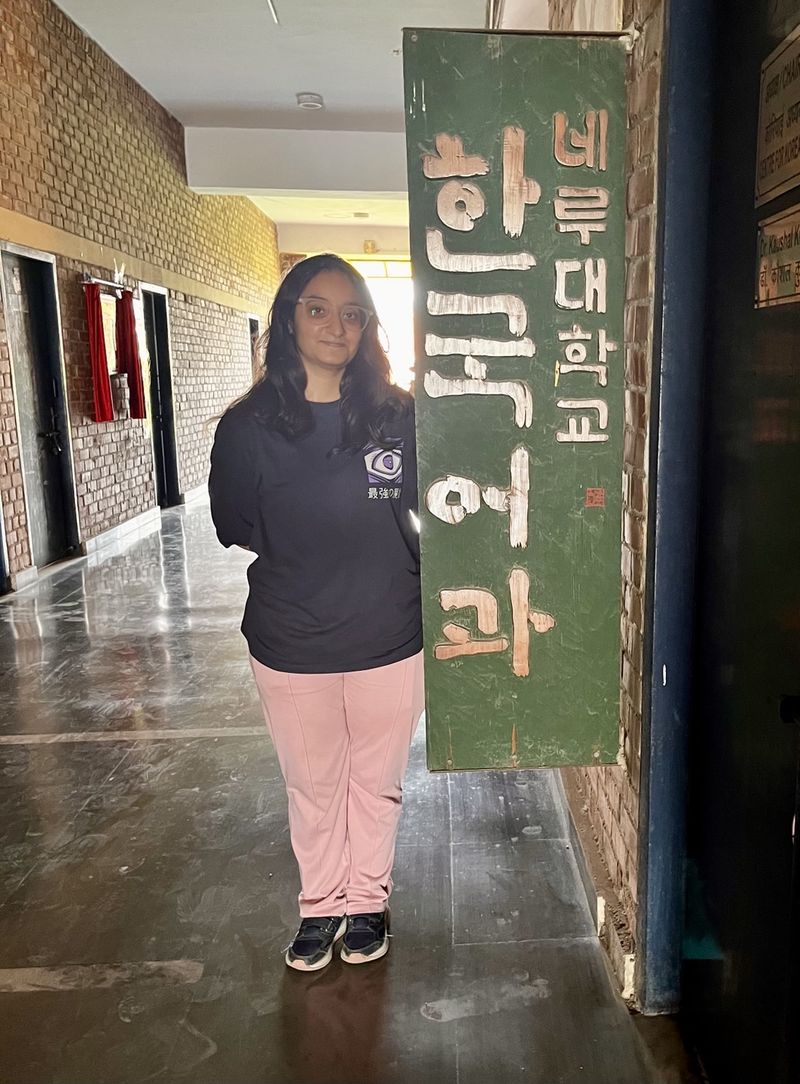
Interdisciplinary integration has begun at Vietnamese universities. Ho Chi Minh National Academy of Public Administration established a Korean Business and Trade major, while its master's program is broadening the boundaries of the field by prioritizing clear research directions over Korean proficiency. Ryu Tuan Anh, head of the Korean Studies Department at Hanoi National Academy of Public Administration, suggested, "We need to expand interdisciplinary projects and linkage programs so that students can enter various fields, including science and technology." Bach Khoa University, known as Vietnam's KAIST, currently offers a Korean-language course for engineering majors.
The Korean Studies Department at the University of Indonesia has also begun curriculum reforms to integrate Korean with a range of academic disciplines, following its move to combine the program with business administration.
Department head Sulastri expressed regret, saying, "In the past, we often received support for native-speaking teachers through the Korea International Cooperation Agency (KOICA) or The Korea Foundation (KF). However, it is true that, as the number of local full-time professors has increased, there are not as many opportunities as before to communicate directly with native speakers."
The situation is similar in India. Asna expressed regret, saying, "In the past, there were relatively many opportunities to take classes with native-speaking professors, but now there is only one native-speaking professor in the department, and the number of lectures is also limited. Some students major in Korean at university without ever taking a class taught by a native speaker."
Student exchanges are also subject to restrictions. Kumar, head of the Korean Studies Center, pointed out, "Although an exchange-student program is in operation, limited slots, a shortage of partner universities, differences in tuition systems between the two countries and insufficient scholarship support make Indian students hesitate to go to Korea." At Jawaharlal Nehru University, only two of the 30 available places are filled by exchange students each year.
The situation is somewhat better in Vietnam. Some universities are operating programs after recruiting Korean professors through KOICA and other channels.
Woo Hyung-min, head of the KF Vietnam Office, said, "KF is pursuing the establishment of professorships, support for faculty hiring and scholarships to promote Korean Studies and Korean-language education overseas. To address the difficulty of offering a variety of courses because local universities lack professors in their majors, we are also continuing to expand the 'KF Global e-School' program, which connects Korean and local universities in real time to provide the courses they need."
[Southeast Asia at a Glance] is a feature that delivers vivid, in-depth coverage from the region of major issues and behind-the-scenes stories in Southeast Asia, which is emerging as a key strategic hub for global supply chains, diplomacy and security.
[email protected] Kim Jun-seok Reporter