“K-Defense will fade within five years if things stay this way” ... AI-driven unmanning fuels a race to accelerate public-private cooperation
- Input
- 2026-10-07 06:59:00
- Updated
- 2026-10-07 06:59:00
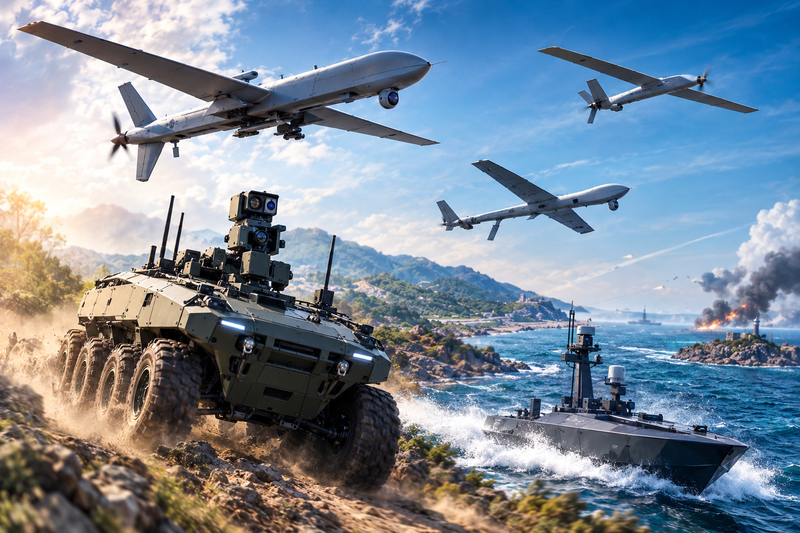
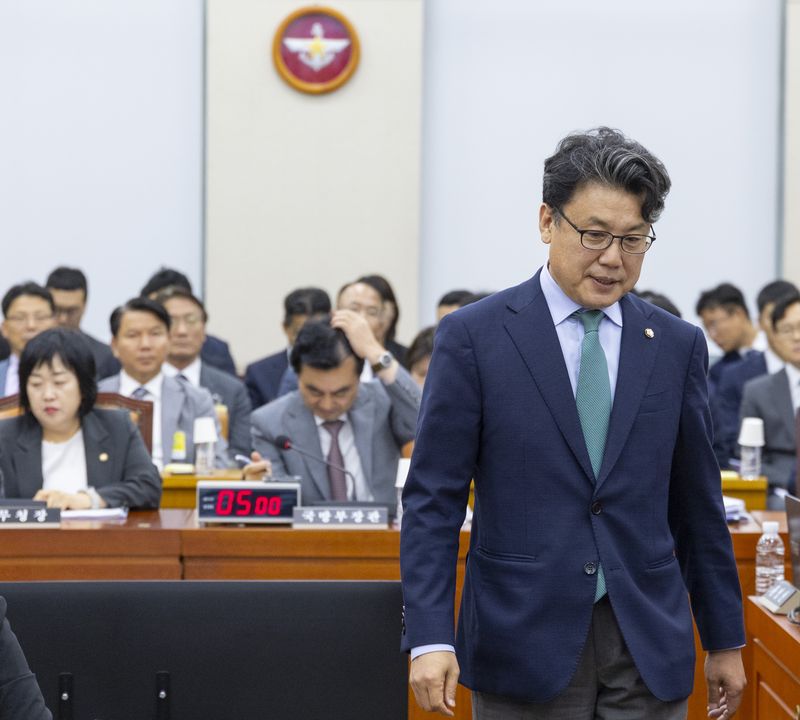
“Experts say our domestically produced weapons will remain popular for only 4–5 years at most. They say it will be difficult to stay competitive without artificial intelligence (AI.”
The concern about the K-defense industry was voiced by Jin Sung-joon, a Democratic Party of Korea lawmaker who chairs the National Assembly’s National Defense Committee. Exports of South Korean weapons systems—including tanks, armored vehicles, self-propelled artillery, missiles, fighter jets and warships—are expanding, but they could lose their competitive edge in the not-too-distant future unless AI-powered manned-unmanned teaming systems are adopted. Defense companies are therefore stepping up development of AI-enabled unmanned systems, while politicians are pursuing institutional reforms to speed up the process.According to people in the defense industry and political circles on the 7th, work is underway to combine AI and manned-unmanned teaming systems with existing weapons systems, while the ruling and opposition parties are jointly pursuing a bill to accelerate the military’s deployment of advanced weapons.
Hanwha and Hyundai: ‘Unmanning existing weapons’; Korean Air and KAI: ‘Drones’; LIG: ‘Unmanned surface vessels’
Hanwha is investing in AI infrastructure and accelerating efforts to automate ground weapons systems. Starting with an investment of 40 billion won, including 35 billion won for a GPU farm, it plans to invest 2 trillion won by 2040 to develop “Defense OS,” an AI model tailored to defense operations. The model will be applied to Hanwha Aerospace’s K9 self-propelled howitzer and Chunmoo multiple rocket launcher. Plans have also emerged to link Hanwha Systems’ space AI solutions, based on synthetic aperture radar (SAR) satellites, with strike operations. The technology will also be used in the Arion-SMET multipurpose unmanned vehicle, which is slated to be fielded by the military.Hanwha is not waiting solely for its in-house AI models to be developed. It aims to equip the K9, Chunmoo and infantry fighting vehicles with manned-unmanned teaming systems by 2029. By 2030, it plans to develop six common-platform models for unmanned vehicles in small, medium and large sizes, weighing 10–30 tons. The company has exports in mind. The Arion-SMET, its first step, has already drawn requests for information (RFIs) from Romania, Finland, Canada and other countries.
Development of unmanned aircraft is also underway. Hanwha Aerospace has successfully demonstrated a simulated combat flight by the Mojave STOL, a short takeoff and landing (STOL) unmanned aircraft it is jointly developing with global unmanned aircraft specialist General Atomics Aeronautical Systems (GA-ASI). The demonstration took place at the Defense Drone Technology Expo hosted by the Ministry of National Defense. At the same event, Korean Air demonstrated an independently developed AI-based drone swarm flight. Twenty-two drones flew simultaneously without colliding and carried out a swarm-strike mission.
Korea Aerospace Industries (KAI), which Hanwha is seeking to acquire, also presented unmanned systems at the International Defence Industry Exhibition (MSPO) in Poland. Its combat system links unmanned aircraft with the KF-21, FA-50, Marine Attack Helicopter (MAH) and Light Armed Helicopter (LAH). The aim is to enhance reconnaissance and strike capabilities with unmanned aircraft while improving the survivability of crewed aircraft. KAI is developing a jet-engine multipurpose unmanned aircraft, as well as direct-collision attack and swarm rotary-wing drone systems.
Hyundai Rotem Company is developing an AI-based manned-unmanned teaming command-and-control system with U.S. defense startup Anduril Industries. The system will apply Anduril’s AI operating system, Lattice, to platforms including the HR-Sherpa multipurpose unmanned vehicle and multi-legged walking robots. LIG Defense & Aerospace (LIG D&A) has also been developing its Haegum series of unmanned surface vessels (USVs) since 2015. At DALO Industry Days, Northern Europe’s largest defense exhibition, it showcased an unmanned surface vessel as one of its key weapons systems, laying the groundwork for exports.
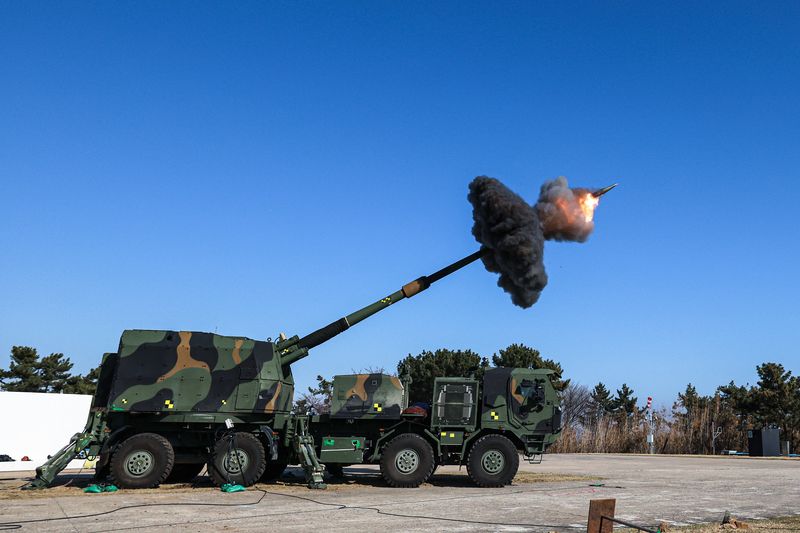
Military to invest actively in unmanned systems; ruling and opposition parties push bill to deploy minimum viable products for advanced capabilities first
The government and politicians are also stepping up efforts to accelerate the adoption of unmanned systems in the K-defense industry. The Defense Acquisition Program Administration (DAPA), for example, recently decided to invest 2.16 trillion won between 2027 and 2036 in the domestic development of vertical takeoff and landing reconnaissance drones, showing its commitment to bringing future weapons systems into military service. Fielding by the military provides official technical validation and serves as a springboard for exports.Reforms to shorten the process for bringing advanced capabilities into military service are also being pursued. The Defense Advanced Capabilities Project Act is being jointly advanced by the ruling and opposition parties, led by National Defense Committee members Kim Byung-joo of the Democratic Party of Korea and Yoo Yong-won of the People Power Party. For advanced capabilities such as drones, the bill would allow requirements to be proposed based on missions and intended effects, with minimum viable products deployed first and their performance improved afterward. It would also establish an Advanced Capabilities Development Committee under the defense minister, moving away from the existing approach of setting target performance.
Song Bang-won, chairman of the Korea Defense Industry Research Association, predicted, “The shortage of troops and the need to improve survivability are common challenges around the world, so unmanned forces are inevitable, not optional. Their share of exports will gradually increase.”
[email protected] Kim Yun-ho Reporter