Business Leaders Absent from Parliamentary Audit... Is the Ruling Party Playing It Safe over Its Pro-Business Stance and Mega-Projects?
- Input
- 2026-10-05 14:25:19
- Updated
- 2026-10-05 14:25:19
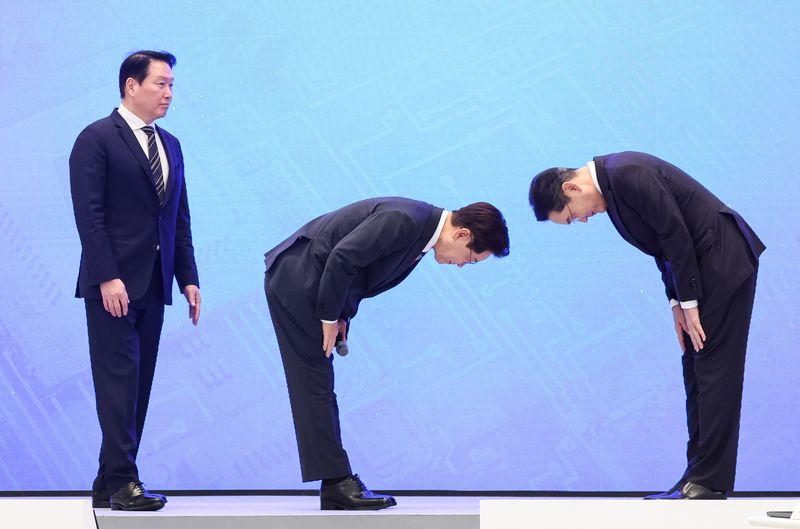
[Financial News] The practice of summoning large numbers of conglomerate chiefs and chief executive officers to this year's National Assembly audit appears to be losing momentum. The shift is seen as a result of concerns over criticism of a "humiliation audit," as well as the government's pro-business stance and its need for cooperation from the business community on key projects.
According to political sources on the 5th, many of the major business group chiefs and executives initially mentioned as potential witnesses were left off the final list for the National Assembly audit, which begins on the 6th.
At the Trade, Industry, Energy, SMEs and Startups Committee, the People Power Party requested that Samsung Electronics Chairman Lee Jae-yong and SK Group Chairman Chey Tae-won appear as witnesses in connection with the government's South Korea's 3 Mega Projects. However, they were not selected during negotiations between the ruling and opposition parties. Kim Dong-kwan, senior vice chairman of Hanwha Group, was also among those for whom witness requests were filed, but he has not been included in the list of confirmed witnesses so far.
In the distribution industry, requests for CEO-level executives to appear were also withdrawn one after another. The Science, ICT, Broadcasting and Communications Committee withdrew its requests for Heo Seo-hong, CEO of GS Retail; Kim Jae-gyeom, CEO of Lotte Homeshopping; and Yoon Sang-hyun, CEO of CJ ENM. They had initially been selected as witnesses to address the renewal approval of TV home-shopping licenses, business practices involving small and medium-sized suppliers, and the parent company's management responsibility for TVING's personal data breach.
Corporate issues themselves are not being excluded from the National Assembly audit. Julie Choi, CEO of TVING, remains selected as a witness in connection with the personal data breach. The Agriculture, Food, Rural Affairs, Oceans and Fisheries Committee will also call Jo Young-sik, vice president of CJ CheilJedang, and Lee Woon-ik, CEO of Samyang, as witnesses over allegations of collusion involving raw materials. Kim Byung-joo, chairman of MBK Partners, will also appear before the Trade, Industry, Energy, SMEs and Startups Committee to answer questions about responsibility for the Homeplus corporate rehabilitation crisis.
In other words, executives with clear ties to specific issues and responsibility are being summoned, while lawmakers have become more cautious about the past practice of bringing in conglomerate chiefs or parent-company CEOs simply because they hold top positions. The contrast is particularly notable within the same committee: Kim Byung-joo, who is directly linked to the Homeplus crisis, was called as a witness, while no agreement was reached to summon Lee Jae-yong and Chey Tae-won over South Korea's 3 Mega Projects.
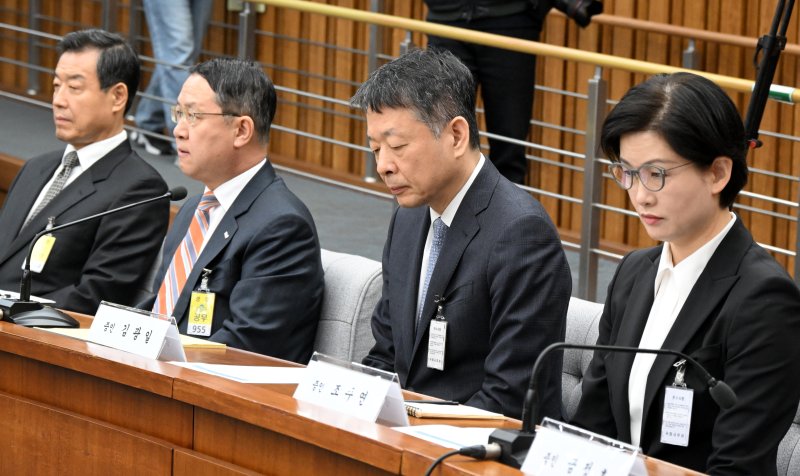
The number of business leaders selected as witnesses for the National Assembly audit has risen sharply in recent years. It increased from 63 in 2020 to 92 in 2021 and 144 in 2022. Although the figure fell to 95 in 2023, it surged again to 159 in 2024, when the first National Assembly audit of the 22nd National Assembly was held.
Last year, the number of business leaders summoned as witnesses approached 200 even before the audit began, triggering controversy over the "mass summonses of business leaders." Criticism also continued over what were described as a "backdrop audit" and a "humiliation audit," in which lawmakers focused on placing famous business leaders or conglomerate chiefs in the witness stand rather than scrutinizing the issues at hand.
The Democratic Party leadership's move to minimize business leaders as witnesses this year also appears to reflect concerns over such criticism. Now that it is the ruling party, the Democratic Party is expected to focus on a "policy-focused audit" that examines government policies rather than competing to summon business leaders.
Analysts say the government's and ruling party's emphasis on expanding corporate investment and improving regulations, along with their efforts to strengthen ties with the business community, is also making them more reluctant to summon executives. Domestically, the South Korea's 3 Mega Projects require corporate participation, while overseas, companies' roles in major economic and industrial projects such as strategic investment in the United States continue to expand.
As the ruling Democratic Party, it is caught between the justification of a "policy-focused audit" and the practical need for corporate cooperation on the government's key projects. Analysts therefore say it is maintaining a policy of selectively summoning business leaders.
[email protected] Song Ji-won Reporter