Population of Chujado Islands Falls Below 1,500; 48.309 Billion Won to Revamp Water, Fishing Village and Tourism Infrastructure
- Input
- 2026-10-04 13:08:18
- Updated
- 2026-10-04 13:08:18
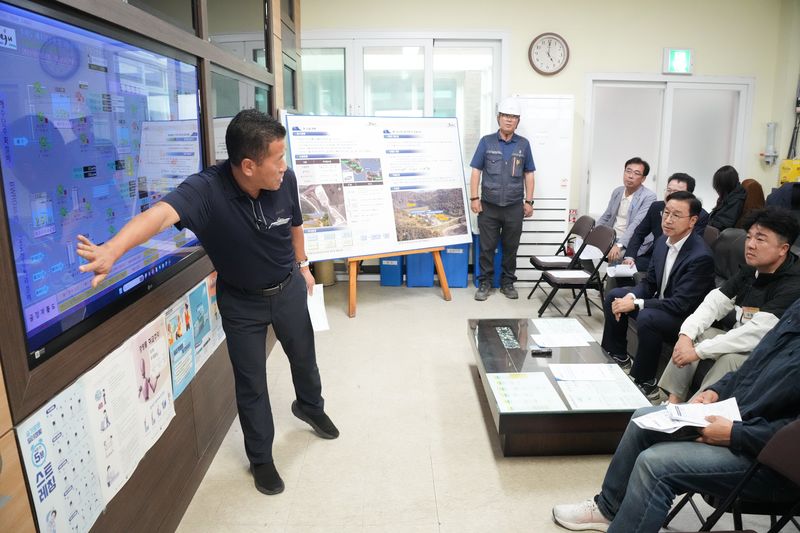
【Financial News Jeju = Reporter Jeong Yong-bok】 Projects are under way on Chujado Islands, where the registered population has fallen below 1,500, to improve water for daily use, fishing-village settlement conditions and tourism infrastructure at the same time. Wi Seong-gon, governor of Jeju Special Self-Governing Province, made his first overnight, two-day visit to Chujado Islands since the ninth popularly elected administration took office. He inspected pedestrian bridge, seawater desalination and Fishing Village New Deal projects with a combined budget of 48.309 billion won.
Jeju Special Self-Governing Province said on the fourth that Governor Wi visited the Chuja Olle Pedestrian Bridge, Chuja Water Purification Plant, Tomb of Hwang Gyeong-han and the site of the Mukri Port Fishing Village New Deal 300 Project in succession from the third through that day. He also attended the 18th Chujado Islands Chamgulbi Festival and listened to residents and fishers.
The focus of the visit was less on inspecting tourism facilities than on how to sustain the island residents' basic living infrastructure.
The registered population of Chuja-myeon stood at 1,492 as of August this year. Of that total, 631 people, or 42.3%, were aged 65 or older. The population has steadily declined from 2,401 in 2011, while rapid aging has also intensified, increasing the importance of maintaining basic services such as water, transportation, medical care and welfare.
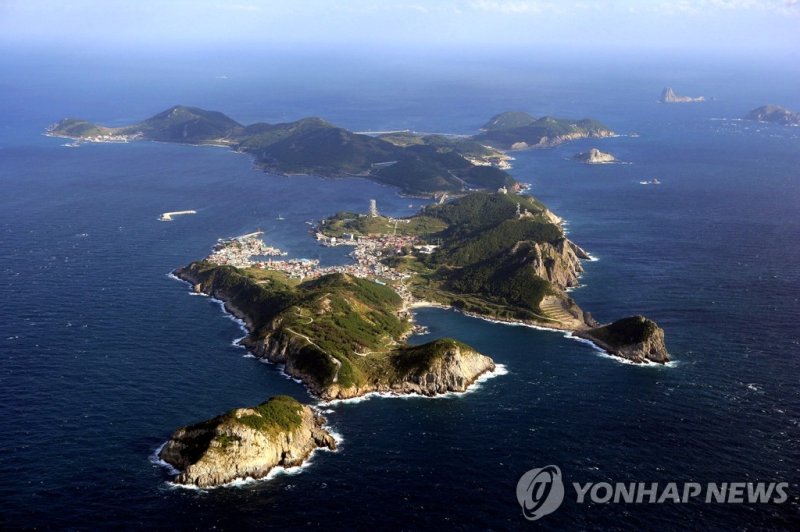
The Chujado Islands lie off the coast north of Jeju's main island, and passengers must take a ferry from the Port of Jeju to reach them. The journey from the Port of Jeju takes about 1 hour and 30 minutes. Because the area consists of four inhabited islands and 38 uninhabited islands, weather and vessel operating conditions directly affect residents' daily lives and tourists' travel.
Governor Wi's first stop was the Chuja Olle Pedestrian Bridge and waterfront park, which opened the previous day. The project created a 162-meter-long arched pedestrian bridge and waterfront park at a cost of 8.529 billion won. Landscape lighting was installed this year, allowing the facilities to be used at night as well as during the day.
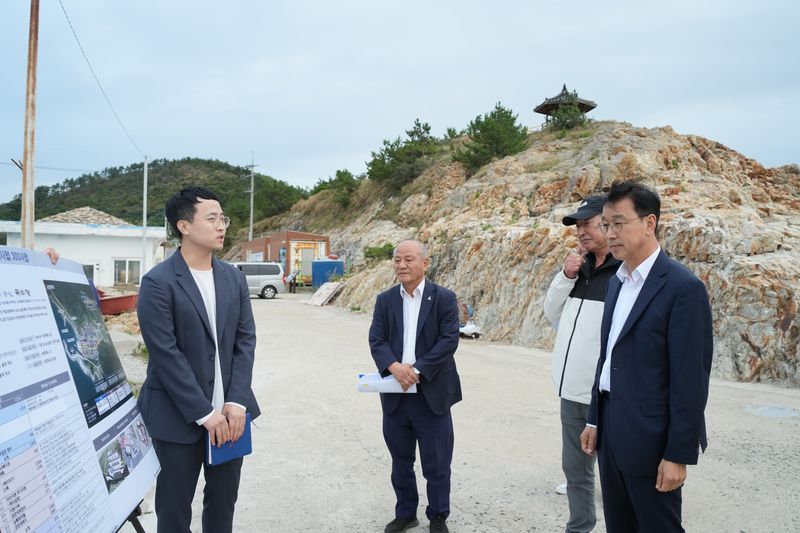
Rather than treating the pedestrian bridge as a tourism facility on its own, Jeju Special Self-Governing Province is considering ways to extend visitors' stays by connecting it with the Chuja Olle Trail, fishing and nearby businesses. The Chujado Islands are known as a fishing destination with abundant species such as opaleye, striped beakperch and red sea bream. They also have existing tourism resources, including Jeju Olle Trail Route 18-1 and Chamgulbi.
However, if visitors do not stay on the islands for long, there are limits to how much facility investment can translate into residents' income. That is why shifting to longer-stay tourism by combining lodging, food and hands-on activities is considered a key task.
Governor Wi examined fishery resources and fishing conditions in the surrounding waters and called for measures to promote fishing tourism using the pedestrian bridge and waterfront park. He also said it was necessary to consider ways to achieve energy self-sufficiency on the islands by using renewable energy and an Energy Storage System (ESS).
The largest project directly tied to living conditions is water supply. Jeju Special Self-Governing Province is investing 30.925 billion won from 2022 through 2027 to upgrade the aging seawater desalination facility at Chuja Water Purification Plant and expand its supply capacity.
Construction of the water conveyance pipelines and civil engineering and building structures has been completed. The expanded facilities are scheduled to be completed in January next year, after which the existing facilities will be upgraded. The entire project is expected to be completed in December next year.
Once the project is complete, the seawater desalination facility will be able to operate along two treatment lines. Jeju Special Self-Governing Province explained that supply stability will improve because one line can remain in operation while the other is undergoing maintenance.
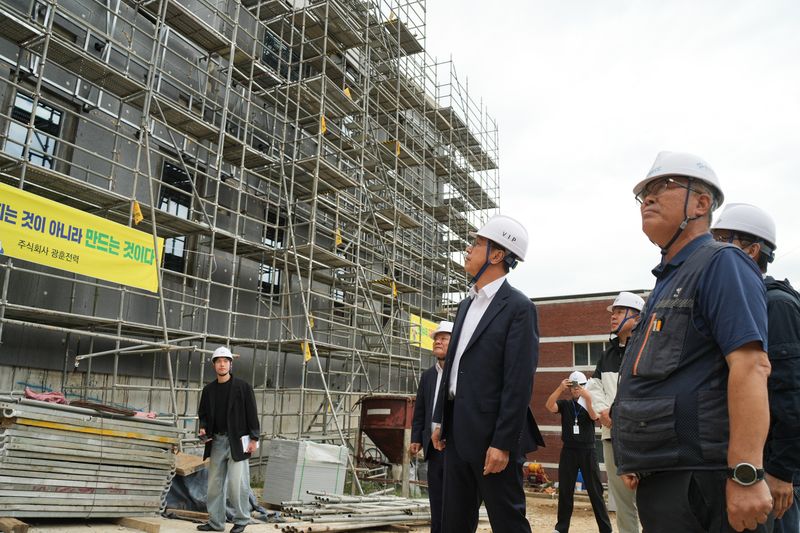
The Chujado Islands' water shortage is a long-standing livelihood issue. Because the islands are separate from the main island's water-supply network, they repeatedly imposed restricted water supplies during droughts in the past. After a seawater desalination facility was introduced in 2000, its treatment capacity has been expanded continuously. The current project is aimed at upgrading aging facilities again and preparing for future demand, including increased tourism.
Governor Wi checked the operating status of the desalination and rainwater-use facilities at Chuja Water Purification Plant. He said, "We must not stop at increasing supply. We need to upgrade the water treatment facilities so that residents can reliably use clean water."
The Mukri Port Fishing Village New Deal 300 Project, which is aimed at improving the fishing village's living and income base, will also receive 8.855 billion won. Mukri Fishing Port and a joint seaweed-processing facility have been upgraded, and a haenyeo welfare center has been rebuilt. A residential support facility called Mukri Sallae has also been established for people returning to fishing and rural areas.
A new Mukri Eoga facility is currently being built with a fishing museum, an archive and exhibition space, and a tourist rest area.
Jeju Special Self-Governing Province plans to examine not only who will operate the new facilities and how, but also how their operation can lead to residents' income, rather than ending the projects with construction. Governor Wi also said, "It is necessary to make use of existing guesthouses and vacant homes and consider accommodation options suited to conditions on the Chujado Islands, such as campgrounds and camping facilities."
The population decline on the Chujado Islands has been driven by a combination of the weakening fisheries base and the constraints of island life, including education, medical care and transportation. The weakening of the employment base after yellow croaker fishing boats that once led the Chuja economy moved to other ports has also been cited as a factor behind the population decline.
Governor Wi said, "Given the characteristics of the islands, we need to carefully examine infrastructure closely tied to residents' lives, including water supply and living conditions in fishing villages. I will ensure that the projects under way, which draw on the Chujado Islands' natural and fishing village resources, lead to tangible improvements in residents' lives."
[email protected] Jeong Yong-bok Reporter