Selling Illegal Wiretapping App and Managing Server Holding Recordings... Supreme Court Rules Seller Was a Co-principal, Not an Aider and Abettor
- Input
- 2026-10-04 11:44:28
- Updated
- 2026-10-04 11:44:28
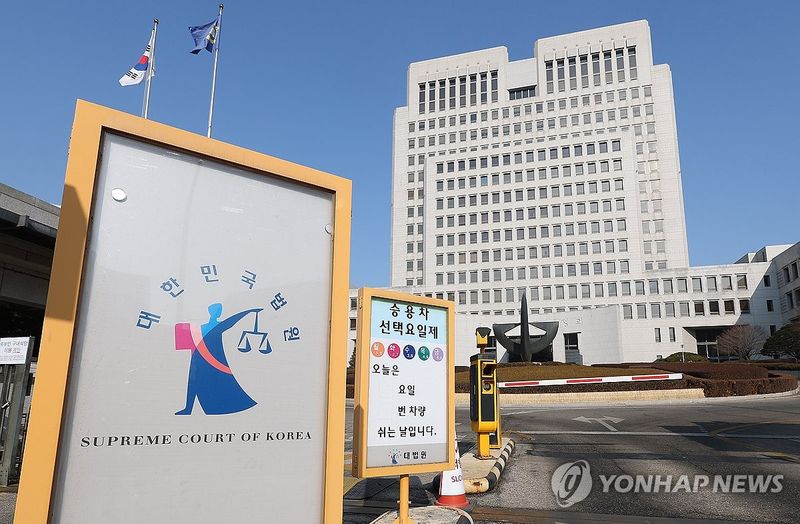
According to legal circles on the 4th, the Second Division of the Supreme Court of Korea, with Justice Oh Kyung-mi as the presiding justice, dismissed the appeal filed by A, the operator of a company that sold mobile-phone surveillance apps, on the 10th of last month. The court upheld the lower court's sentence of seven years in prison, five years' suspension of qualifications, and confiscation of KRW 1.974 billion.
A was indicted for overseeing the company's operations as its de facto operator from around January 2019, including customer consultations and the settlement of sales proceeds. The app operated by having purchasers install a “parent version” on their own phones and a “child version” on the phones of surveillance targets. Once installed, the app's icon was hidden, making it difficult for the targets to know that it was running. Call recordings, GPS locations, and text messages were automatically sent to the company's server, allowing purchasers to monitor them in real time. The company advertised using keywords such as “cheating husband,” recruited members through private investigation agencies, and charged KRW 500,000 for one month or KRW 2.8 million for six months.
Prosecutors alleged that A conspired with app purchasers to secretly record 119,713 non-public calls between third parties, distributed malware by causing 6,008 people to download the app, and collected and provided the personal location information of 980 surveillance targets without their consent. They also alleged that he operated a location-based services business without reporting it to the Korea Communications Commission (KCC), thereby obtaining approximately KRW 3.396 billion.
The issue was whether a person who created and sold the app should be punished as a co-principal for the purchaser's illegal recordings or merely as an aider and abettor. At the appellate trial, A argued that the purchasers had made the recordings and that he had only sold the app. Prosecutors added aiding and abetting a violation of the Protection of Communications Secrets Act as an alternative charge.
In December last year, the Busan District Court, the trial court, found A guilty on all counts in the indictment. In May this year, the Busan High Court, the appellate court, also dismissed his appeal. The appellate court stated, “A sequential and implicit conspiracy with the app purchasers is recognized, as is functional control over the acts through an essential contribution to the crimes based on it. He is not merely an aider and abettor.” The court cited as grounds the fact that the app was designed on the premise of recording calls without the other party's consent, that its advertisements emphasized its wiretapping capabilities and consultations explained how to install it secretly, and that recordings were automatically stored on a separate server so they could be heard at any time.
The Supreme Court of Korea also accepted the lower courts' findings. The court stated, “The lower court's judgment contains no error that violated the rules of logic and experience, exceeded the limits of the principle of free evaluation of evidence, or misunderstood the legal doctrine concerning the establishment of co-principal liability.” It rejected the claim that the lower court had failed to determine whether the recordings involved “conversations between other parties” under the Protection of Communications Secrets Act, stating, “This claim was raised for the first time only at the Supreme Court stage and therefore cannot constitute a lawful ground for appeal.”
[email protected] Kim Dong-gyu Reporter