Japanese Media Take Notice of the Truth Behind "1 Win, 9 Losses"... At Least at the Asian Games, South Korea Is Japan's Nemesis, Not Its Rival
- Input
- 2026-10-04 11:30:00
- Updated
- 2026-10-04 11:30:00
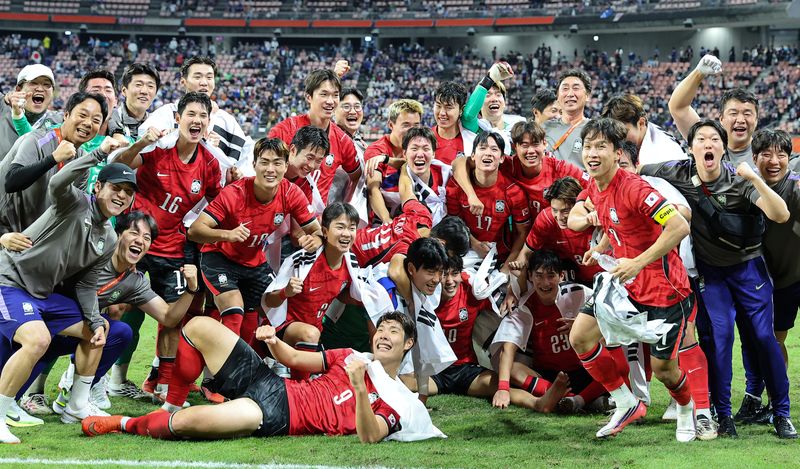
[Financial News] At this point, even the word "rival" is too generous, at least at the Asian Games. "Nemesis" is more fitting. South Korea has won nine of their 10 meetings. More importantly, it has won every single final, without exception.
South Korea's national under-23 football team, led by head coach Lee Min-sung, defeated archrival Japan 1-0 in the men's football final of the 2026 Aichi-Nagoya Asian Games at Toyota Stadium in Aichi Prefecture, Japan, on the 3rd. The victory secured an unprecedented fourth consecutive title.
What sends fans' adrenaline surging just as much as the joy of winning is the brutally one-sided all-time record between the two teams.
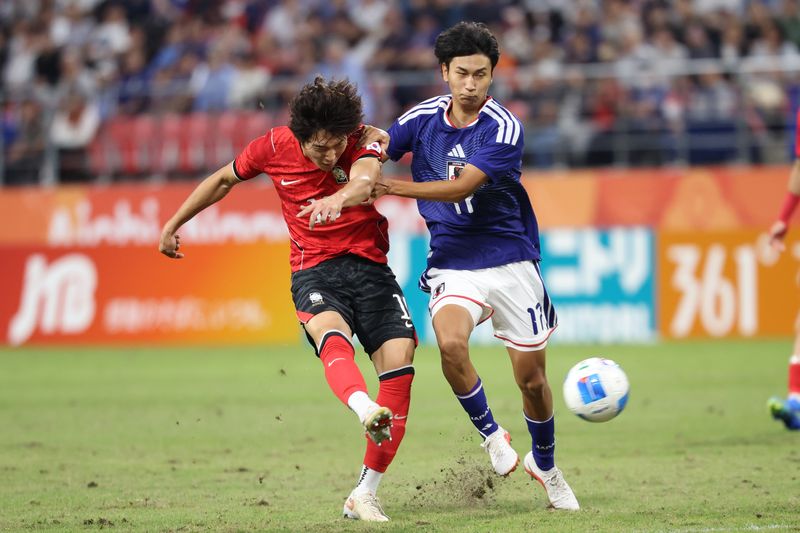
Even Japanese media could not deny reality after the defeat in this final and highlighted a shocking number: "1 win, 9 losses." Japanese outlets reviewed the all-time Asian Games meetings between the Republic of Korea and Japan, reporting that Japan's record against South Korea stood at one win and nine losses, including this final defeat.
That is Japan's all-time record against South Korea in men's football at the Asian Games. Its winning percentage is just 10%. In other words, South Korea has won nine of their 10 encounters.
What cuts Japan to the bone more than anything is the history of the finals contested for gold. South Korea has been the only winner in the Korea-Japan finals held at the last three consecutive editions.
The 2018 Jakarta-Palembang Asian Games final was decided after a hard-fought extra-time battle, with consecutive goals from Lee Seung-woo and Hwang Hee-chan giving South Korea a 2-1 victory over Japan. Four years later at the 2022 Hangzhou Asian Games, South Korea conceded the opening goal just two minutes after kickoff but stormed back to a 2-1 comeback win through goals from Jeong Woo-yeong and Cho Young-wook.
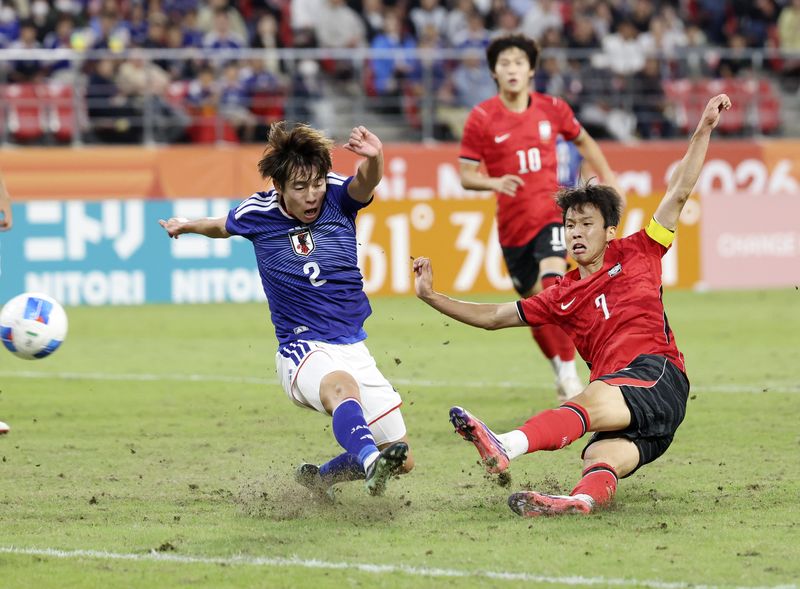
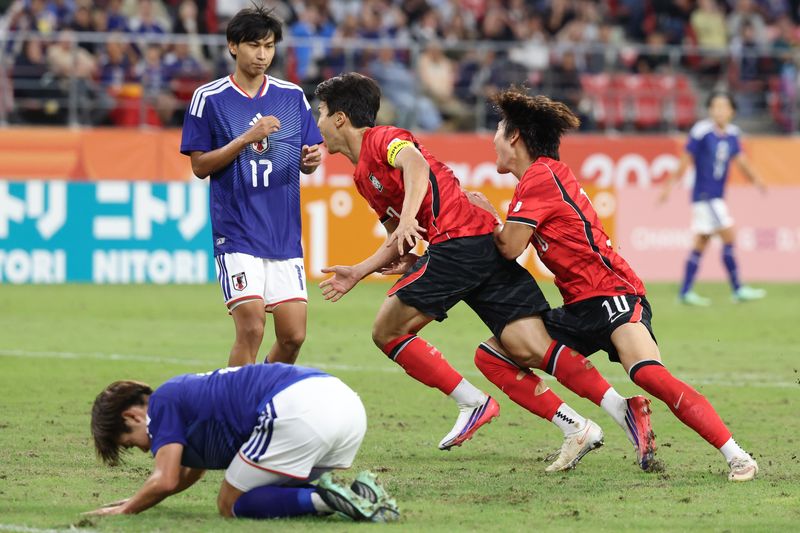
In 2026, the stage for the third meeting was, fittingly, Japan's own heartland. It was the Asian Games' first return to home soil in 32 years, since the 1994 Hiroshima Asian Games. Japanese media called for "third time's the charm," while head coach Go Oiwa boasted, "We will pour out all the frustration of the past," as he promised to reclaim the gold medal after 16 years. The stands were packed, too. It was essentially the highlight of the entire 2026 Aichi-Nagoya Asian Games.
But once the match began, the entire Japanese archipelago fell silent. In the 16th minute of the second half, Eom Ji-sung's fierce winning goal found the back of Japan's net, giving South Korea a 1-0 victory. The results—2018 (1-2 loss), 2022 (1-2 loss), and 2026 (0-1 loss)—may appear to be three straight one-goal thrillers, but it was always the Taegeuk Warriors who stood atop the podium and took the gold.
Even with the backing of overwhelming home support, Japan could not escape the brutal "1 win, 9 losses" trap. After receiving a dismal record of three losses in three Asian Games finals, Japan's football community is now seething over the scars left by South Korean football.
[email protected] Jeon Sang-il Reporter