"I've Given Birth, Too" ... Elderly Woman Takes Seat from Nearly Full-Term Pregnant Woman in Ankle Cast [What Do You Think?]
- Input
- 2026-10-04 15:27:41
- Updated
- 2026-10-04 15:27:41
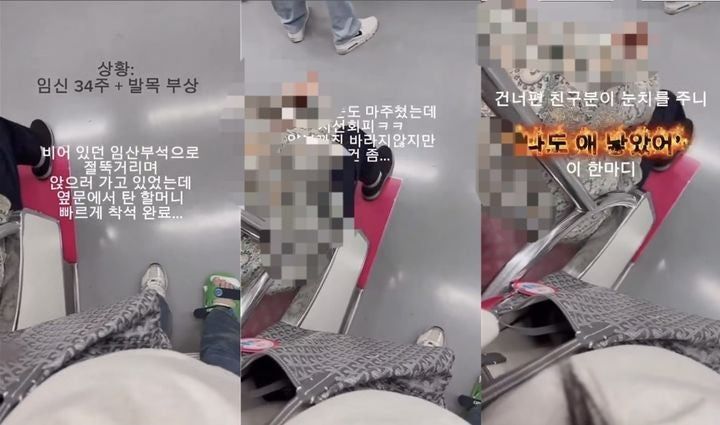
[Financial News] Online outrage is growing after a story emerged about a 34-week pregnant woman wearing an ankle cast who had to stand during her subway ride because another passenger took over a priority seat for pregnant passengers.
According to social media and online communities on the 3rd, a video and post were recently shared showing a pregnant woman identified as A standing on a crowded subway train while wearing an ankle cast.
At the time, A was 34 weeks pregnant and nearly full-term. Limping, she headed toward an unoccupied priority seat for pregnant passengers. However, an elderly woman who boarded through a nearby door approached quickly and took the seat first. A recounted, "Our eyes met as she sat down, but she simply looked away."
An acquaintance traveling with the woman noticed A's predicament and gestured for her to give up the seat. However, the woman reportedly refused, saying, "I've given birth, too." With no other vacant seats in the carriage, A, who was nearly full-term and had an injured leg, had to stand all the way to her destination.
After hearing the story, online users criticized the woman, saying, "It is beyond common sense to take the seat after seeing a nearly full-term pregnant woman with an injured leg," and, "If she has given birth, she should understand the pain better, but instead she acted as if she were the victim." Others expressed dismay, saying, "The fact that not one passenger sitting in a nearby regular seat gave up their place is also a bleak reflection of our society."
Debates and conflicts over the effectiveness of priority seats for pregnant passengers on subways recur every year. Seoul Metro receives an average of 6,921 complaints related to these seats annually, or about 19 per day. The main complaints include requests for public-address announcements regarding nonpregnant passengers occupying the seats.
According to a survey by the Korea Population, Health and Welfare Association, the rate of pregnant women who have used priority seats fell from 92.3% to 79.5%, indicating that vulnerable transit users still face significant barriers in practice. However, because there are no legally binding provisions or penalties governing the use of priority seats for vulnerable transit users, Seoul Metro currently relies on civic-awareness campaigns, such as broadcasting promotional videos and public-address announcements on trains.
[email protected] Moon Young-jin Reporter