North Korea Provokes with Hypersonic MRBM Yesterday... Observed to Show Off 'Hwasong-16Na' with Solid Fuel and a 7-Axis Launcher Nearing Completion
- Input
- 2026-10-04 11:04:42
- Updated
- 2026-10-04 11:04:42
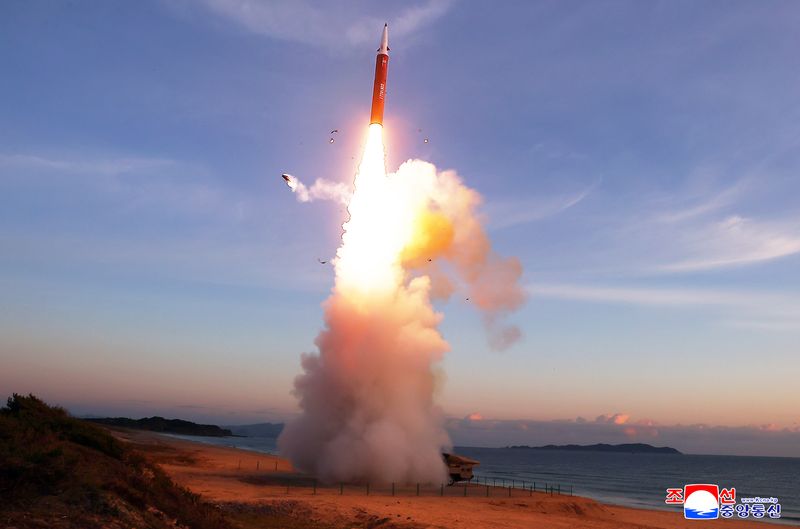
KODEF Secretary General Shin Jong-woo first pointed out that North Korea is currently developing hypersonic missiles in two separate types: the 'glider type' and the 'cone type.'
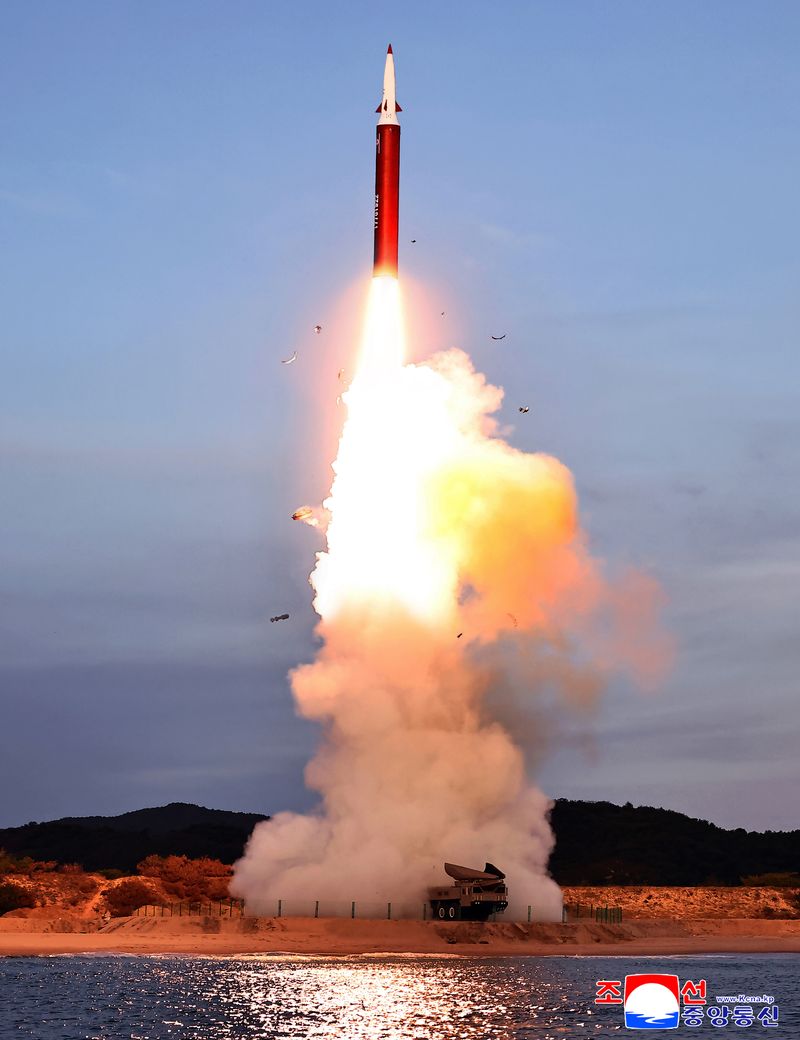
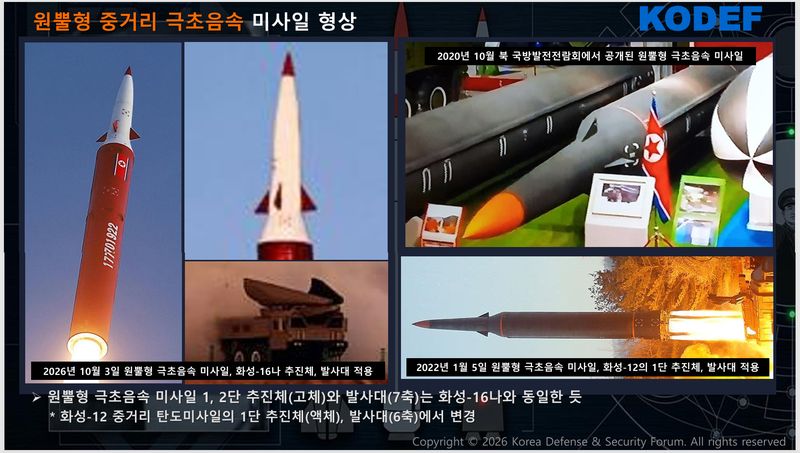
The report assessed that the first- and second-stage solid propellants and the seven-axis transporter-erector-launcher (TEL) of this cone-shaped hypersonic missile are identical to those of North Korea's latest medium-range missile, the Hwasong-16Na. This represents a complete transition from the previous method, which used the liquid-propellant first stage and six-axis launcher of the Hwasong-12, to a solid-propellant-based system. This means the pre-launch fueling stage has been eliminated, significantly enhancing the ability to conduct a surprise launch.
North Korea launched a ballistic missile by surprise into the East Sea on the morning of the previous day. This came 13 days after it launched short-range ballistic missiles (SRBMs) twice in one day from the Wonsan area on the 20th of last month, marking the 16th missile provocation of the year. The action came one day after Kim Yo Jong, a senior official of the Workers' Party of Korea, rejected inter-Korean dialogue.
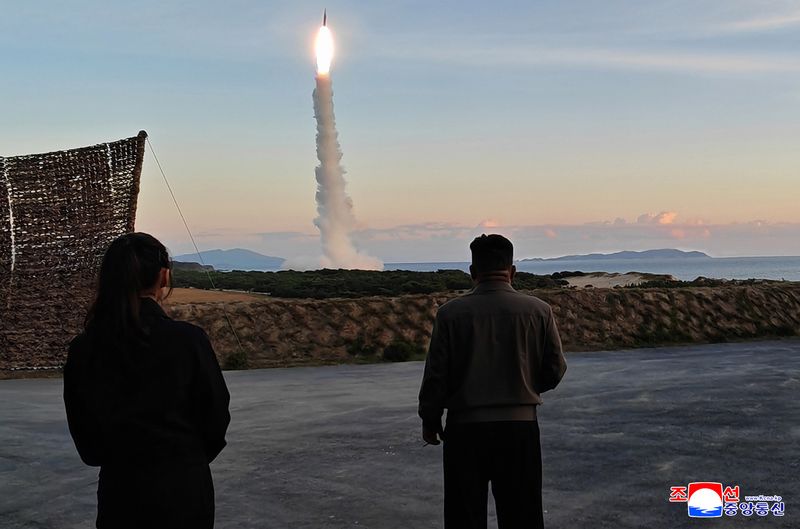
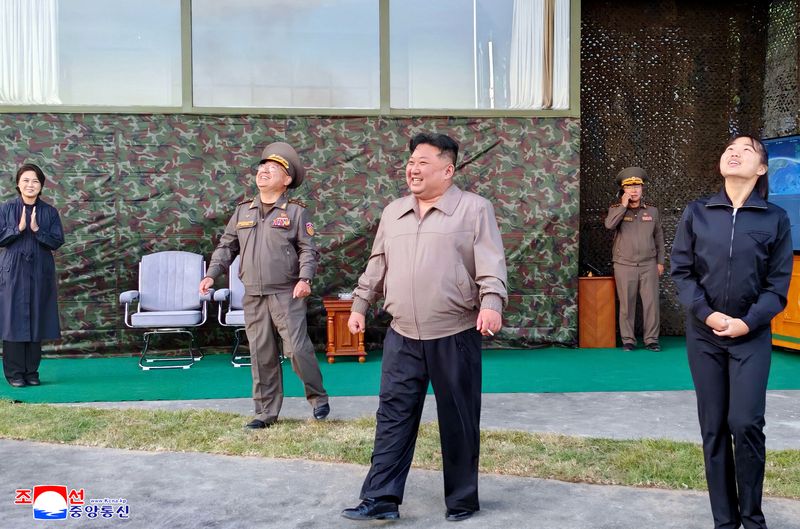
On the previous day, the day of the missile launch, Kim Yo Jong claimed through the Korean Central News Agency, a representative state-run external propaganda outlet, that the launch was an intermediate-range strategic missile (MRBM) exercise conducted under the observation of Chairman Kim Jong Un. Unlike North Korea's usual practice of disclosing details the day after a ballistic-missile provocation or remaining silent, its issuance of a position roughly 12 hours later was unusual. South Korea and the United States are currently conducting a detailed analysis of the projectile's specifications.
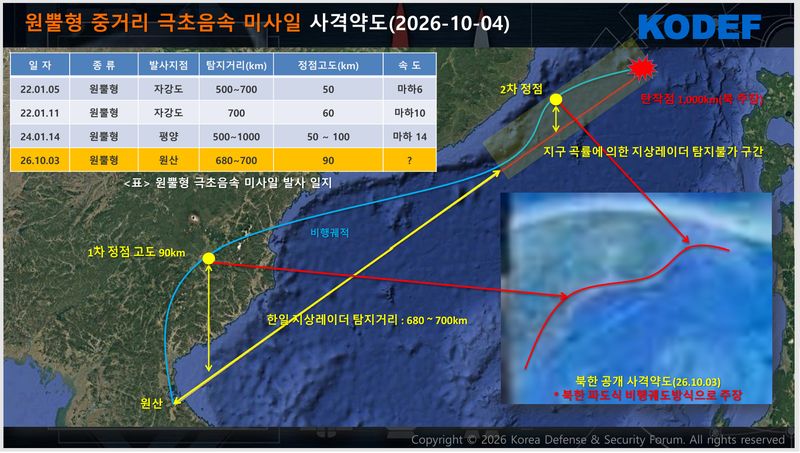
In its report, KODEF also identified the scientific cause of the discrepancy in the initial detection data reported by the South Korean and Japanese military authorities and North Korea. North Korea's cone-shaped hypersonic missile has the technical capability to perform a 'gliding re-jump' maneuver: after reaching a primary peak altitude of 90 km and descending, it rises again anomalously in the low-altitude section. During this process, the curvature of the Earth creates an approximately 300-km 'ground-radar-undetectable zone' that South Korean and Japanese ground radars cannot physically track.
The previous day, the Republic of Korea Joint Chiefs of Staff (ROK JCS) and Japan's Ministry of Defense announced that they had detected the missile only up to the 680–700 km inflection point, the limit of ground-based radar detection. North Korea, however, claimed that the final impact point after passing through the blind zone and performing a gliding re-jump was 1,000 km away, revealing a discrepancy.
The Republic of Korea Joint Chiefs of Staff (ROK JCS) reported the previous day, "At around 6:30 a.m., we detected one ballistic missile launched from the Wonsan area of North Korea toward the East Sea," adding that the missile flew more than 700 km. Japan's Ministry of Defense stated that the North Korean ballistic missile reached a maximum altitude of approximately 90 km and was presumed to have fallen outside Japan's exclusive economic zone (EEZ) after flying about 680 km.
North Korea is analyzed to have sought to showcase its ability to evade interception by highlighting this approximately 300-km section in which South Korean and Japanese ground-radar detection is limited by the curvature of the Earth.
North Korea is currently observed to be attempting to neutralize the ballistic-missile defense (MD) networks of South Korea, the United States, and Japan through a two-track strategy: deploying the short-range hypersonic missile Hwasong-11Ma for strikes against the Korean Peninsula and operating the Hwasong-16Na (cone-shaped) against medium-range targets such as Andersen Air Force Base in Guam. Shin Jong-woo assessed, "The public disclosure of this fourth launch demonstrated that the advancement of the hypersonic weapons system is in its final stage by confirming turning-flight and gliding-re-jump technologies."
In a statement, Kim Yo Jong directly targeted South Korea-U.S.-Japan cooperation, claiming, "The South Korean and Japanese military authorities failed to track our missile to the end." She particularly mocked the explanations by South Korea, the United States, and Japan regarding detection limitations caused by the curvature of the Earth as "pathetic excuses," insisting that this proved the perfection of North Korea's missile capabilities. She also claimed that artificial-intelligence (AI) technology had been introduced into the missile and threatened, "As the superiority of the special flight mode incorporating AI and the ability to change the low-altitude flight trajectory has been verified, there is virtually no way to avoid the strike of our missiles."
Military experts interpret the timing and intent of North Korea's latest provocation as a sophisticated bid to seize the initiative against the South Korean and U.S. military leadership. The surprise launch was carried out less than a day after newly appointed Defense Minister Kang Shin-chul visited Camp Humphreys in Pyeongtaek for his first official engagement after taking office and held an emergency meeting with General Xavier T. Brunson, commander of the ROK-U.S. Combined Forces.
Minister Kang Shin-chul and General Brunson reportedly reviewed the combined defense posture and discussed countermeasures regarding an explosion caused by a North Korean anti-personnel mine south of the Military Demarcation Line (MDL) within the Demilitarized Zone (DMZ) on the western front on the 21st of last month. However, the specific details of the discussion were not disclosed.
Experts also analyze the provocation as an attempt to 'tame' the new defense minister by undermining the alliance's overwhelming combined deterrence and neutralizing his effort to secure the initiative on North Korea.
[email protected] Lee Jong-yoon Reporter