2,335 Constitutional Complaints Against Court Judgments Filed, but Only 23 Reached the Merits; Nearly Half Concern the Appellate-Brief Deadline
- Input
- 2026-10-04 14:25:59
- Updated
- 2026-10-04 14:25:59
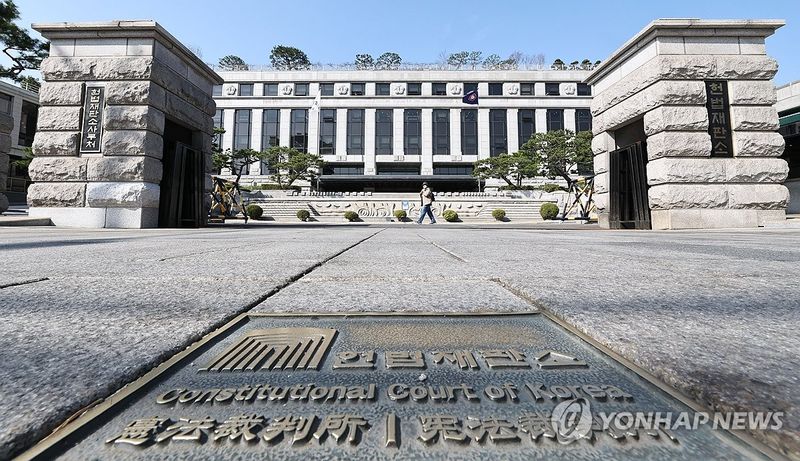
[Financial News] More than 2,300 constitutional complaints against court judgments have been filed since the system was introduced by people claiming that court proceedings infringed their fundamental rights and seeking a ruling from the Constitutional Court of Korea. However, only about 20 cases have proceeded to review by the full bench. Nearly half of the cases that reached the merits have focused on the deadline for filing a statement of grounds for appeal, drawing attention to what the Constitutional Court of Korea will decide in the future.
According to the Constitutional Court of Korea on the 4th, a total of 2,335 constitutional complaints against court judgments had been filed as of midnight on the 28th of last month. Of these, 2,184 were dismissed without reaching the merits, while 23 cases had been referred to the full bench as of that day.
Compared with the total number of complaints filed, the cases that proceeded to the full bench account for less than 1%. Rather than functioning as a de facto "fourth instance" for all final court judgments, the constitutional complaint system is being used to review a limited number of cases in which fundamental-rights violations may have occurred.
Notably, cases concerning the deadline for filing a statement of grounds for appeal account for a large share of those referred to the full bench. The Constitutional Court of Korea has referred two additional cases involving the appellate-brief deadline to the full bench. Including the nine cases of the same type previously referred, at least 11 constitutional complaints against court judgments concern the appellate-brief deadline. They represent approximately 47.8% of the 23 cases referred to the full bench.
The issue concerns the mandatory filing system for statements of grounds for appeal under the Civil Procedure Act. Under the current Civil Procedure Act, if the grounds for appeal are not stated in the notice of appeal, the appellant must submit a statement of grounds for appeal within 40 days of receiving notice that the appellate case record has been received. The appellate court may extend the deadline by one month only once upon application. However, if the statement is not submitted within the prescribed period, the appeal must in principle be dismissed.
The system was introduced through an amendment to the Civil Procedure Act in 2024 to identify the issues in appellate cases at an early stage and expedite appellate proceedings. However, concerns have been raised that it may excessively restrict the constitutional right to a trial by depriving appellants of the opportunity to have their cases heard on the merits simply because they missed the deadline. The Supreme Court of Korea has also recently issued a ruling emphasizing an appellant's procedural rights in this regard.
On August 25, in a case concerning the cancellation of a provisional registration, the Supreme Court of Korea ruled that if an appellant failed to meet the deadline for filing a statement of grounds for appeal for a reason for which the party could not be held responsible, or for an equivalent reason, the court may extend the deadline even after it has passed. The Supreme Court of Korea stated that the disadvantage an appellant suffers under the mandatory filing system cannot be allowed to reach a level that infringes the constitutional right to a trial.
In that case, the appellant applied for litigation aid before the deadline for filing the statement of grounds for appeal expired, but the decision concerning the application was served after the deadline had passed, together with the decision dismissing the appeal. The lower court dismissed the appeal on the grounds that the statement had not been submitted within the prescribed period, but the Supreme Court of Korea reversed the decision and remanded the case.
The Supreme Court of Korea has already pointed out that strict enforcement of the deadline for filing a statement of grounds for appeal could infringe the right of access to the courts. As the Constitutional Court of Korea continues to take related constitutional complaints against court judgments up for merits review, the two highest courts are moving to establish more specific standards for the same system in their respective rulings.
In particular, if the Constitutional Court of Korea ultimately rules that an individual decision dismissing an appeal for failure to file a statement of grounds for appeal infringed fundamental rights, the case could become one of the first since the system was introduced to effectively overturn a court decision.
A lawyer who previously served as a constitutional researcher predicted, "With 2,184 of the 2,335 constitutional complaints against court judgments already dismissed, the 23 cases that survived—and, among them, the appellate-brief cases that account for nearly half—will become the key issue in establishing the initial standards for the constitutional complaint system."
[email protected] Yoo Seon-jun Reporter