‘2026 Busan German Night’ Draws Attention on the 36th Anniversary of German Reunification
- Input
- 2026-10-03 19:51:50
- Updated
- 2026-10-03 19:51:50
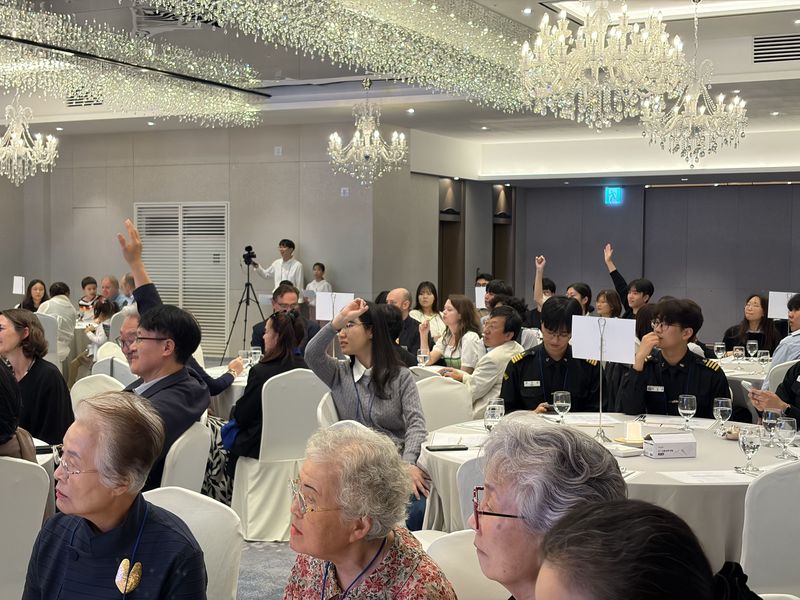
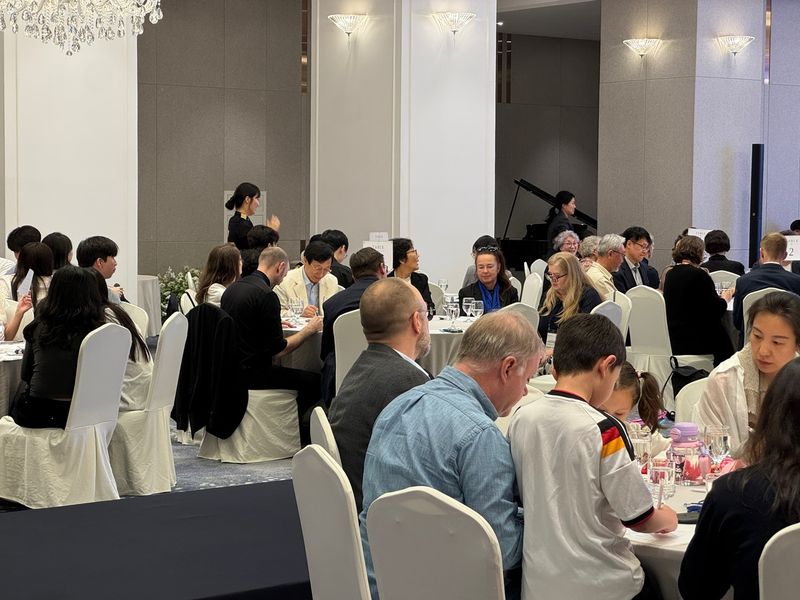
[Financial News] The ‘2026 Busan German Night and Korea-Germany Meeting Night’ was held successfully on the 2nd at the convention hall of Busan Tourist Hotel to commemorate the 36th anniversary of German reunification and promote friendship and exchange between South Korea and Germany.
The event was organized through the continued participation and cooperation of various South Korea-Germany exchange partners, including the Honorary Consulate of the Federal Republic of Germany in South Korea, the Korean-German Cultural Exchange Association LIDO-Korea, the Embassy of Germany in South Korea, the Germany-Korea Foundation, and the Busan German Companies Association.
The gathering took on added significance by bringing together figures from a wide range of fields—not only diplomacy, the economy, academia, education, culture, youth affairs, and maritime affairs, but also the shared memories of the Korean War and peace—rather than limiting the exchange to a particular institution or sector.
The event was attended by officials from the Embassy of Germany in South Korea and figures involved in Germany and Europe-related affairs, as well as representatives of the United Nations Memorial Cemetery in Korea (UNMCK), the European Chamber of Commerce in Korea (ECCK), the City of Hamburg, universities and research institutions in Busan, Jeju, and Gyeongnam, and the South Korea-Germany cultural exchange community.
In a welcoming address, the honorary consul introduced the attendees at each table and emphasized, "Every one of the tables prepared here is a distinguished table of honored guests that showcases the essence of South Korea-Germany exchange." In fact, each table was occupied by people connecting the past, present, and future of South Korea-Germany exchange, adding to the significance of the event.
The event also brought together the Busan Association of Korean Nurses Dispatched to Germany (BEKIDA), the German-speaking community, the University of Göttingen Alumni Association, the Embassy of Germany in South Korea, the United Nations Memorial Cemetery in Korea (UNMCK), the European Chamber of Commerce in Korea (ECCK), officials from the City of Hamburg, and professors and researchers from universities in Busan, Jeju, and Gyeongnam.
Representatives from the economy, media, culture, education, healthcare, maritime affairs, and civil society also attended, along with university students and families from the Busan Saturday German School, broadening the scope of exchange across generations, nationalities, and fields.
Students from Korea Maritime & Ocean University (KMOU), Busan University of Foreign Studies (BUFS), and the Department of German Studies at Jeju National University (JNU), headed by Kim Maeng-ha, took part and showcased South Korea-Germany exchange among future generations. JNU students also toured historic sites in Busan, gaining opportunities for field research and study on South Korea-Germany relations.
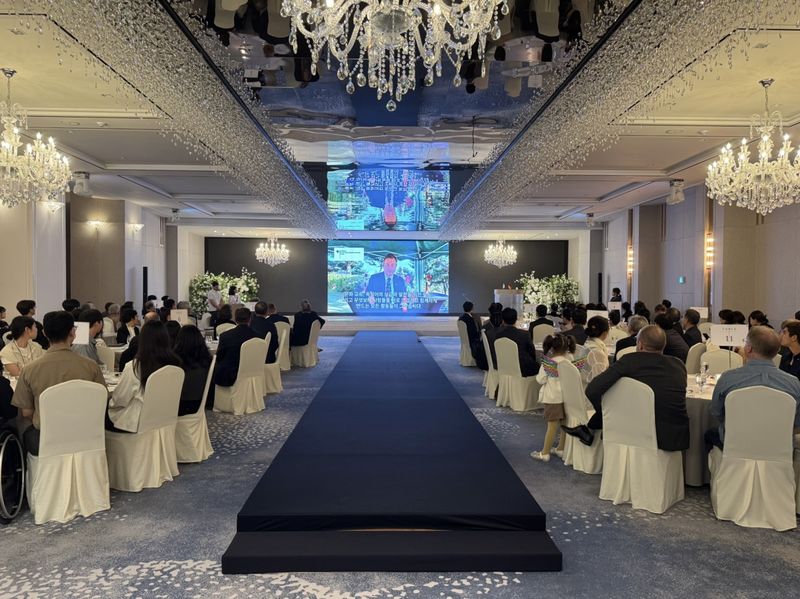
The event highlighted not only the historical significance of German reunification but also the ties between South Korea and Germany forged through the Korean War, Busan, the United Nations forces, and South Korea’s postwar reconstruction.
As a result, a diverse group of people from South Korea and abroad who are interested in Germany, Europe, the Korean War, peace, and reunification gathered to share historical memories and discuss possibilities for future cooperation.
In congratulatory remarks, German Ambassador to South Korea Georg Schmidt recalled that Germany’s peaceful reunification continues to hold special significance today. He also underscored the importance of the South Korea-Germany cultural and language exchanges, university student networks, Saturday German School, and local research and educational activities taking place in Busan.
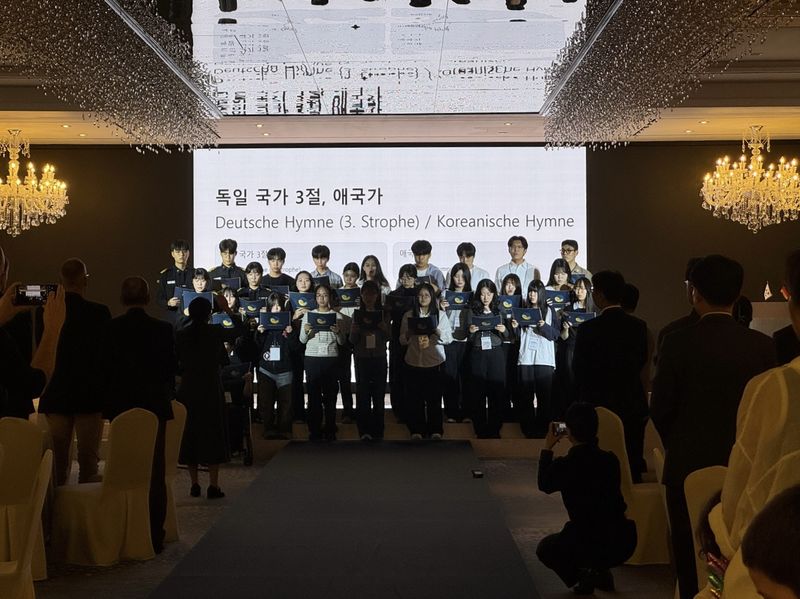
One highlight of the event was a special performance by students from the Busan Saturday German School.
Students of diverse nationalities and cultural backgrounds, including Germany, South Korea, and China, expressed their multiple cultural identities through music and performances, receiving enthusiastic applause from the audience. Through the Saturday German School, they are learning the languages and cultures of Germany and South Korea while also gaining experience in understanding the cultural identities of the countries and families to which they belong.
The Busan Saturday German School is particularly meaningful because executive directors of the Korean-German Cultural Exchange Association LIDO-Korea continue to operate it as volunteers. The students’ performances showed that South Korea-Germany exchange is not confined to diplomacy or institutional relations but is alive in the daily lives and education of younger generations.
Students and professors, diplomats, businesspeople, researchers, and civil society representatives naturally came together at the event to share meals and conversations, exchanging views on the direction in which South Korea-Germany relations should develop.
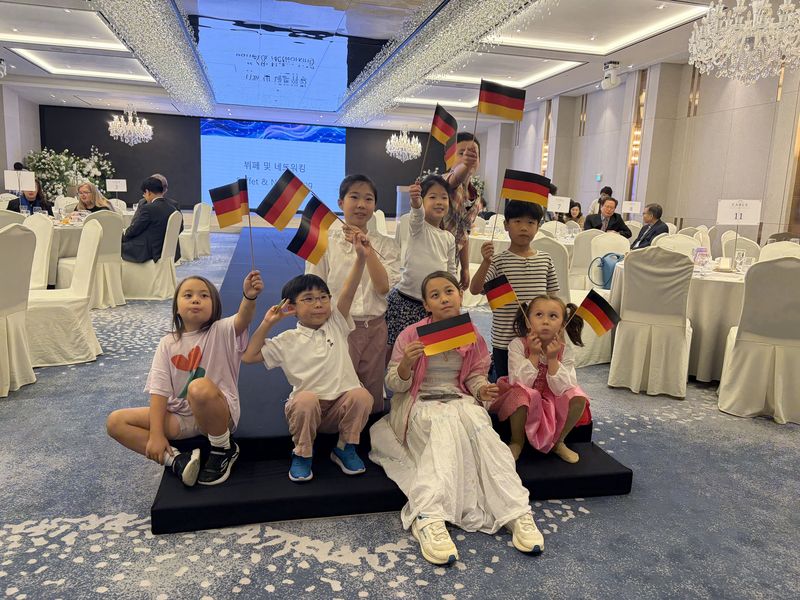
The participants shared their experiences and ideas across nationalities, generations, and professional fields, confirming that grassroots South Korea-Germany exchange in Busan continues steadily.
The event was held as part of the ongoing Busan Korea-Germany Meeting Night commemorating the ‘Day of German Unity,’ which has continued every year without interruption since 2019.
The event has been able to continue because it is not a one-time project of a single institution. Rather, it is the result of voluntary cooperation and solidarity among various groups that have consistently worked to advance South Korea-Germany relations in Busan and across South Korea.
In his welcoming remarks, Honorary Consul Chinsung Chung expressed his gratitude to those who have devoted themselves to developing South Korea-Germany relations. He emphasized that the people gathered that day were the very figures who had built those relations in Busan. He also said that connecting people with people, generations with generations, and cultures with cultures was an important meaning of the gathering.
Acknowledgments were also extended for the continued collaboration among various partners, including the Honorary Consulate of the Federal Republic of Germany in South Korea and the Korean-German Cultural Exchange Association LIDO-Korea. The event also emphasized that activities in various areas—including South Korea-Germany cultural and language exchange, youth and education cooperation, and exchanges among the Korean-German diaspora community, universities, and researchers—have continued and expanded steadily, centered on Busan.
The ‘2026 Busan German Night’ concluded not merely as a commemoration of German reunification, but as an occasion to reflect on the past, reaffirm current exchanges and cooperation, and prepare for exchange and cooperation among future generations.
The participants agreed that Germany’s experience of reunification could serve as an important historical reference when considering peace and reunification on the Korean Peninsula. They also resolved to continue expanding civilian, academic, educational, cultural, and maritime exchanges between South Korea and Germany, centered on Busan.
Jeong Mun-su, chairman of the Korean-German Cultural Exchange Association, said, "While commemorating German reunification, we also confirmed the current state of South Korea-Germany relations being sustained through encounters between people in Busan." He added, "We will continue working together so that various institutions and organizations, as well as the next generation, can carry forward the history of South Korea-Germany exchange and create new paths for cooperation."
The event concluded as a meaningful gathering that both commemorated the 36th anniversary of German reunification and confirmed the continuity and future potential of civilian South Korea-Germany exchange in Busan since 2019.
[email protected] Byeon Ok-hwan Reporter