[Exclusive] AI Glasses 'Cheating' to Be Prevented... CSAT Response Manual to Be Released on the 15th
- Input
- 2026-10-04 15:25:41
- Updated
- 2026-10-04 15:25:41
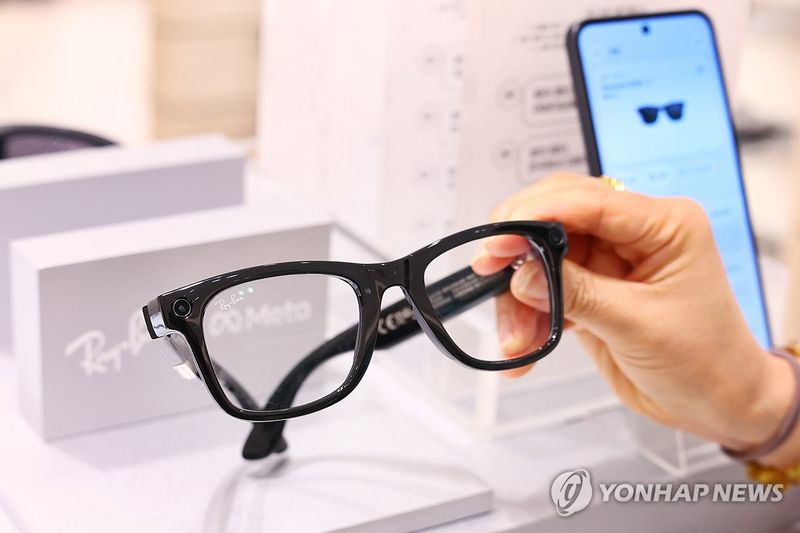
[Financial News] The Ministry of Education and the Korea Institute for Curriculum and Evaluation (KICE) will announce a manual on the 15th to prevent cheating on the College Scholastic Ability Test (CSAT) using AI glasses. With about a month remaining before the CSAT, the authorities are notifying proctors of supervision guidelines and stepping up preparations to address cheating involving advanced devices such as AI glasses.
According to Financial News' reporting on the 4th, the Ministry of Education and KICE plan to prepare and distribute separate response guidelines for proctors and notices for test takers on the 15th in printed and video formats. As smart glasses have begun to spread following the commercial launch of Meta Platforms' AI glasses in Korea in May, the authorities designated them as prohibited items for the CSAT in June and are now specifying the procedures to be applied at actual test sites.
The recent increase in cases of people being caught carrying prohibited items into CSAT test sites is also heightening the need for action. Unlike conventional electronic devices, AI glasses are difficult to distinguish from ordinary glasses, making them difficult to identify immediately at the test site even when they are brought in or used for cheating.
AI glasses go commercial... Actual cheating cases emerge in exams
According to data submitted by the Ministry of Education to the office of Baek Seung-a, a Democratic Party of Korea lawmaker on the National Assembly Education Committee, there were no detected cases of cheating involving the viewing of unauthorized materials or the use of wireless devices from the 2022 CSAT through the 2026 CSAT. However, detected cases of CSAT cheating involving possession of prohibited items rose in recent years: 65 in 2022, 65 in 2023, 63 in 2024, 71 in 2025 and 84 in 2026.
This year requires particular vigilance because it is the first CSAT to be held after AI glasses such as Ray-Ban Meta and Oakley Meta became commercially available in Korea in May. Cases have repeatedly been confirmed in which devices equipped with filming and communications functions were used for cheating in other exams. One test taker wearing AI glasses was caught in each of the TOEIC exams held on May 10 and May 31. From May to June, five cases were also recorded in national technical qualification exams, including those for Fire Protection Engineer, Information Processing Engineer, Electrical Industrial Engineer and Gas Technician, in which candidates wore or used smart glasses and had their exams invalidated or were penalized for cheating.
Experts recommend developing identification criteria and procedures before and after exams that take into account possible device modifications, such as removing light-emitting diode (LED) displays or concealing cameras. Hyung-nam Moon, president of the Korea AI Education Association and a professor in the Division of Convergence and International Studies at Sookmyung Women's University, said, "AI glasses are becoming increasingly difficult to distinguish from ordinary glasses, so authorities should consider introducing technical means to detect electronic devices and communications functions when necessary. They should not rely solely on proctors' personal judgment or visual inspections. Rather than using appearance-based criteria that list specific products, they should apply function-based criteria that determine whether a device has filming, recording, storage, computing, communications or information-display functions."
"Wearable AI Devices Are Spreading... Urgent Need to Establish a Standard Response System"
Moon emphasized, "A standard supervision manual applied uniformly at test sites nationwide must be established to clearly specify who will inspect suspected devices, when and through what procedures, and how a final determination of cheating will be made. Procedures must also be established to protect the rights of test takers who wear corrective glasses. Rather than excessively inspecting all test takers, the authorities should first sufficiently verify the accuracy, privacy protections and inspection time before implementing such measures."
He added, "The key is to create a five-stage standard system: 'prohibited entry, pre-exam checks, supervision during the exam, checks when suspicion arises and post-exam determination.' As new wearable AI devices such as AI contact lenses and miniature earphones may continue to emerge, the authorities must move beyond adding regulations only after new devices appear each year and establish a permanent CSAT AI-cheating response system capable of addressing technological changes."
The Ministry of Education said it is analyzing the characteristics of AI glasses with KICE, metropolitan and provincial education offices and other relevant institutions to establish standards for preventing cheating at test sites. A Ministry of Education official stated, "We are consulting on measures to prevent cheating by analyzing the key characteristics of AI glasses. We will provide proctors with guidance and training on the relevant measures in October to ensure that the exam is operated and managed fairly."
[email protected] Choi Hye-rim Reporter