Jeju Landscapes Become Memories in Jeonju: Lee Mi-seong's Eighth Solo Exhibition
- Input
- 2026-10-03 08:29:43
- Updated
- 2026-10-03 08:29:43
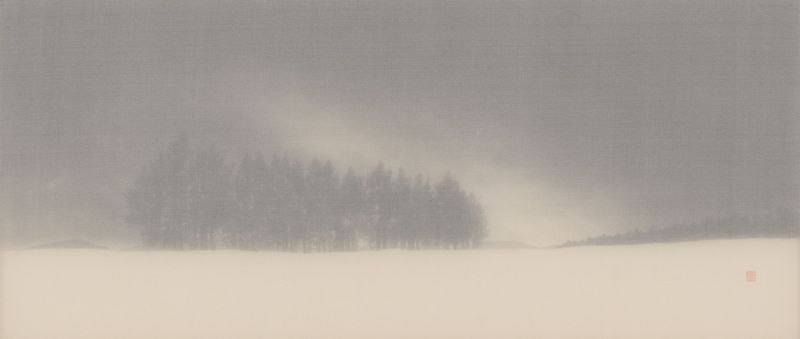
【Financial News, Jeju—Reporter Jeong Yong-bok】 The oreum, forests, snow-covered fields, and memories of wind and light from Jeju Island unfold as Korean landscapes in Jeonju, North Jeolla Province. Korean painter Lee Mi-seong will hold her eighth solo exhibition, *Landscapes Where Memories Linger*, at Gyodong Art Museum in Jeonju from the 6th through the 11th.
The exhibition presents new works in which the artist reconstructs the natural scenery she encountered on Jeju Island as landscapes retained in memory after time has passed, rather than reproducing it exactly as it appeared before her eyes.
The exhibition is being held in Exhibition Room 2 of the Main Building at Gyodong Art Museum on Gyeonggijeon-gil, Wansan-gu, Jeonju, North Jeolla Province.
Lee Mi-seong's work begins by layering silk and jangji and building up countless repeated lines on the surface. As the lines and forms overlap behind the translucent silk, marks that appear small up close transform, when viewed from a distance, into mountain ridges, forests, wind, and waves.
The outlines of the landscapes are not fixed in sharp focus. Forms of mountains and forests emerge on the surface, then fade again as if dissolving into fog. Through this process, the artist expresses the distance between landscapes seen in reality and the memories that remain after time has passed.
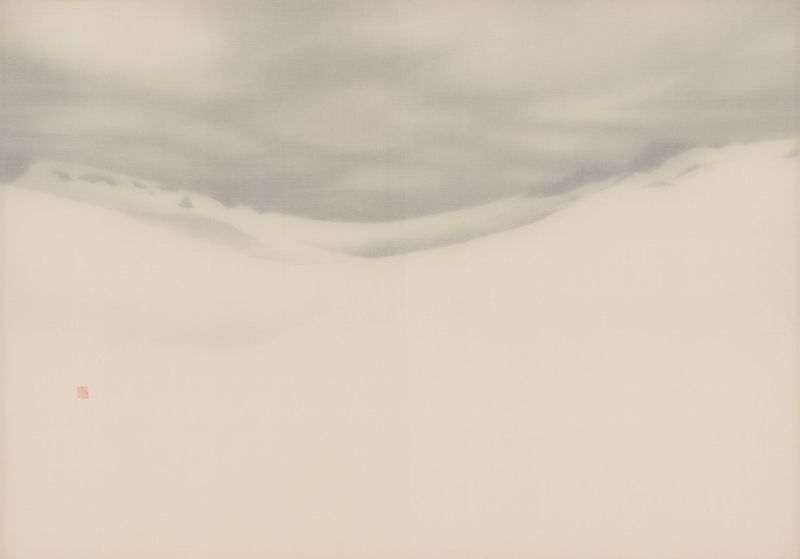
The broad areas left blank are also key elements of the compositions. Instead of filling the surface, the artist allows elapsed time and emotions to remain within the empty spaces. The less clearly the forms are defined, the more room viewers have to overlay their own memories onto the works.
In her work notes, Lee Mi-seong explained, "Rather than transferring the landscape before my eyes exactly as it is, I wanted to draw closer to the image that remains within me after time has passed."
She went on to say that the oreum and forests of Jeju Island, its snow-covered fields, and the horizon beneath the sky were not landscapes depicting specific places exactly as they are, but landscapes in her mind created by the overlap of childhood memories and present emotions.
This approach is also evident in the exhibited series *Landscapes of Memory + α*.
The outlines of mountains and forests emerge faintly through surfaces of gray and pale ink tones, meeting broad areas of negative space. Repeated lines appear first when viewed up close, but the forms of ridges and trees gradually emerge when seen from a distance.
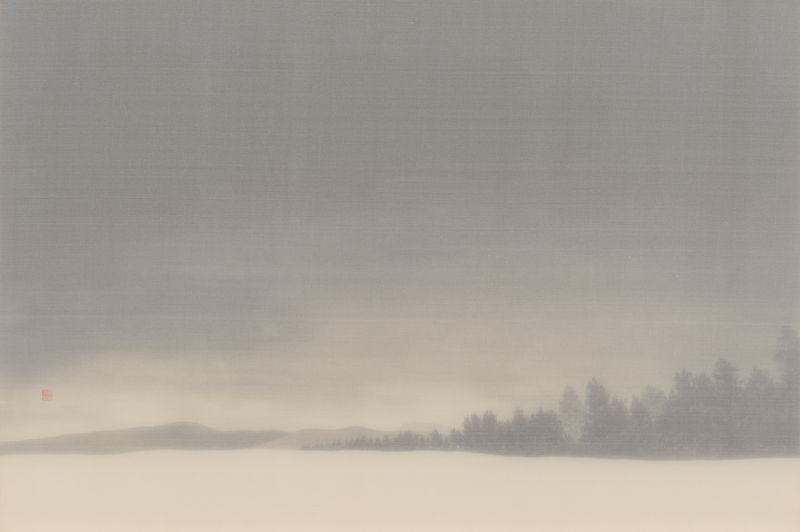
Silk and jangji, the materials used in these works, are traditional materials in Korean painting, but the artist has expanded their expressive possibilities around her personal experiences of memory and time. Although the subject matter comes from Jeju's natural environment, her focus is on creating landscapes into which viewers can project their own memories rather than describing specific locations.
The exhibition is also notable because it brings the artist's recent work to Jeonju after she has continued her artistic practice and solo exhibitions primarily around Jeju Island.
Lee Mi-seong majored in Korean painting in the Department of Fine Arts at Jeju National University and studied Korean painting in the university's Graduate School of Fine Arts. She has held solo exhibitions in Jeju Island, Seoul, and elsewhere, and is active with the Korea Art Association Jeju Special Self-Governing Province Branch and other art organizations in Jeju.
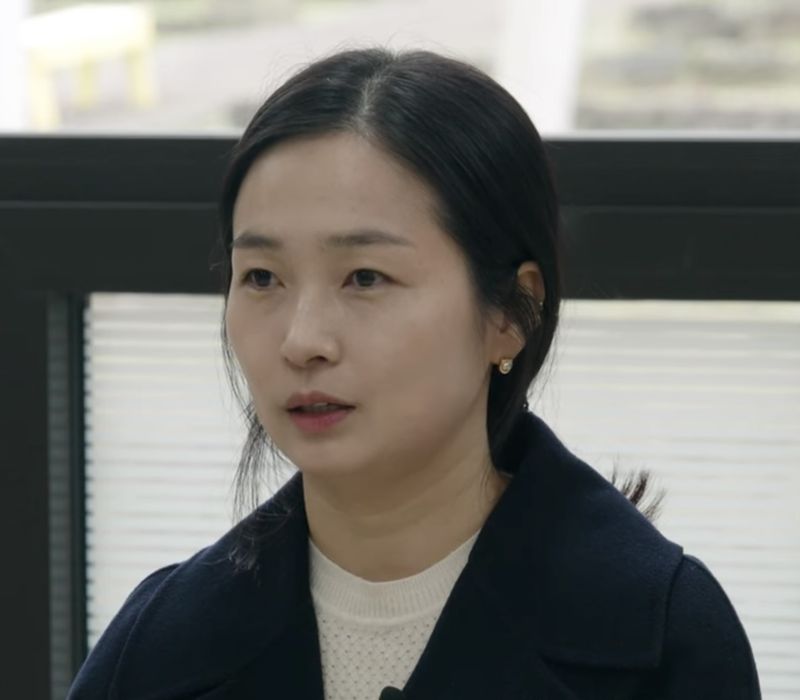
Since her first solo exhibition in 2011, she has presented her work at Jeju Culture and Arts Center, galleries, Seolmundae Women's Culture Center, Lee Jung Seop Art Gallery, and Seoul Arts Center, among other venues. This year's exhibition at Gyodong Art Museum is her eighth solo exhibition.
In this exhibition, the specific place of Jeju Island becomes faint mountains and forests, lines, and negative space on silk and jangji. It is the way the Jeju landscape remembered by the artist encounters each viewer's memories in the new setting of Jeonju.
[email protected] Jeong Yong-bok Reporter