"U.S. Refiners' Quarterly Net Profits to Surge More Than Fourfold"
- Input
- 2026-10-03 03:44:15
- Updated
- 2026-10-03 03:44:15
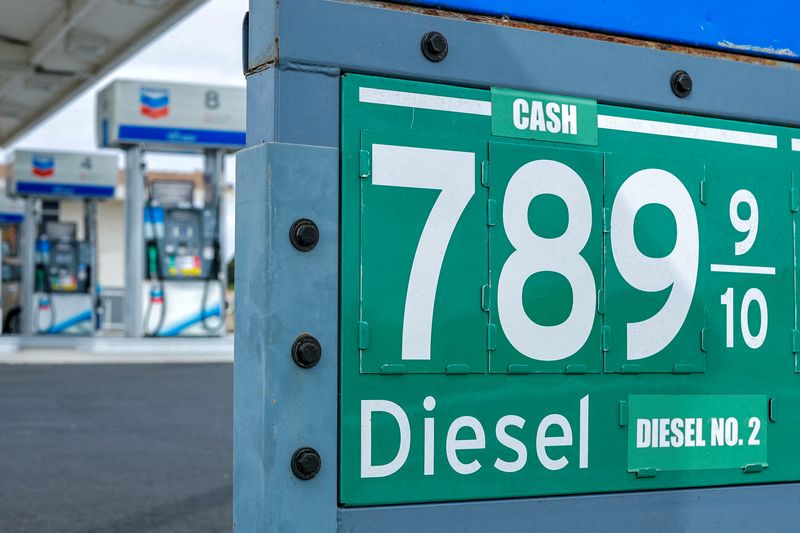
U.S. refiners are expected to see their net profits surge more than fourfold, fueled by soaring diesel and gasoline prices. The gains are attributed to President Donald Trump's war with Iran and Ukraine's attacks on Russian energy facilities.
Refiners Raking in Wartime Windfall Profits
Financial Times (FT) reported on the 2nd (local time) that the eight listed independent U.S. refiners are expected to post combined net profits of $32.4 billion, or approximately 43.6 trillion won, over the six months following the outbreak of the war with Iran. President Donald Trump's launch of the war against Iran on February 28 was decisive. The eight independent U.S.-listed refiners posted $6.8 billion in net profits over the second and third quarters of last year.
Revenue is expected to rise 34% from $242.9 billion to $325.5 billion over the same period, while net profits are projected to surge more than fourfold.
Global supplies of petroleum products suffered severe disruptions due to the war with Iran and Ukraine's drone attacks on Russian refining facilities. As refined-product prices climbed to record highs, refiners reaped massive windfall profits.
Although the United States pushed domestic production to its limit, supply is falling short as exports increase. As a result, U.S. diesel prices have risen more than $2.50 per gallon since the outbreak of the war with Iran, reaching $6.38.
Before the war, the U.S. refining industry faced severe margin pressure amid fierce competition with rivals in the Middle East and Asia. It has now been transformed into a goose laying golden eggs.
Arne Shevelan, an analyst at Rystad Energy, explained, "The financial performance of U.S. refiners is undergoing a dramatic change," adding, "This is against the backdrop of severe fuel supply disruptions caused by wars involving the Middle East and Russia."
Shevelan said refiners' net profit margins had risen to levels comparable to those during the energy crisis triggered by Russia's full-scale invasion of Ukraine in 2022. He forecast that their margins would remain elevated as geopolitical instability persists.
Trump Leads Agreement on "Group of Seven (G7) Release of 100 Million Barrels"
According to Rystad Energy, U.S. refining production reached a five-year high of 17.4 million barrels per day in August. Refiners recorded operating rates above 95% for 15 consecutive weeks, the longest such streak since 1998.
Exports also increased. In August, U.S. exports of diesel, gasoline, jet fuel and naphtha reached 2.8 million barrels per day, well above the 2.3 million barrels per day recorded in August last year. European and Latin American countries, whose supply chains had been disrupted by the loss of supplies from the Middle East and Russia, rushed to the United States.
With the November 3 midterm elections approaching, President Donald Trump even seriously considered banning exports to stabilize domestic diesel prices. Instead, on the 2nd, he led the G7 to agree to release 100 million barrels from strategic reserves. He pressured the G7 with the threat of banning U.S. diesel exports.
Ultimately, the G7, including the United States, agreed that day to release 100 million barrels of crude oil and refined products such as diesel from their reserves over the next four months. They also agreed not to impose measures such as export bans.
As U.S. export volumes return to the domestic market, diesel and gasoline prices are increasingly likely to stabilize. Consequently, refiners' huge net profits are also expected to gradually decline.
[email protected] Song Kyung-jae Reporter