Nike, the Fallen 'Goddess of Victory,' Begins Its Fightback [Yoon Jae-jun's World View]
- Input
- 2026-10-05 05:00:00
- Updated
- 2026-10-05 05:00:00
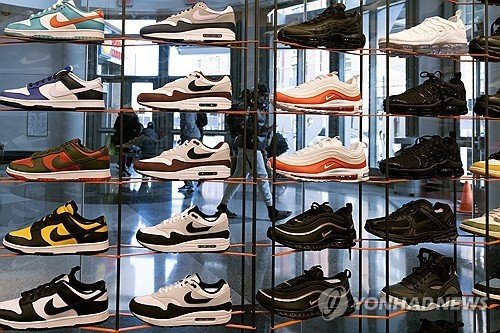
[Financial News] Nike, the world's largest sportswear brand, was named after the goddess of victory in Greek mythology and is facing a severe crisis. As it loses sales and customers, the company is also seeing its market share threatened by emerging rivals such as On and Hoka. Once a company that transformed the industry, Nike is now struggling to defend its throne.
Quarterly revenue announced on the first of the month in local time fell 4% to $11.2 billion, below market expectations. Revenue in China, one of Nike's key markets, plunged 26%. Net income declined from $727 million to $712 million. Nike shares dropped 3.7% in after-hours trading shortly after the weak results and restructuring news were announced. As a result, Nike's stock has fallen 47% so far this year, putting it at risk of recording its worst annual performance ever.
Nike had initially expected its sales decline to continue only through the first half of the year. It has now sharply lowered its outlook, saying revenue for the fiscal year ending in May 2027 will fall by a high-single-digit percentage, or 7% to 9%.
Nike identified a recovery in the Greater China market, along with a rebound in its lifestyle lines Nike Sportswear and Jordan, as long-term priorities. Even in the United States, its largest market, growth was limited to around 2%. DICK'S Sporting Goods said sales of Nike's staple products, including Air Force 1, had slowed considerably.
Elliott Hill began working at Nike as a sales intern in 1988 and returned as CEO in October 2024 after retiring. Although his rebuilding strategy is showing some results, the recovery has been slow. To make matters worse, French soccer superstar Kylian Mbappé recently ended his 20-year partnership with Nike and moved to Swiss emerging brand On. Before Mbappé, Spain's next-generation star Lamine Yamal also joined Adidas. These developments raise questions about whether Nike can continue to attract top athletes as well as win over fans.
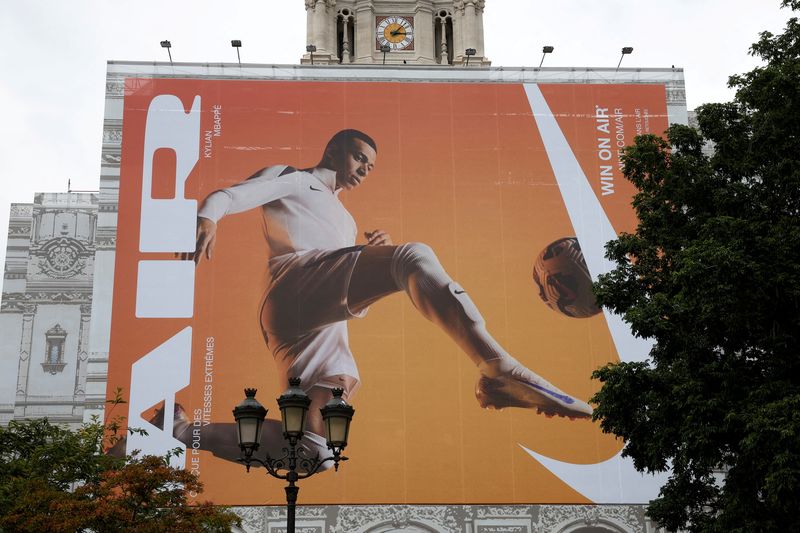
Nike remains a powerful global megabrand, but strategic missteps in recent years have sent its stock tumbling 75% over five years. The company was also removed from the S&P 100, a leading blue-chip index.
Experts point to two main mistakes by Nike. First, it severed ties with brick-and-mortar retailers and focused almost exclusively on direct-to-consumer sales through its online store. Second, it indiscriminately released large quantities of limited-edition products, such as Air Jordan, whose appeal depended on scarcity, thereby weakening the brand's value.
Sports retail analyst Matt Powell noted, "The more limited-edition products became commonplace, the less interested people became," adding, "Budgets that should have been spent on product research and development were used simply for digital transformation, while innovation in the products themselves came to a standstill." The D2C strategy pursued under former CEO John Donahoe, who previously worked at eBay, enjoyed a brief boost from the online shopping boom in the early days of the pandemic. However, it later produced adverse effects as inflation and an economic slowdown took hold. While Nike was distracted by its digital transformation, emerging brands such as On and Hoka filled retail shelves and rapidly gained ground.
Nike built the Air Jordan legend by betting its basketball budget on Michael Jordan, then a rookie in the mid-1980s. The company grew alongside icons of their respective eras, including Tiger Woods, Serena Williams and Cristiano Ronaldo. That legacy is now being tarnished.
Nike expects revenue to decline by a high-single-digit percentage in the coming fiscal year.
Nike ultimately announced plans to shrink its workforce and operations following the earnings report. To improve its fundamentals, the company is pursuing a rebuilding plan called "Sport Offense." After the earnings announcement, Nike said it would reduce supplies of the Jordan brand, whose scarcity had diminished, and unveiled plans to cut costs and jobs totaling $2.5 billion by 2031.
In an internal email to employees, CEO Elliott Hill said, "We plan to consolidate regional business units and reduce jobs across the organization," adding, "These adjustments will result in fewer roles across Nike." The targets and specific scale of the layoffs will be determined sequentially beginning in 2027.
Hill has worked to repair relationships with wholesale and retail distributors that had grown distant after Nike pushed its D2C strategy too aggressively.
As its weak performance persists, Nike is accelerating its overhaul. The company laid off about 800 warehouse employees in January and 1,400 headquarters employees in April. Matthew Friend, who had led Nike's finances since 2020, also resigned as chief financial officer during the summer.
Nike is pursuing a large-scale restructuring program aimed at saving approximately $2.5 billion through fiscal 2031. The process is expected to generate additional pretax costs of about $1 billion, including severance payments.
Analysts believe Nike may be able to return to growth, even if reclaiming the exclusive position it once held will be difficult. Restarting the engine of innovation, however, is expected to take time. Nike, which once defined an era with the slogan "Just Do It," has reached a point where it must provide younger generations and future stars with an answer to the question, "Why Nike?"■ From the Reporter’s PerspectiveNike and Tiger Woods ended their 27-year partnership in 2024.
Nike continues to release Kobe Bryant basketball shoes, but his legacy is fading after he died in a helicopter crash in Los Angeles in 2020.
With even Mbappé gone, Nike continues to rely on NBA star LeBron James and Michael Jordan, who retired in 2003. James is 42 this year, and it remains uncertain how many more years he will continue playing.
Nike will be hoping fervently for the emergence of a new soccer or basketball prodigy.
[email protected] Yoon Jae-jun Reporter