"The Accident Is Over, but the Fear Continues": The Mental Health Aftereffects Experienced by Song Ki-yoon's Wife [Health Talk]
- Input
- 2026-10-03 07:20:00
- Updated
- 2026-10-03 07:20:00
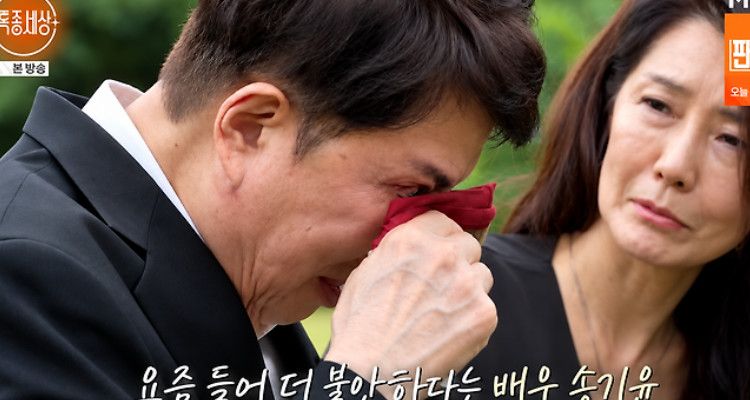
[Financial News] Actor Song Ki-yoon's wife, Kim Sook-jin, said she received psychiatric treatment after suffering from severe depression and panic disorder following a major traffic accident. After a serious accident, people may experience symptoms of post-traumatic stress disorder (PTSD), including not only depression, anxiety and panic attacks but also recurring images of the accident or avoiding riding in vehicles.
The latest developments in the lives of Song Ki-yoon and his wife, Kim Sook-jin, who works as a performance planner, were featured on MBN's "Special World," which aired on the first.
Kim Sook-jin said she was traveling to inspect a performance venue when her vehicle was hit by a dump truck approaching from behind. Recalling the incident, she said, "The car was so badly damaged that it was impossible to recognize its shape, but I did not have a single drop of blood on me." She added, "Instead, the impact struck my entire body."
Although she did not suffer major physical injuries, she said mental health problems continued afterward. Kim Sook-jin said, "I wondered if I could endure three years like this." She added, "I developed severe depression and even panic disorder, and I took a lot of psychiatric medication. There wasn't a single part of my body that was unscathed."
She Became Anxious Even When Riding in a Car After the Accident
She said the fear she experienced during the accident continued even after time had passed. Song Ki-yoon said his wife became anxious whenever the vehicle ahead came even slightly closer while they were traveling by car.
After a major accident, fear or anxiety may return when a person encounters a similar situation, and such symptoms can occur with PTSD. The National Mental Health Information Portal, operated by the Ministry of Health and Welfare's National Center for Mental Health and the Korean Neuropsychiatric Association, lists accident-related nightmares, flashbacks in which images or sensations from the accident are vividly relived, heightened arousal that causes a person to startle at even small sounds, and avoidance of people or places that remind them of the accident among the main symptoms of PTSD.
Depression or panic attacks may also occur alongside PTSD. According to medical information from Seoul National University Hospital, people with PTSD may experience dissociation or panic attacks, and may also develop depression and anxiety symptoms. Reduced concentration and memory, sleep disturbances and anger reactions may occur as well.
Traffic Accidents Can Also Cause PTSD
PTSD is different from a condition that develops simply because a person has experienced a great deal of stress. It can emerge after a severe traumatic experience, such as an accident in which a person feared for their life or faced the possibility of serious injury.
Seoul National University Hospital states that, in addition to war, sexual violence and fires, experiences involving fear for one's life or a significant risk of injury may also constitute trauma. However, not everyone who experiences a major accident develops PTSD. A diagnosis is made by considering the type and duration of symptoms after the accident, as well as their impact on daily life.
The National Mental Health Information Portal explains that fear or nightmares immediately after a shocking event may be a natural reaction, but that psychiatric evaluation is necessary if the symptoms persist or worsen. In particular, people whose symptoms have not eased or have instead become more severe one week after experiencing serious trauma are advised to seek a professional assessment.
Depression and Panic Disorder Require Separate Assessment

Kim Sook-jin personally said that she experienced depression and panic disorder after the accident. Although the two conditions can occur alongside PTSD, each has separate diagnostic criteria and treatments.
The National Mental Health Information Portal classifies panic disorder as a condition in which panic attacks involving sudden, intense anxiety and fear recur, causing a person to worry about having another attack or change their behavior. Depression is a condition in which depressed mood, loss of interest, changes in sleep or appetite, and reduced concentration persist and affect daily life.
Feeling anxious or depressed after an accident does not immediately mean that a person has a particular disorder. A psychiatric evaluation considers how long the symptoms have lasted, the situations in which they worsen, and the extent to which they affect daily life, sleep and interpersonal relationships.
Treatment Combines Medication and Psychotherapy
Medication and psychotherapy are used to treat PTSD. The National Mental Health Information Portal states that medication may be prescribed during the acute phase to reduce symptoms such as re-experiencing and heightened arousal. Later, psychotherapy such as exposure therapy or eye movement desensitization and reprocessing (EMDR) may be used.
Seoul National University Hospital also explains that selective serotonin reuptake inhibitors (SSRIs), cognitive therapy and behavioral therapy may be used to treat PTSD. The treatment approach varies depending on co-occurring symptoms such as depression or panic disorder and the patient's condition.
As in Kim Sook-jin's case, people who experience intense anxiety while riding in a vehicle for a prolonged period after an accident, repeatedly relive images of the accident, or continue to experience depression, panic attacks or sleep disturbances can have their condition assessed by a mental health professional. The National Mental Health Information Portal states that PTSD can become chronic, making early detection and ongoing treatment necessary.
[email protected] Han Seung-gon Reporter