"Delivery-App Commission Regulation Could Cut Riders’ Monthly Income by About KRW 270,000 If Order Volume Falls 6.8%"
- Input
- 2026-10-02 20:01:45
- Updated
- 2026-10-02 20:01:45
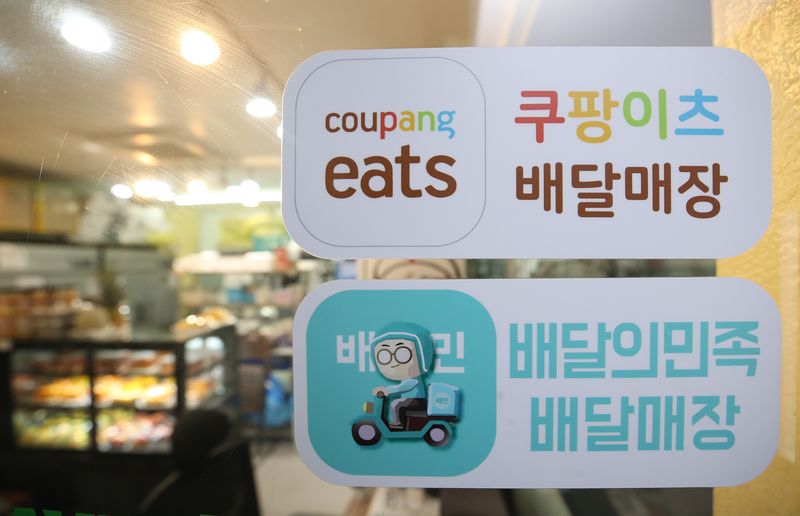
[Financial News] An analysis has found that riders’ monthly income could fall by about KRW 270,000 if order volume declines 6.8% due to regulations on delivery-app commissions.
At the "Delivery-App Commission Cap Forum: Coexistence of Small Businesses and Platforms," held by the Korean Academy of Commodity Science and Technology at the Textile Center Building in Gangnam-gu, Seoul, on the 2nd, Kim Tae-young, a professor in the Department of International Logistics at Chung-Ang University, said, "If the commission-rate cap is artificially lowered, costs could shift to other areas due to the nature of the platform ecosystem."
Professor Kim said, "If the number of orders and the average order value decline, the policy objective of increasing merchants’ net sales may not be achieved."
In his presentation, Professor Kim analyzed how commission regulations could affect consumer delivery fees, order volume, small business sales, and rider income. Based on data related to daily life logistics services from 2024 to 2025, he assumed riders’ average gross monthly income to be about KRW 3.95 million and estimated that a 6.8% decline in order volume could reduce monthly income by about KRW 270,000.
Professor Kim argued, "Even if commissions are capped, the actual costs incurred, such as logistics expenses, do not disappear. Instead, they could be passed on in other forms, including delivery fees or other ancillary costs."
Professor Kim also assessed that if platforms’ profitability deteriorates, it could become more difficult for new entrants with limited capital to enter the market, potentially reinforcing a market structure centered on large incumbent platforms. He proposed expanding practical protections, such as rider safety and insurance support and greater transparency in dispatching and compensation calculations, rather than imposing direct commission regulations. He also called for expanded support for small businesses’ digital transformation, marketing, and settlement costs.
Lee Yoo-seok, a professor of business administration at Dongguk University, also emphasized that delivery apps are online-to-offline (O2O) platforms that combine online intermediation with offline logistics services, unlike simple online information platforms.
Professor Lee explained that, unlike app stores and credit card services, delivery apps incur recurring delivery and logistics costs as the number of orders increases. Therefore, he said, it is difficult to apply the price-regulation logic used for other platform industries without modification.
He said, "Rather than a zero-sum commission cap that divides the existing pie among participants, we need a mutually beneficial model that expands the ecosystem as a whole." He added, "A separate policy framework is needed that reflects the cost structure and unique characteristics of delivery platforms, which entail offline logistics costs."
The forum also produced a proposal for policies that would expand support for small businesses’ digital transformation and marketing, provide assistance with settlement costs, and strengthen rider safety and insurance support as well as transparency in compensation calculations, rather than impose direct price controls.
Meanwhile, bills seeking to cap delivery-app commissions at 15% have been introduced in the National Assembly’s Political Affairs Committee.
[email protected] Jang Min-kwon Reporter