China Signals Hostility Through Its Form of Address, Dropping "Prime Minister" and Calling Her "Sanae Takaichi"
- Input
- 2026-10-02 17:49:26
- Updated
- 2026-10-02 17:49:26
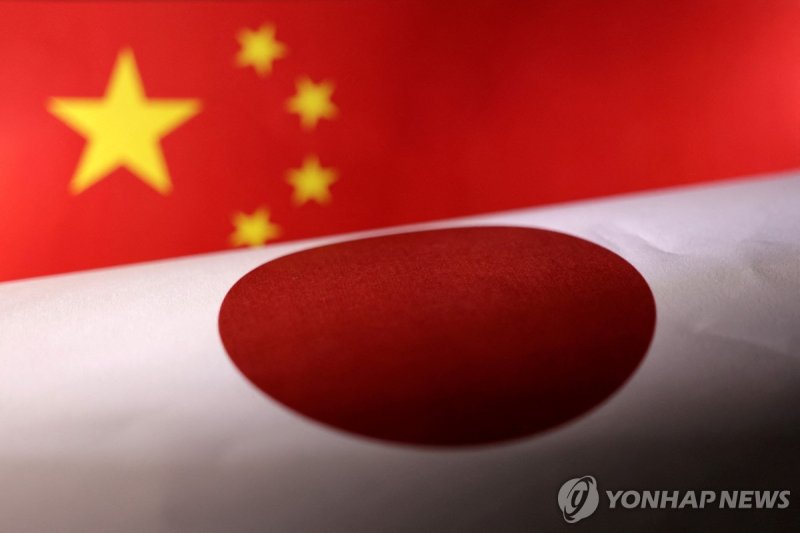
[Financial News | Tokyo—Correspondent Seo Hye-jin] The Ministry of Foreign Affairs of the People's Republic of China referred to Japanese Prime Minister Sanae Takaichi by her name alone, omitting the title "prime minister," Nihon Keizai Shimbun (Nikkei) reported on the 2nd. As tensions between China and Japan continue over remarks concerning a possible Taiwan contingency, the move has been interpreted as showing hostility toward Prime Minister Takaichi even in diplomatic forms of address.
According to Nihon Keizai Shimbun, Guo Zhaokun, director-general of the deputy spokesperson's office at the Ministry of Foreign Affairs of the People's Republic of China, referred to the Japanese leader as 'Sanae Takaichi' at a press conference on the 30th of last month. He omitted the previously used forms of address, such as 'Japanese prime minister' and 'Prime Minister Takaichi,' while responding to remarks by Japan's Defense Minister Shinjirō Koizumi about possessing nuclear weapons and nuclear-powered submarines.
Shangguan News, a Chinese Communist Party-affiliated outlet, reported that this was the first time since Takaichi took office last October that the Ministry of Foreign Affairs of the People's Republic of China had publicly dropped her title and used only her name. Hong Kong's Sing Tao Daily also wrote that day, "The Foreign Ministry pays close attention to its wording" and "This was not a slip of the tongue."
The move is unusual even compared with previous periods of strained China-Japan relations.
According to Sing Tao Daily, the Ministry of Foreign Affairs of the People's Republic of China continued to refer to Junichiro Koizumi, who served as prime minister from 2001 to 2006 and visited Yasukuni Shrine for six consecutive years, as either the 'Japanese prime minister' or 'Prime Minister Koizumi.' Even at the latest press conference, Guo Zhaokun referred to Defense Minister Shinjirō Koizumi as 'the incumbent head of the defense sector,' avoiding the use of his name alone.
China-Japan tensions deepened following Prime Minister Takaichi's response in parliament last November. Takaichi said that a Taiwan contingency could constitute a 'situation threatening Japan's survival' under Japan's security legislation. China interpreted the remark as leaving open the possibility that Japan's Self-Defense Forces could use force and protested. Since then, dialogue and exchanges between the governments of the two countries have been cut off.
However, China continues to maintain contact with Japanese politicians and economic organizations that distance themselves from the Takaichi administration. Takeshi Iwaya, who visited China late last month, held separate talks with Wang Yi, a member of the Communist Party's Politburo and foreign minister, and Vice Premier He Lifeng. While stepping up pressure on Prime Minister Takaichi, China appears to be keeping channels open for exchanges with other forces in Japan.
[email protected] Seo Hye-jin Reporter