Gasoline Cars' Share of the Global New-Car Market Falls Below 50% for the First Time
- Input
- 2026-10-02 17:44:13
- Updated
- 2026-10-02 17:44:13
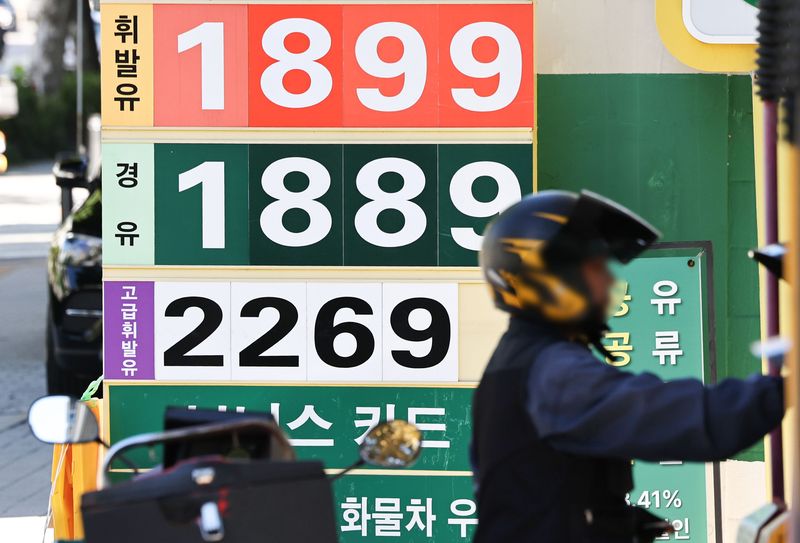
[Financial News, Tokyo—Correspondent Seo Hye-jin] In the first half of this year, gasoline-only cars accounted for less than 50% of global new-car sales for the first time. As high oil prices and concerns over fuel supplies weakened demand for gasoline-powered cars, electric vehicles (EVs) saw sales growth as their relatively low running costs gained attention. However, EV sales declined in China and North America amid reduced policy support, highlighting clear regional differences.
Nihon Keizai Shimbun (The Nikkei) reported on the 2nd that its analysis of data from automotive industry research firm Mobility Global showed global gasoline-powered car sales fell 10% year on year to 20.25 million units in the January-June period. The figure excludes some large vehicles.
Gasoline-powered cars accounted for 49% of total new-car sales, down 3 percentage points from the first half of last year. The Nikkei reported that this was the first time their share had fallen below 50% since the 1920s, when automobiles began to spread widely. The share has dropped 24 percentage points in five years from 73% in 2021.
The decline in gasoline-powered car sales was particularly pronounced in China and Europe. Sales fell 26% year on year in China and 13% in Europe. The Nikkei attributed the weakening demand to surging crude oil prices caused by geopolitical uncertainty and concerns over fuel supplies.
EV sales, by contrast, increased. Global EV sales totaled 6.87 million units in the first half, up 12% from a year earlier. Their share of the overall new-car market also rose 3 percentage points to 17%. The increase was attributed to the growing number of consumers who are considering not only vehicle purchase prices but also operating costs as gasoline prices rise.
Europe and Southeast Asia led the growth of the EV market. EV sales in Europe totaled 1.81 million units in the first half, up 32% year on year. According to the European Automobile Manufacturers' Association (ACEA), EV sales surpassed those of gasoline-powered cars for the first time in the first half of this year across 31 major European countries.
In Southeast Asia, EV sales surged 81% to 350,000 units. Oceania also recorded 110,000 sales, 2.2 times the figure from the first half of last year.
In China, which accounts for roughly half of global EV sales, sales fell 3% to 3.44 million units. The decline followed a reduction in tax benefits for EVs that took effect in January. Sales in North America also dropped 15% in the wake of U.S. President Donald Trump's withdrawal of preferential measures for EVs. Although high oil prices are stimulating EV demand, changes in policy support are also having a substantial impact on purchasing decisions.
Yoshiaki Kawano, an analyst at Mobility Global, explained, "The pace of EV adoption slowed from around 2024 after subsidies were discontinued, which helped hybrid vehicles (HEVs) grow. However, high oil prices are prompting consumers to reassess EVs' low running costs."
He added, "Few EV buyers are switching back to gasoline-powered or hybrid vehicles," and forecast, "If EV prices continue to fall, genuine demand that does not depend on subsidies will also grow."
[email protected] Seo Hye-jin Reporter