Seoul's Development History Told Through 29 Hangang Bridges... Seoul Metropolitan Government Publishes 'The Bridges of the Hangang River'
- Input
- 2026-10-02 16:40:42
- Updated
- 2026-10-02 16:40:42
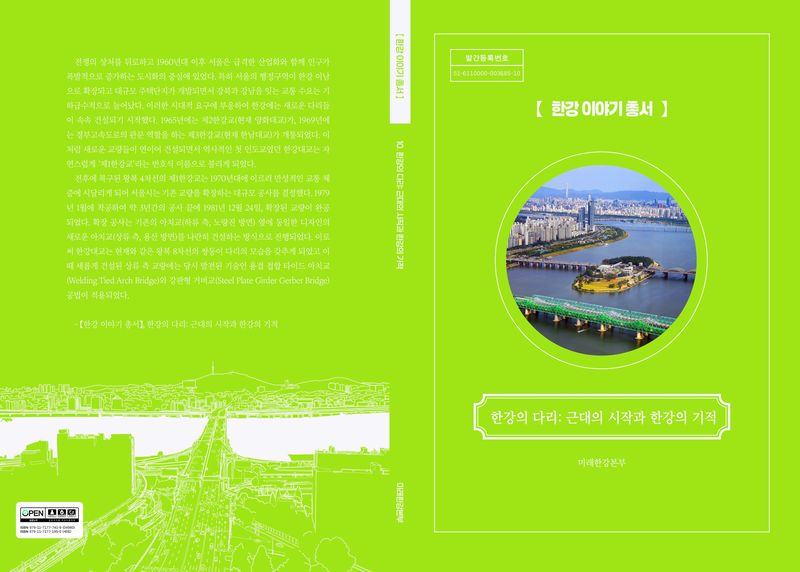
[Financial News] A book has been published that examines Seoul's changes and development through bridges spanning the Hangang River, from Joseon-era pontoon bridges to the Hangang Railway Bridge, Gwangjin Bridge, Mapo Bridge and Hannam Bridge. The Seoul Metropolitan Government Hangang Project Headquarters announced on the 2nd that it had published Volumes 10 and 11, titled 'The Bridges of the Hangang River,' in the Hangang Stories Series, which introduces the history and culture of the Hangang River along with historical records.
The books cover the background and technology behind bridge construction, as well as changes in surrounding areas after the bridges were built, from the premodern period when the Hangang River had no bridges to Gangnam development and the present day.
Volume 10, 'The Beginning of Modernity and the Miracle on the Hangang River,' covers how people crossed the Hangang River in premodern times through the early stages of Gangnam development. Volume 11, 'Gangnam Development and Seoul as a Megacity,' introduces how Seoul changed alongside its bridges from the development of Jamsil to the present.
The book covers a total of 29 bridges. As of April 2025, 23 bridges in Seoul and six near the city's boundaries were selected from the 33 bridges on the main channel of the Hangang River.
The structures of the bridges also offer a glimpse into Seoul's social and economic conditions at the time. In the 1960s, many truss bridges were built because they required relatively less material. Girder bridges, which could be constructed quickly and economically, became the dominant type in the 1970s. In the 1980s, ahead of the Asian Games and the Olympics, arch bridges were built mainly with consideration for the urban landscape and aesthetic design.
The book also includes stories associated with the bridges. Using historical materials such as photographs, maps and drawings, it explains how the Hangang Railway Bridge, whose construction concession had been granted to American James Morse, was completed by Japan; why Gwangjin Bridge was built at Gwangnaru, the eastern gateway to Hanyang; and why a crescent-shaped structure was installed on Seongsan Bridge.
Since 2024, the Seoul Metropolitan Government has been publishing the Hangang Stories Series on themes including the modern and contemporary history of the Hangang River, culture and the arts, folk customs, floods and flood control. Including these two volumes, a total of 12 have been published, containing 1,139 historical records.
All 12 volumes in the series, including 'The Bridges of the Hangang River,' are available free of charge on the Hangang Park website. Next year, the Seoul Metropolitan Government plans to publish a volume on 'Boats of the Hangang River,' covering the development of boats from premodern times to the present.
Park Jin-young, head of the Seoul Metropolitan Government's Han River Project Headquarters, said, "I hope this will be an opportunity for people to understand the stories hidden in the bridges they cross without a second thought and to look back on Seoul's development and citizens' lives, which have changed alongside the construction of the bridges."
[email protected] Seong Cho-rong Reporter