Oh Se-hoon's side: "There would have been no appellate trial if the recording had surfaced earlier" ... Special counsel seeks an 18-month prison sentence
- Input
- 2026-10-02 17:16:00
- Updated
- 2026-10-02 17:16:00
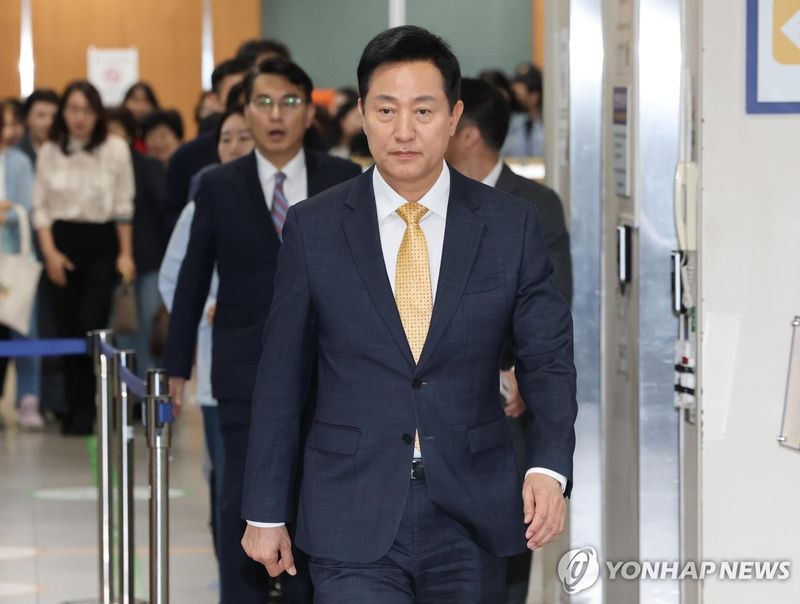
[Financial News] Special counsel prosecutors have sought a custodial sentence that would result in the loss of Seoul Mayor Oh Se-hoon's office in his appellate trial. Oh was indicted on charges of commissioning an opinion poll for the Seoul mayoral by-election from political broker Myeong Tae-gyun and having a supporter pay the bill in violation of the Political Funds Act. Oh's legal team argued for acquittal, focusing on call recordings submitted as key evidence in the appeal.
The Special Prosecutor's Team for Kim Kun-hee, led by Special Prosecutor Min Joung-kie, sought a sentence of one year and six months in prison and a fine of 33 million won at a hearing on the charges against Oh Se-hoon under the Political Funds Act. The hearing was held on the 2nd before the 22nd Criminal Division of Seoul Central District Court, presided over by Chief Judge Cho Hyung-woo. The prosecution also sought one year in prison each for former Deputy Mayor Kang Cheol-won and Kim Han-jung, who is known as a supporter.
At the first trial, Oh was sentenced to a fine of 10 million won, a punishment that could result in the loss of his mayoral office. The special counsel had also sought one year and six months in prison and the forfeiture of 33 million won for Oh, as well as one year in prison each for former Deputy Mayor Kang and Kim.
As the appellate trial began, Oh's side submitted recordings of phone calls between supporter Kim and Myeong as evidence. The conversations included Myeong's remark, "Oh Se-hoon doesn't know much about it," and Kim's statements, "It wasn't something he asked for; I did it on my own," and "I never heard it directly from the mayor," supporting Oh's claims.
Myeong's side countered that the recordings referred to discussions about joining forces with Ahn Cheol-soo, who was then a People Power Party primary candidate. The special counsel's team responded, "Although it had already testified at the first trial that call recordings existed, it belatedly selected and submitted only those favorable to it from among the 35 recordings," adding, "There are also conversations consistent with the charges, including the remark that 'Kang Cheol-won did a good job of making it.'"
Oh's legal team stated, "This is a distortion of the facts, and it has been confirmed that even his attorneys learned about the recordings only later and persuaded him before they were finally submitted," adding, "It is all the more regrettable because if these recordings had been submitted earlier, there would have been no appellate trial or dispute."
The team particularly emphasized, "The recording serving as impeachment evidence is a conversation held two days after the People Power Party finalized its primary candidate on March 4," and added, "It is key impeachment evidence that there was no request to commission the poll or pay for it, and it directly contradicts the charges."
The team also explained the context of the special counsel's reference to the remark that "Kang Cheol-won did a good job of making it": "Oh Se-hoon was not someone who would ask for manipulation. However, when someone who had come up from Changwon and claimed to be conducting an opinion poll said he would produce good results, Kim Han-jung found it hard to believe and tried to verify it himself, but the results did not turn out well."
The lawyer representing businessman Kim also argued for an acquittal, saying, "Even though Oh did not ask him to do so, this was merely an impulsive act by an enthusiastic supporter who used his own money to fund the opinion poll based on his independent judgment. No conspiracy existed."
The defense also rejected the special counsel's claim that the recordings were inadmissible because they had been selectively chosen or edited. The legal team said, "We made clear that we would submit everything if the court requested it, so this cannot be considered concealment," and pointed out, "The fact that the special counsel is insisting from the outset of its closing arguments on blocking the recordings from being admitted itself shows that they are devastating evidence for maintaining the charges."
In his final statement, Oh personally pleaded his innocence, wiping away tears as he appeared overcome with emotion. He said, "From the time I entered politics, I took the lead in creating the Political Funds Act, also known as the 'Oh Se-hoon Law,' based on my belief that politics should be free from money and clean. For me to have asked a supporter to pay the costs would be completely incompatible with the principles I have upheld throughout my life, and it is something I cannot even imagine."
He continued, "I knew during the election that Myeong was not someone to be trusted, so I immediately distanced myself from him and have not contacted him even once since then. However, I failed to cut ties decisively when I had a strange feeling and did not conduct myself perfectly, which led me to stand trial. This is entirely my fault, and I bow my head in apology to the public."
The court concluded all arguments on the 2nd and will issue its ruling on the 23rd. If a prison sentence or a fine of at least 1 million won is handed down in the appellate trial as well, Oh is expected to remain at risk of losing his mayoral office.
[email protected] Lee Chang-hoon Reporter